
Pseudomugil gertrudae
Spotted Blue Eye
Species Summary
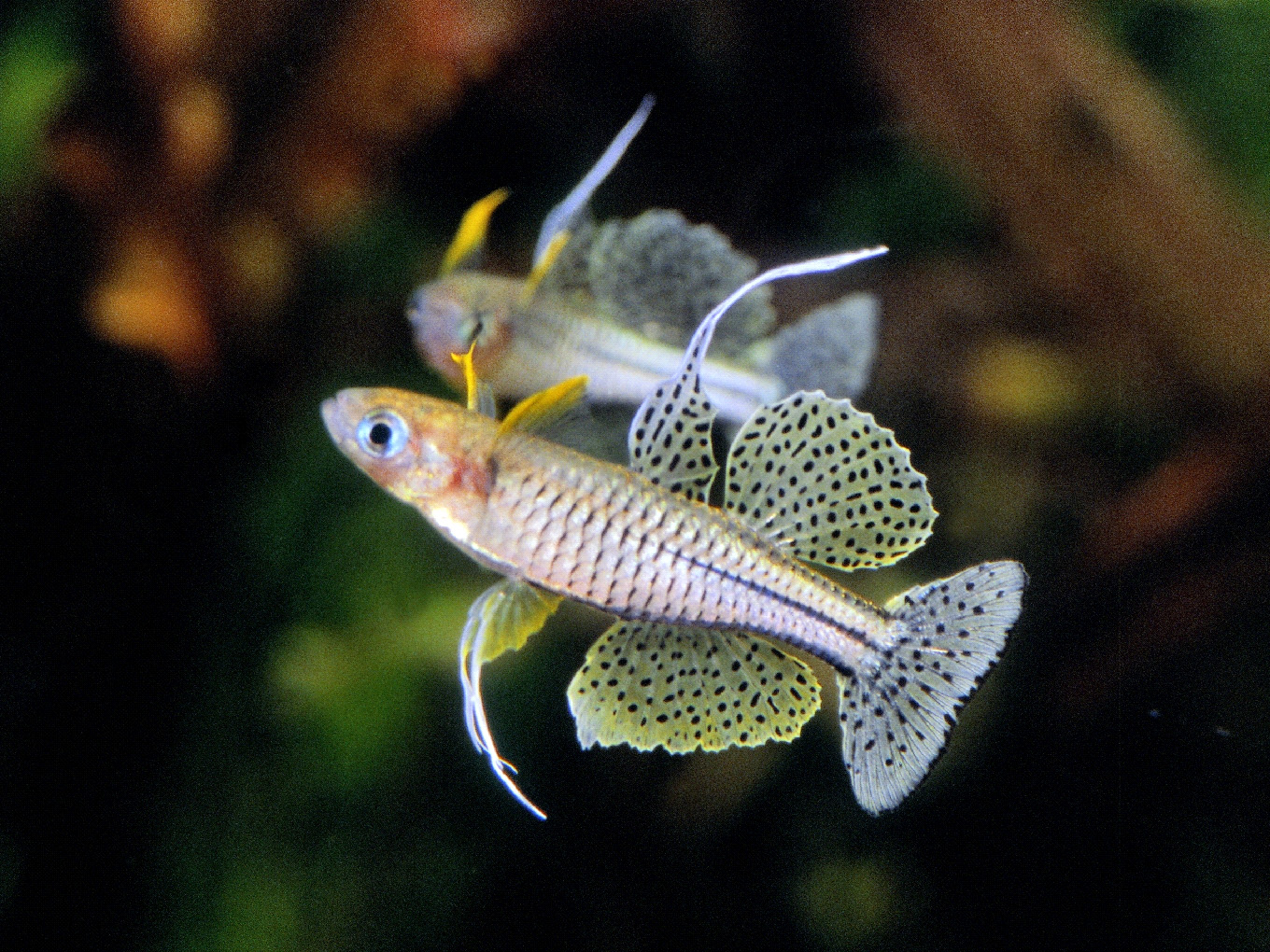
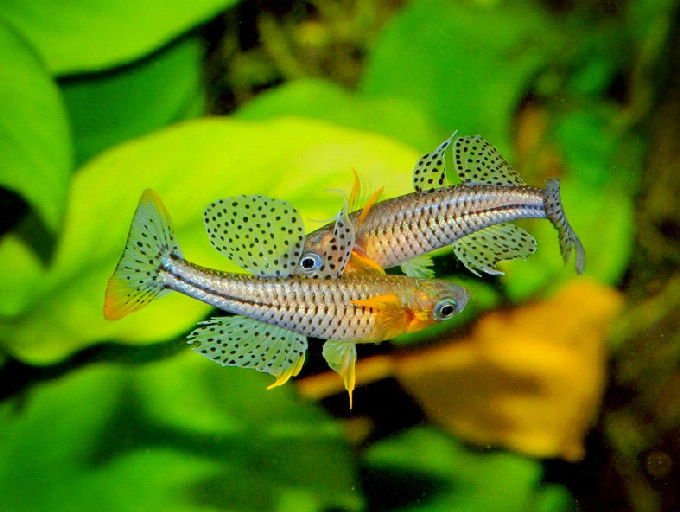
Pseudomugil gertrudae is a small freshwater fish growing to a size of around 30 mm and is endemic to Australia and New Guinea. They have a moderately compressed and elongated body that is a semi-transparent silvery-blue colour, sometimes having an overall wash of golden-yellow, with the swim bladder clearly visible. They have two dorsal fins, very close together, the first much smaller than the second. The tips of the pectoral fins can be bright yellow, orange or orange-red, other fins often edged with white. The dorsal, anal and tail fins can be clear to white, silvery-grey or yellow with rounded or oblong dark spots scattered all over. Several rows of body scales are edged in black forming an attractive latticework pattern over the body. All scales except those of the mid-dorsal and mid-ventral rows have a spot varying in size and intensity from specimen to specimen and from time to time in the same specimen, forming about 6 rows of discontinuous lines, except for the mid-lateral stripe, which tends to be continuous from just below and in line with the origin of first dorsal fin to the caudal peduncle.
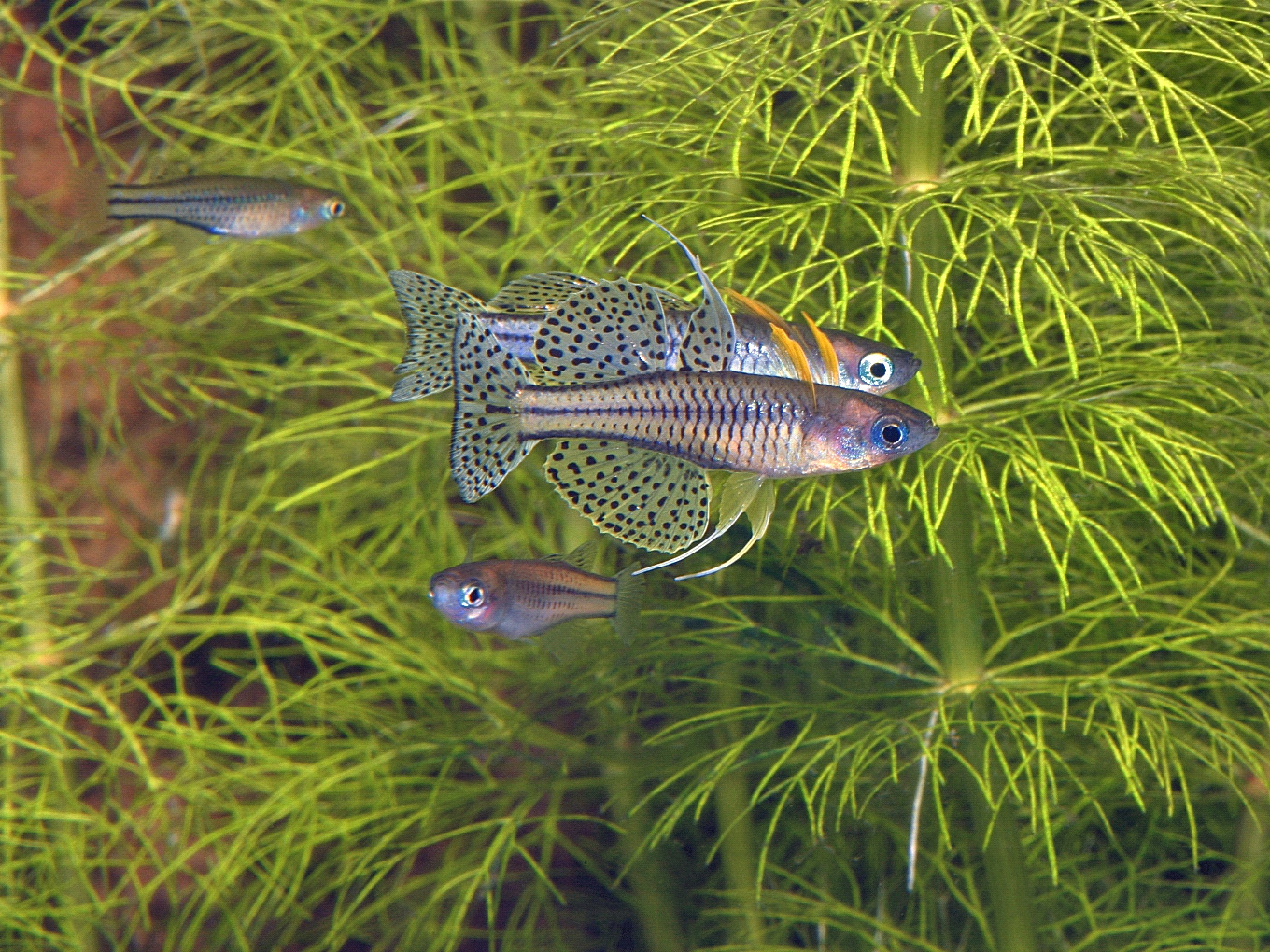
Females generally have a deeper body than the males whilst the adult males have larger dorsal, anal and pelvic fins, with extended filaments on the first dorsal and pelvic fins. Males also exhibit more intense spotting on the body and fins. This species has a patchy distribution where it occurs and as such, there is considerably variation between the different populations in colouration and body size, as well as fin size and shape.
The variety from Weipa is one of the most impressive forms and can be found in Melaleuca swamps besides the road leading into town. A similar form can be found in Pappan Creek. Pappan Creek flows into the Mission River. The forms typical of those found at the top of Cape York in areas such as the Jardine River (and its associated swamps) and Burster Creek have large round fins and multiple small spots. In Arnhem Land a nice form with golden body colours occurs in Goanna Lagoon while not far away in the Giddy River the fish have larger fins with larger spots but no golden body colour. Specimens collected in the Darwin region typically have orange pectoral fins. There are many other forms of this beautiful little fish and new ones are regularly being discovered. Pseudomugil gertrudae from the Aru Islands are larger and have an overall a golden colour (fins and body). To date there has been no research published on the genetic or physical characteristics of the various populations.
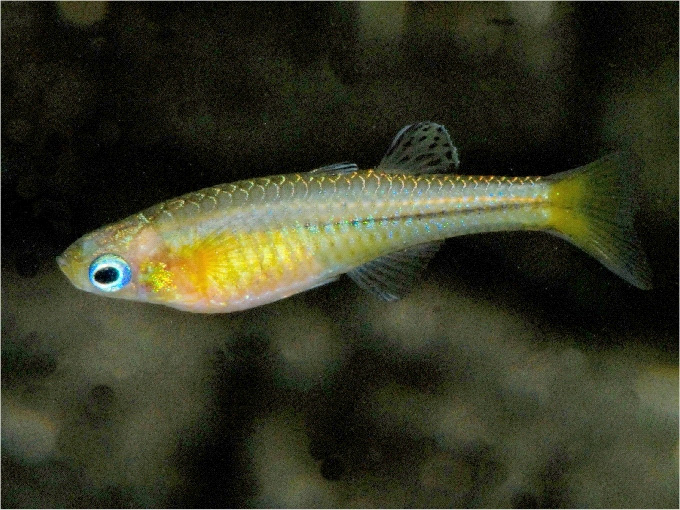
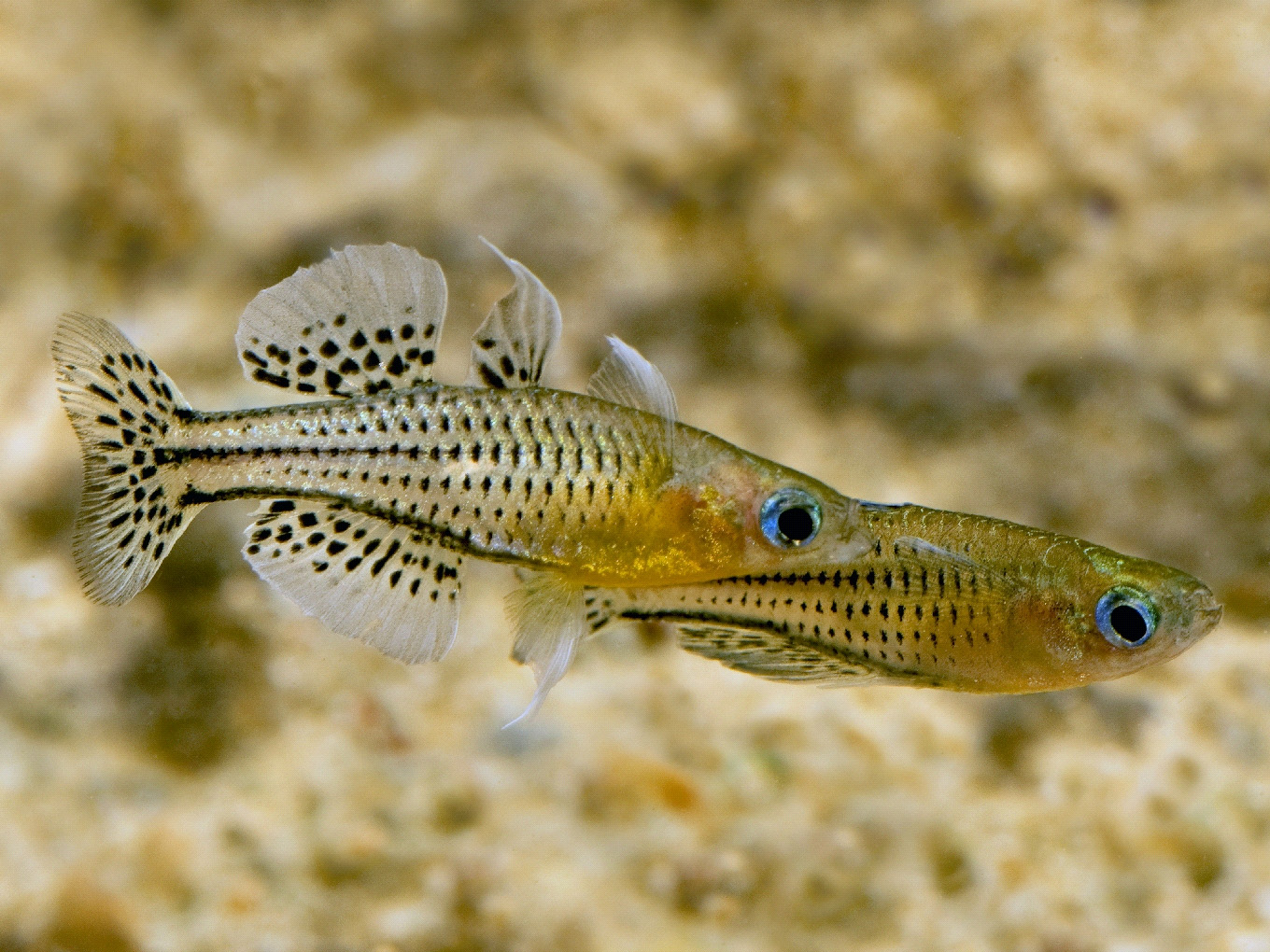
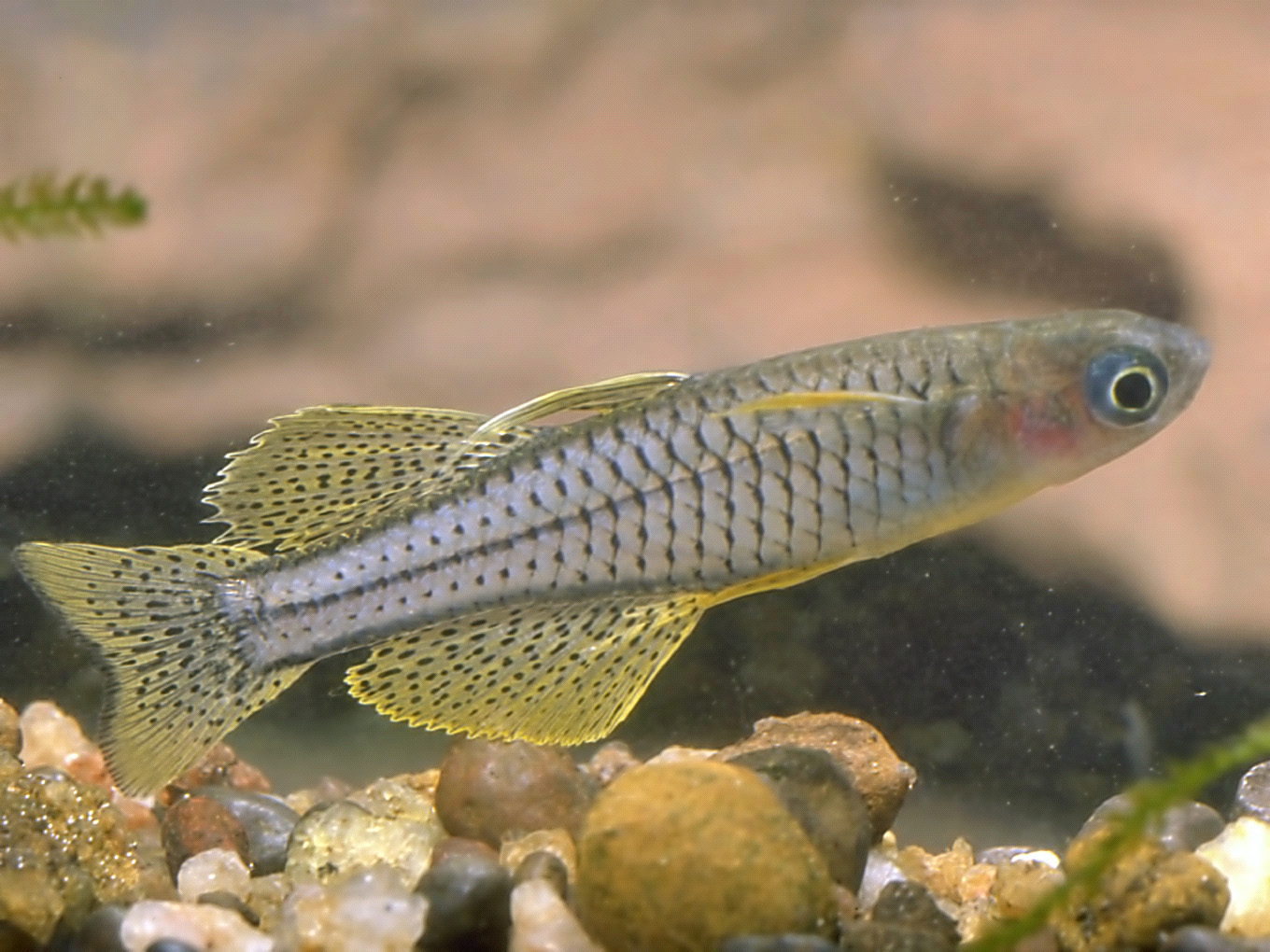
Pseudomugil gertrudae is very similar to the endemic New Guinea species, Pseudomugil paskai. Both species are characterised by rows of permanent spots covering the fins. The only differences being the colour and shape of the fins.
Pseudomugil gertrudae were originally collected from Trangan Island (Aru Islands), which lies directly south of the Vogelkop Peninsula in western New Guinea. They were described by Max Wilhelm Carl Weber, Professor of Zoology at the University of Amsterdam in 1911 and named “gertrudae” after the wife of Dr. Hugo Merton, a German naturalist who travelled through the Aru Islands between October 1907 and August 1908.
Etymology
The species is named in honour of Gertrude Merton, the “gracious wife” of German naturalist Hugo Merton (1879–1940); she accompanied her husband to the Aru Archipelago of Indonesia, during which the holotype was collected.
Etymology compiled from C. Scharpf (2024), “Fishes of Sahul: an Etymological Survey (Part 7), Pseudomugilidae and Telmatherinidae”, Fishes of Sahul 38(2): 2176–2189, and etyfish.org.
Distribution & Habitat
In Australia, Pseudomugil gertrudae has been found in scattered localities in river systems which flow into the Timor Sea and Gulf of Carpentaria - from Darwin through Kakadu and Arnhem Land to Cape York Peninsula, including the offshore islands of Bathurst, Melville and Groote Eylandt, plus some of the islands in the Torres Strait. They are widespread throughout Cape York Peninsula, extending down the eastern coastal plains to around the Innisfail - Tully region.
Their known distribution within Australia includes the Adelaide, Alligator, Blyth, Buckingham, Cadell, Cato, Daly, Finniss, Liverpool, and the Moyle River systems in the Northern Territory; including the smaller catchments around Darwin. In Queensland they have been found in the Barron, Coen, Dulhunty, Embley, Endeavour, Jacky Jacky, Jardine, Johnstone, McIvor, Moresby, Mulgrave, Murray, Olive, Russell, Tully and Wenlock Rivers, plus the smaller coastal streams. They have also been found in oligotrophic sand dune lakes in the Cape Flattery and Shelburne Bay region.
The known New Guinean distribution includes the Aru Islands, the Pahoturi, Fly (Elevala River, Lake Bosset) and Bensbach (Torassi) river systems. They probably occur elsewhere along the southern coast of New Guinea that has suitable habitat.
Pseudomugil gertrudae are found in small creeks, lagoons, billabongs, swampy marshes and rainforest streams, often associated with dense aquatic vegetation, woody debris and leaf litter. They are almost exclusively found in vegetated lagoons and backwaters with clear water where they can be seen swimming in the shallow waters along the margins. Floating species of waterplants or bottom rooted emergents with floating leaves occur in most, if not all, of their natural habitats. Substrates are usually mud or silt, and there is an abundance of water plants growing to the surface around the margins. Sometimes they may have water plants growing in the deeper water in the middle. Lagoons often have a thick layer of leaf litter around the margins. They are seldom found in turbid lagoons, even when there are abundant water plants.
The water in some habitats is often intensely discoloured by tannic acids leached from decaying vegetation. These ‘blackwater’ habitats are generally acidic, with pH levels from 3.9 to 6.8, have low conductivity (dissolved ions), and vary in their dissolved organic matter, ionic composition, and colour.
Alkalinity and hardness levels are very low. Factors contributing to these variations are age, formation, layers of low permeability and peats, proximity to the sea, surrounding vegetation, and the extent to which leaf litter accumulates and decays in the water. However, habitat conditions can vary substantially and P. gertrudae have been collected from natural habitats within the following range of water conditions:
Temperature: 12–34° Celsius pH 3.68–9.4 Conductivity: 12–646 µS/cm Hardness 0–320 ppm Alkalinity 2–180 ppm
Biology
Very little is known about the biology or ecology of this species in their natural environment. Most information is mainly based on aquarium observations. Pseudomugil gertrudae are a relatively short lived species in the wild and most die in their first year, even if conditions are ideal. Mortality becomes more predictable after the first two years of life. Natural factors affecting them include disease, parasites, predation and competition for food and space. Females may only spawn once, usually at around one year of age, rarely living to spawn a second season. Males often live around two years. In captivity, life expectancy can increase up to four years if appropriate aquarium conditions are provided.
In their natural environment spawning usually commences during the early-wet season from October to December, which often causes an increase in plankton and other foods. The young are spawned when food is plentiful and when aquatic plant communities are most dense, affording them protection from predation. They are an egg-scatterer, generally spawning amongst aquatic plants and grasses. In captivity pre-spawning behaviour is initiated adjacent to the chosen spawning site by the male actively pursuing a female. Males displayed during the daylight hours with the peak of activity occurring in the late morning and early afternoon when water temperatures are maintained around 24–28°C. When actively pursuing a female the male display from a side on position, with spread dorsal and anal fins, while at the same time raising and lowering his pectoral fins. During this procedure the colour intensifies in both sexes with the spots on the body and fins becoming very dark. In contrast to the rainbowfishes the male never touches the female during courtship. During spawning, the pair shake violently and push their way deep into the spawning medium to shed the eggs. Spawning is not inhibited if more than one pair of fish are present in the tank. Several incursions may be made into the spawning medium.
Spawning in P. gertrudae appears to be a sporadic event, but nonetheless continuous throughout the whole year when maintained in suitable aquarium conditions. In general, only one to three eggs are shed at a time but as many as seven have been observed on some occasions. Spawning often continues throughout the day, with each female releasing up to 10 or 12 eggs. Spawned eggs are relatively large, adhesive, negatively buoyant in freshwater and average 1.3 ± 0.5 mm in diameter, and are usually clear to light amber in colour. Eggs have adhesive filaments that attach to aquatic plants or amongst the strands of the spawning mops, and sometimes even in the substrate. Spawning has been observed in ponds with eggs being recovered from the roots of floating duckweed.
Eggs are best left attached to the spawning medium to minimise handling stress and removed from the spawning tank and placed in another aquarium for incubation and larval rearing. Maintain a constant temperature ± 1°C and gently aeration. Hatching will begin after an incubation period of around four to nine days depending on temperature. Temperature is one of the major factors that influences the embryonic period of blue-eyes. Although P. gertrudae are only small their newly hatched larvae are rather large. The hatching size of the larvae is around 3-4 mm. Hatched larvae are well developed and competent swimmers. Upon hatching the larvae swim at the surface of the water, generally within the upper 1-cm water layer. The mouth is well developed and functional, and they begin feeding within hours of hatching. They can be fed finely powdered dry foods, newly-hatched brine shrimp, copepods, phytoplankton and microworm. Pseudomugil gertrudae grow fairly rapidly and reach maturity in about three months; at a size of around 15 to 20 mm in length.
Pseudomugil gertrudae have a generalised diet in their natural habitat consuming aquatic prey items such as small crustaceans, various aquatic insects and invertebrates, tadpoles, algae, diatoms and small quantities of terrestrial insects such as flies. In captivity, they can be fed live or frozen foods such as daphnia, copepods, mosquito larvae or brine shrimp. Microworm and other small worms are also an excellent food. Flake food or small bite-sized pellets can also be fed with success however for best results some supplementary feeding with live or frozen food is required.
Pseudomugil gertrudae are a very attractive species and well-suited to the smaller aquarium. When maintained in a small group the males will regularly display to each other and they look like small colourful butterflies as they flutter about the aquarium. A small 50 litre aquarium, tastefully decorated with floating water sprite, driftwood overgrown with aquatic moss, and containing a small group of mixed males and females will delight the eyes of the most discerning hobbyist. Their small size however makes them easy prey for larger fish so they really should be kept separate or in company with fishes of the same size.
References
- Allen G.R. (1980) A Generic Classification of the Rainbowfishes (Family Melanotaeniidae). Records of the Western Australian Museum 8(3): 449-490.
- Allen G.R. (1989) Freshwater fishes of Australia. T.F.H. Publications, Inc., Neptune City, New Jersey.
- Allen G.R. (1991) Field guide to the freshwater fishes of New Guinea. Christensen Research Institute, Madang, Papua New Guinea.
- Allen G.R., S.H. Midgley and M. Allen (2002) Field guide to the freshwater fishes of Australia. Western Australian Museum, Perth, Western Australia.
- Ivantsoff W., L.E.L.M. Crowley, E. Howe and G. Semple (1988) Biology and early development of eight fish species from the Alligator Rivers Region. Technical memorandum 22, Supervising Scientist for the Alligator Rivers Region, AGPS, Canberra.
- Merrick J.R. & G.E. Schmida (1984) Australian freshwater fishes: biology and management. Griffin Press, Netley, South Australia.
- Saeed B., W. Ivantsoff, and G.R. Allen (1989) Taxonomic revision of the family Pseudomugilidae (Order Atheriniformes). Australian Journal of Marine and Freshwater Research 40: 719-787.
- Weber M. (1911) Die Fische der Aru- und Kei-Inseln. Ein Beitrag zur Zoolographie dieser Inseln. Abhandlungen der Senckenbergischen Naturforschenden Gesellschaft Frankfurt-a.-M. 34: 1-49, Pls. 1-2.