

Pseudomugil luminatus
Red Neon Blue-eye
Species Summary
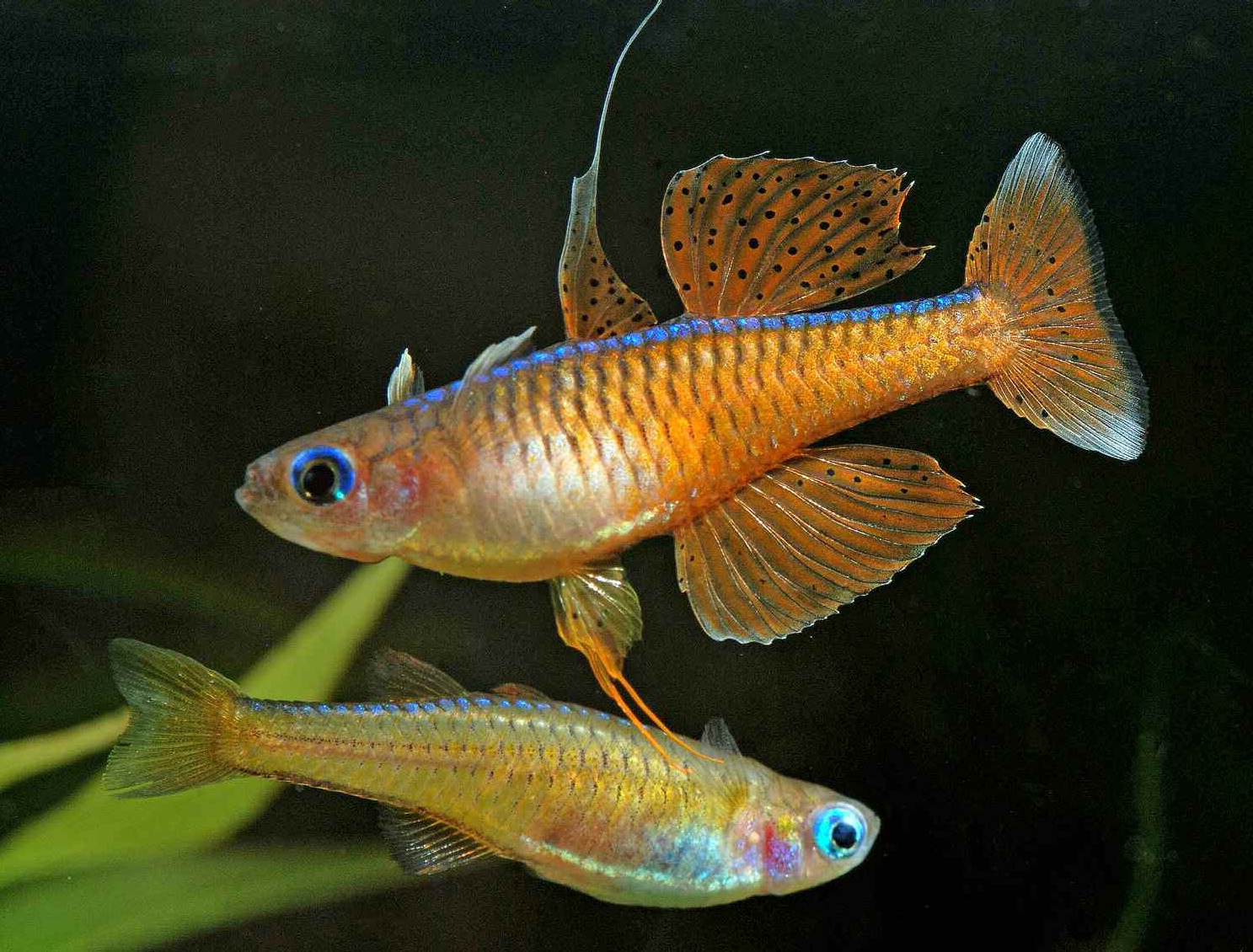
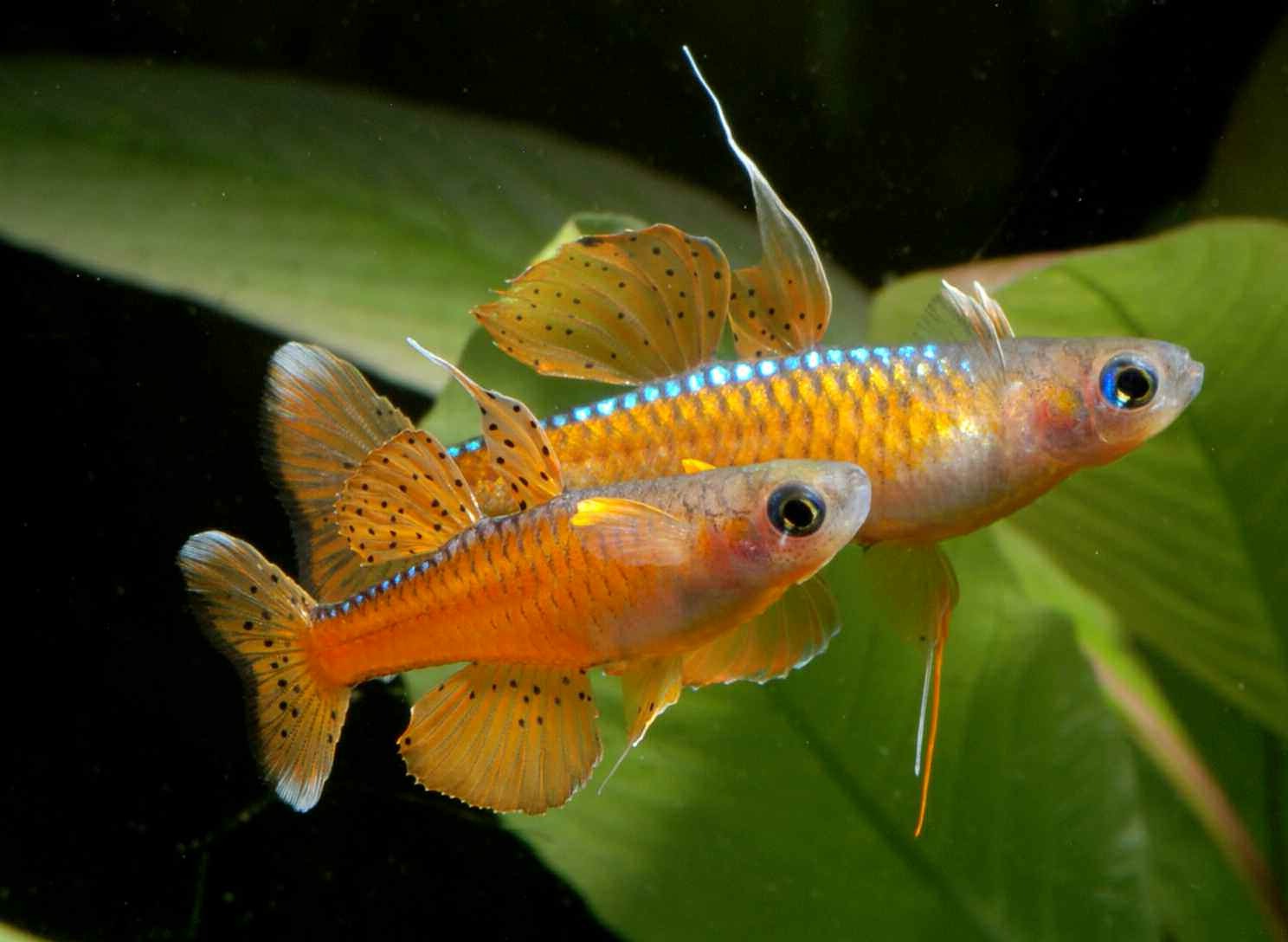
Pseudomugil luminatus, the Red Neon Blue-eye, is a small, brilliantly coloured blue-eye described in 2016 from swamps near Timika in south-central New Guinea (Papua Province, Indonesia). Adult males show a yellowish to reddish body topped with a glowing neon-blue stripe along the upper back, median fins scattered with black spots, and white to yellow highlights on the tips of the caudal fin and the upper pectoral-fin edge. It belongs to the ‘Gertrudae Group’ of blue-eyes, alongside P. gertrudae and P. paskai, and both sexes develop an elongate filament from the second dorsal spine and first pelvic ray.
Etymology
The species name luminatus is Latin for illuminated (the authors say “light up”), referring to the bright colours exhibited by adult males.
Etymology compiled from C. Scharpf (2024), “Fishes of Sahul: an Etymological Survey (Part 7), Pseudomugilidae and Telmatherinidae”, Fishes of Sahul 38(2): 2176–2189, and etyfish.org.
Distribution & Habitat
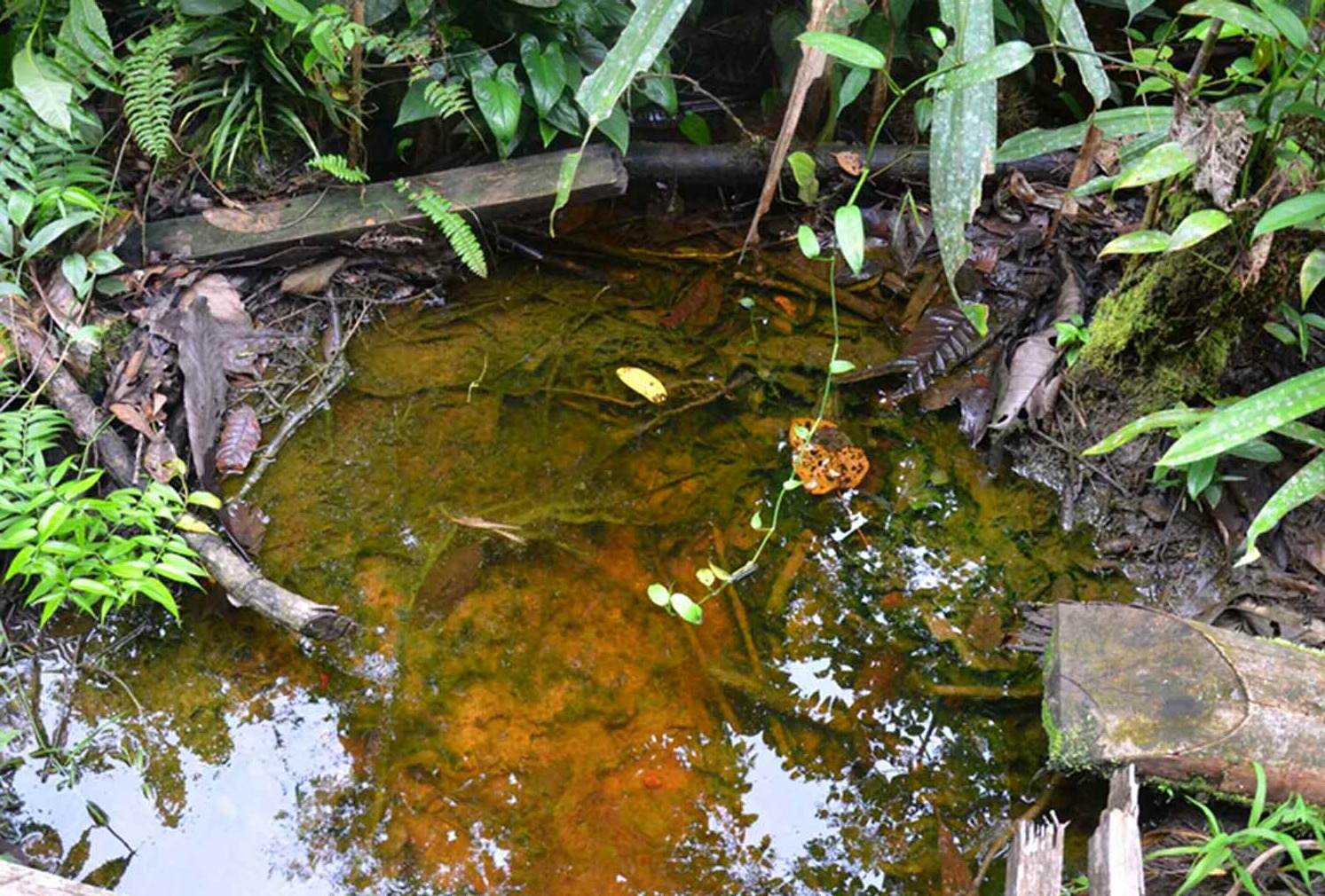
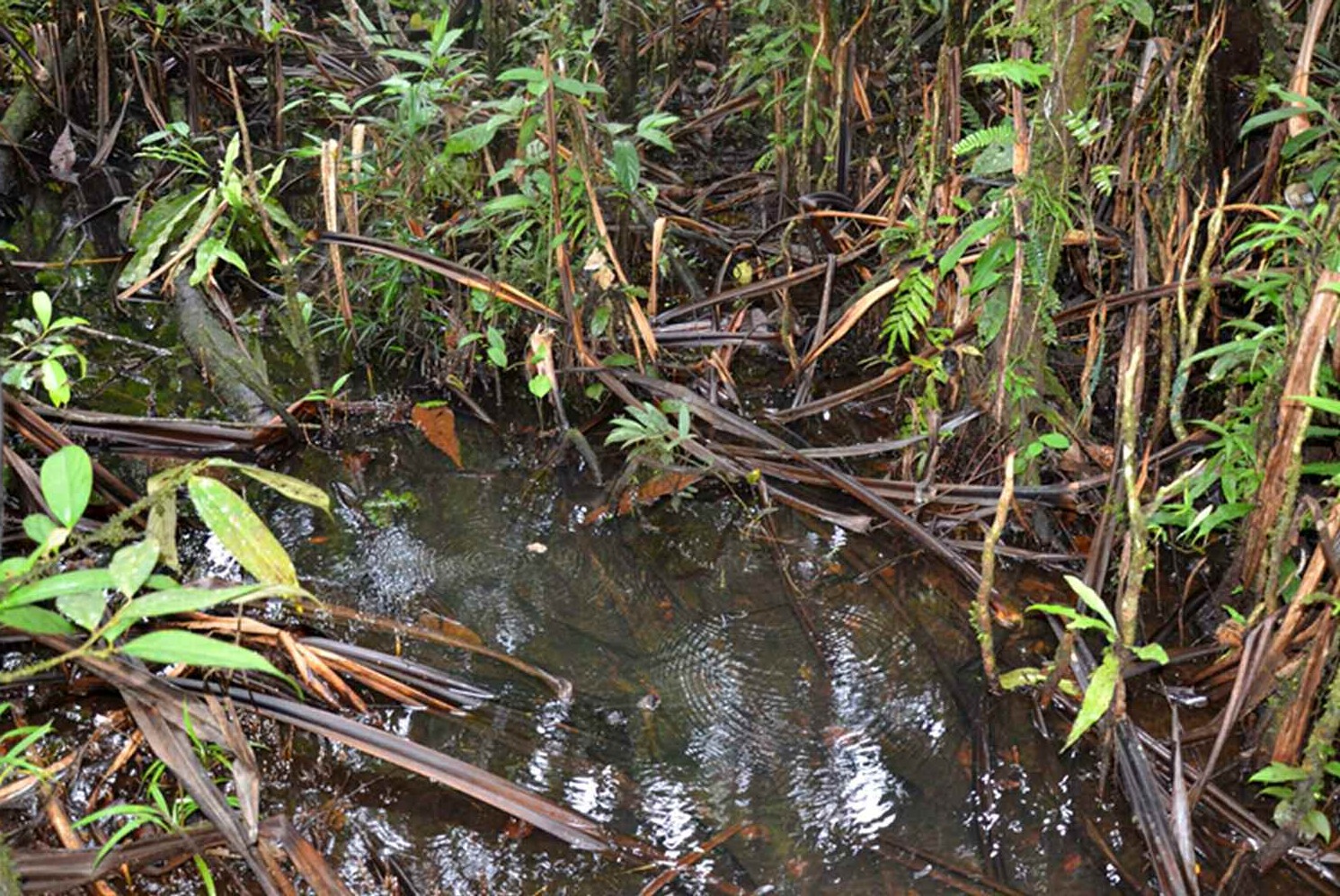
Pseudomugil luminatus is known only from the vicinity of Timika, in the lowlands of south-central New Guinea. It lives in sago-Pandanus swamps with clear, dark-stained, slow-flowing water. The type locality, about 20–25 km upstream of the Aikwa River estuary, was severely altered by mine-tailing sediment in the late 1990s, and the species is presumed gone from there along with the rest of the swamp fauna; most later specimens came from two sites in the nearby Iweka River system. Water at collection sites ranged from soft and acidic to circumneutral (pH 4.8–7.2), with temperatures of 26–28 °C.
Description
A small blue-eye reaching only about 22 mm SL. Live males are generally yellowish to reddish with a striking neon-blue stripe along the uppermost part of the body, and the median fins carry widely scattered black spots, most prominent on the second dorsal fin; the caudal-fin lobes and upper pectoral-fin margin are tipped white to yellow. In alcohol the colour fades to tan, with a fine vertical black streak at the junction of each scale along the front two-thirds of the body. Females share a similar but duller pattern, usually without the fin spots.
Comparison with Similar Species
Pseudomugil luminatus is most similar to P. paskai of the upper Fly River system in Papua New Guinea, about 530 km to the east, sharing the same scattered fin spots and filamentous first-dorsal and pelvic rays in adult males. It differs in usually having 10 rather than 11 anal-fin rays, 9 rather than 9–10 pectoral-fin rays, and 25–26 rather than 27–28 lateral scales, and its males lack the neon-blue body stripe, having considerably paler body and fin colour instead. Genetic data strongly support the two as separate species.
Account compiled for Home of the Rainbowfish from G. R. Allen, P. J. Unmack & R. K. Hadiaty (2016), “Pseudomugil luminatus, a new species of Blue-eye (Teleostei: Pseudomugilidae) from southern New Guinea, with notes on P. gertrudae”, Fishes of Sahul 30(1): 941–961.
References
- Allen G.R., P.J. Unmack and R.K. Hadiaty (2016) Pseudomugil luminatus, A New Species of Blue-eye (Teleostei: Pseudomugilidae) From Southern New Guinea, With Notes on P. gertrudae. Fishes of Sahul 30(1): 950-961.
- Evers H. (2012) Orangeblaue Blitze - ein neues Blauauge ist da! Amazonas 8(4): 42-45.