
Ultraviolet Disinfection
Ultraviolet (UV) disinfection is a well-established technology and has been around for more than 50 years. In the late 1800, researchers first discovered the germicidal effects of sunlight, and systems based on fluorescent tube technology have been operating since the 1950’s. The UV lamps are similar to household fluorescent lamps, except that fluorescent lamps are coated with phosphorous, which converts the UV light to visible light. Advances in UV technology have resulted in more efficient lamps and more reliable equipment, and therefore, the use of UV technology has increased dramatically.
There are presently several manufacturers of UV disinfection equipment with a large number of lamp configurations, types, and intensities. Research is continuing into new types of UV systems, such as pulsed output lamps. Mercury vapour lamps are the source of UV light for all systems, except for the pulsed UV system. Low-pressure mercury lamps are more efficient in converting electricity to germicidal UV light, but the total UV output is much weaker than from a medium-pressure lamp. The LowPressure, Low-Intensity (LPHI) mercury lamps have design features to maintain mercury pressure at an optimum level under high discharge currents.
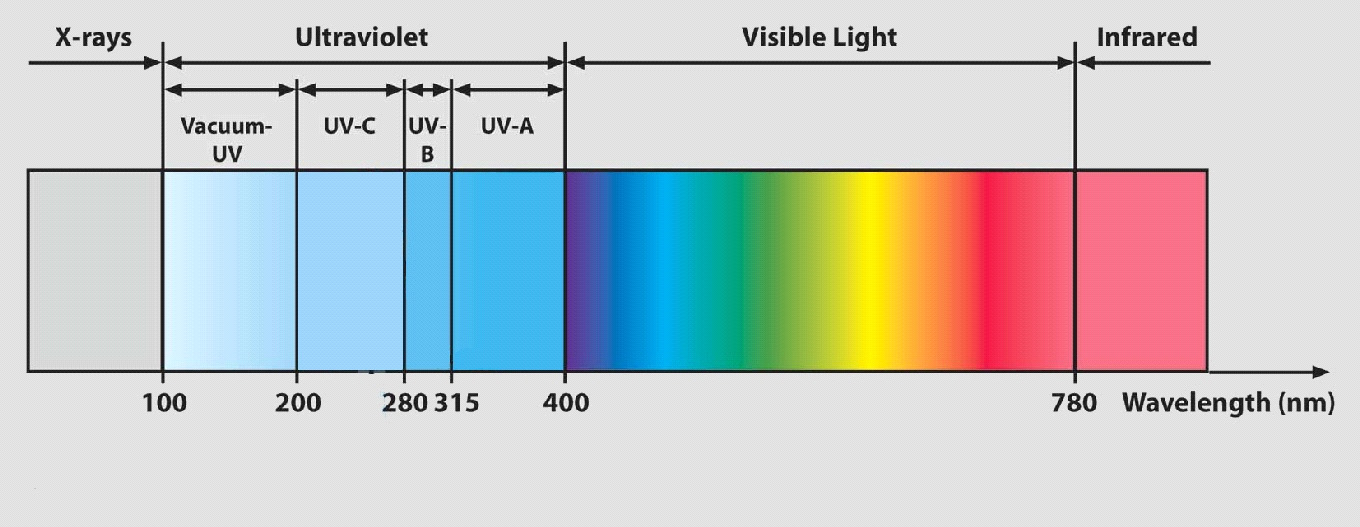
UV equipment consists of a cylindrical chamber containing one or more quartz tubes (permeable to UV), producing ultra-violet radiation. Water flowing through the chamber is exposed to UV-C radiation produced by the special lamps. The best solution for aquarium systems seems to be low/ medium-intensity equipment. In addition to the power of a UV lamp, it is also necessary to know the useful life span (usually 2,500-10,000 hours). During this period, the UV dosage of the lamp will progressively decrease until it reaches a value close to 50-60% of the original dosage, which is considered the end of its life span.
The purpose of using a UV steriliser is not always to exterminate all bacteria present in the water, as the energy required to achieve this would be excessive. In fact, UV equipment is used mostly in aquatic systems to maintain bacterial populations below dangerous levels. When you choose a UV steriliser, there are five main factors that will help determine the ability of the UV steriliser to achieve its desired effect:
- The type of lamp used in the application.
- The length of the lamp being used.
- The physical design of the UV’s water exposure chamber.
- The condition of the water being treated.
- The water flow rate through the UV’s exposure chamber.
A sound UV steriliser design revolves around the careful selection of lamp type, lamp length, lamp position, and body diameter. These factors, together with the intended water flow rate, percent transmittance of the water to be treated, and UV dose rate needed to kill the targeted microorganism should be your basis for the selection of a unit for your aquarium or pond.
Target Microorganism
To achieve successful UV disinfection the UV equipment capacity must match the target microorganism UV dose requirement. In other words; the microorganism must be held in direct contact with the UV-C light for a specific amount of time. Different organisms have different tolerances to exposure to UV. The Ornamental Aquatic Trade Association recommends 10 mJ/cm2 UV as the minimum lethal dose for bacteria. Generally it is acknowledged that few bacteria can survive 25 mJ/cm2. To kill some viruses requires 125 – 200 mJ/cm2, while small parasites may require 1,000 mJ/cm2. The UV radiation will only affect waterborne microorganisms that flow through the UV unit and will not harm other aquarium inhabitants.
You may come across a number of different units being used to describe the lethal dose of UV. Different forms are used. Some report the intensity of UV radiation in the units of milliwatts per square centimetre (mW/cm2), which is energy per square centimetre received per second. In addition, it is measured in the units of milliJoules per square centimetre (mJ/cm2), which is energy received per unit area in a given time. Most scientists and engineers in the UV business now use the units “mJ/cm2” (milliJoule per square centimetre) for UV dose.
Overall dosages are calculated by multiplying the lamp output by the time the water is exposed to the light, with the final dosage commonly expressed as milliJoules per square centimetre (mJ/cm2), which is equivalent to milliwatt seconds per square centimetre. One milliJoule (mJ) corresponding to one milliWatt (mW) per second. If lamp output is 10 mW/cm2 and residence time of water inside the sterilisation chamber is three seconds, total UV dosage applied equals 30 mJ/cm2.
The mechanism of kill involves the absorption of photons of UV energy by the DNA (RNA in some viruses), which fuses the DNA and prevents replication.
Microorganisms may, however, become viable again in the presence of visible light (photoreactivation) if UV disinfection is inadequate. Therefore, aquarium systems may require longer exposure or higher dose, because factors such as total suspended solids can affect UV transmittance and bacteria may be protected by an envelop of particulate matter. For example, in a recirculating aquaculture system it was observed that UV intensity greater than 1800 mJ/cm2 was required to achieve a not quite 2-LOG10 reduction in heterotrophic bacteria. Further research also found that UVirradiation produced inconsistent inactivation or no inactivation of Aeromonas hydrophila, Aeromonas punctata and Flavobacterium columnare. Sharrer et al. (2005) presented a hypothesis that recirculating aquatic systems that treat with UV-irradiation provide selection pressure for bacteria that embed within particulate matter or that form bacterial biofilms, because this provides shading from some of the UV-irradiation. Even if this hypothesis is invalidated, achieving total inactivation of bacteria in recirculating aquarium water using only UV-irradiation appears to be difficult.
Log reduction is used in reference to the physical-chemical treatment of water to remove, kill, or inactivate microorganisms such as bacteria. During the UV process, the rate of destruction is logarithmic, as is their rate of growth. Thus, bacteria subjected to UV-irradiation are killed at a rate that is proportional to the number of organisms present. The process is dependent on both the exposure and the time required to accomplish the desired rate of destruction. “Log” stands for logarithm, which is the exponent of 10. For example, log2 represents 102, or 10 x 10 or 100. Log reduction stands for a 10-fold or one decimal or 90% reduction in numbers of recoverable bacteria. Another way to look at it is: 1-Log reduction would reduce the number of bacteria by 90%. This means, for example, that 100 bacteria would be reduced to 10 or 10 reduced to 1. 5LOG refers to 10 to the 5th power or reduction in the number of microorganisms by 100,000-fold. For example, if a water sample contained 100,000 microorganisms, a 5-Log reduction would reduce the number of microorganisms to one.
It must be remembered that the efficiency of sterilisation using UV-irradiation is strongly conditioned by the way in which this radiation is transmitted in the water (transmittance). The transmittance can be drastically reduced by the presence of suspended solids. For this reason, prefiltration is a must on all UV applications to be effective. High colour, turbidity, dissolved and suspended solids, presence of metals and organic matter reduce the amount of UV radiation reaching microorganisms and necessitate higher doses of applied radiation for effective disinfection. Units require regular cleaning and maintenance to remain effective.
The UV dosage is also influenced by other factors such as the variation of the water flow inside the radiation chamber or the temperature of the water to be treated. Ideally, a UV disinfection system should have a uniform flow with enough axial motion (radial mixing) to maximise exposure to UV-irradiation. The path that an organism takes in the reactor determines the amount of UV-irradiation it will be exposed to before inactivation. A reactor must be designed to eliminate short-circuiting and/or dead zones, which can result in inefficient use of power and reduced contact time.
Total dissolved solids should not exceed approximately 500 mg/L. There are many factors that make up this equation such as the particular make-up of the dissolved solids and how fast they absorb the available UV energy. Calcium and magnesium, in high amounts, have a tendency to build up on the quartz sleeve, again impeding the UV energy from penetrating the water. Suspended solids need to be reduced to a maximum of 5 microns in size. Larger solids have the potential of harbouring or encompassing the microorganisms and preventing the necessary UV exposure. Turbidity is the inability of light to travel through water and should be less than one nephelometric turbidity unit (NTU). Over one NTU can shield microorganisms from the UV energy, making the process ineffective.
An additional factor affecting UV is temperature. UV levels fluctuate with temperature levels. If the temperature of the water exceeds a certain threshold value as specified by the manufacturer, UV lamps can break. Hence, the water temperature should always be monitored. If the temperature exceeds the limit, the UV reactor should be shut down. Calcium carbonate (hardness) is one of the rare compounds with decreasing solubility at higher temperature. Hence, at elevated temperatures calcium carbonate may be precipitated which may reduce the UV transmittance.
Photoreactivation
In certain cases, bacteria and other microorganisms are capable of repairing their DNA following damage by ultraviolet radiation. Known as ‘photoreactivation’, it is a natural defense mechanism that has evolved over millions of years. While some microorganisms need visible light in order to repair their DNA, others can repair their DNA without light (‘dark repair’). This self-repair ability poses obvious problems when UV disinfection technology is used to treat aquarium water.
Photoreactivation has been known since 1949 when Albert Kelner, while doing research into the lethal effects of radiation, noted that the damage induced in bacteria by UV exposure was altered by exposure to visible light. Since this initial discovery, photoreactivation has also been observed in fungi, algae, and higher plants and animals, including humans.
Although photoreactivation occurs in many species, the photoreactivating ability among species varies. Previous studies on bacteria suspended in liquid, or on agar plate surfaces, have been conducted showing that photoreactivation occurs with mycobacteria, and that the length of exposure to photoreactivating light is an important factor affecting the extent of photoreactivation. Photoreactivation in liquid suspensions was highly correlated with the dose of UV used, and that damaged cells were continuously repaired during exposure to common fluorescent light. It has been reported that some bacteria possess a photoreactivating enzyme, which is able to repair UV damage not only in phage DNA but in their own genome as well.
Summary
Ultraviolet sterilising units can help reduce overall pathogen numbers in an aquarium system, but they will not prevent the spread of pathogens within the system. The innate resistance of bacteria and the presence of organic matter, turbidity, excessive numbers of organisms, exposure times or dilution use concentrations, pH, temperature, and water hardness may all affect treatment. UV sterilisation is inactivated by dirt, mud, biofilms and suspended particles, whether inorganic (soil and clay particles) or organic (faeces and algae). Effective disinfection can only be achieved when as much suspended materials and dissolved organic material as possible has been removed from the water.
UV-irradiation is lethal to most microorganisms, but each species has its own particular tolerance. Varying intensities of UV-irradiation are required for removal of different microorganisms, with the recommended dose being of the order of 35 – 1,000 mJ/cm2. However, the suggested dose does not take in to account the photoreactivating ability of the different species of micro-organisms. It has become increasingly clear that a great variety of factors determines the loss or survival of bacterial activity following UVirradiation. Ultraviolet irradiation may only kill bacterial cells if irradiation occurs in the dark (Pattisapu et al. 1997).
Finally, UV-irradiation is only effective against organisms suspended in the water. In aquarium systems most bacteria adhere to surfaces and form biofilms. A single bacterial species can form a biofilm, but in aquariums biofilms are often formed from various species of bacteria, fungi, algae and protozoa. Biofilms can be created within 15 minutes of a bacterium associating with a surface.
Biofilms are capable of forming on all aquarium system components, incorporating the various microorganisms present in the water. Pathogenic microorganisms released from aquarium biofilms are capable of causing recurring exposure to disease. In these hardy biofilm communities, pathogens like Aeromonas, Flavobacterium, Mycobacterium and Pseudomonas and others not only survive but proliferate and lie in wait for susceptible hosts. Biofilms also provide the bacteria with physicochemical protection against environmental stresses such as osmotic changes, dehydration and disinfecting agents such as chlorine.
In addition, UV-light may only cause partial damage to bacterial cells and may enhance mutation (e.g., UV-resistant strains).