

Hatching Brine Shrimp
The standard procedure for hatching brine shrimp nauplii is to incubate the eggs for 24–48 hours in a saltwater solution and then separate the nauplii from the unhatched eggs and shells. I use a 2-litre wide-mouthed glass jar filled with tap water. To this I add 10 to 20 grams (2 to 4 level measured teaspoons) of cooking salt and a pinch (¼ level teaspoon) of Sodium bicarbonate.
Brine shrimp eggs have been shown to hatch out at salinities ranging from 5 to 35‰ (parts per thousand). However, research has shown that better hatching results have been achieved at the lower range. During the hatching process, the eggs absorb water through the shell by osmosis. When the osmotic pressure within the egg is great enough, the shell then bursts, freeing the larval brine shrimp. At higher salinities, the osmotic pressure outside the egg is higher than within the egg, lengthening the time for hatching. However, if you are having problems with poor hatch rates then experiment with different salt levels as I have found that you can get better results using different salinity levels.
The pH for the hatching solution may range from 7.5 to 8.5. A pH above 9.5 tends to be too alkaline, while a pH below 6.5 results in a dramatic decrease in the hatching results. Hatching time varies with incubation temperature and the geographic strain of brine shrimp used. The temperature for optimal hatching rate and high hatching efficiency is considered to be 27–30° Celsius. However, at least 90% of premium grade eggs should hatch within an 18-hour period in a temperature range of 25–32° Celsius. Lower temperatures will cause the eggs to hatch at a slower rate. The air temperature of my fish room governs the temperature in my case. During summer, I harvest the shrimp after 24 hours, wintertime 48 hours, and spring/autumn 36 hours. I live in a sub-tropical climate and my fishroom rarely drops below 20° C during winter, but in summer it can reach 30 to 35°C.
The recommended hatching density of eggs should not exceed 5 grams per litre of water. Constant aeration should be provided by an airline, without an airstone, inserted to reach the bottom of the jar. Aeration is essential for two reasons - the maintenance of dissolved oxygen levels, and keeping the eggs suspended in solution. Adjust the air supply so that moderate aeration occurs. Too little aeration will result in low levels of dissolved oxygen while too much aeration will cause the cysts to stick to the upper jar out of the water. These conditions will significantly affect the hatch rate.
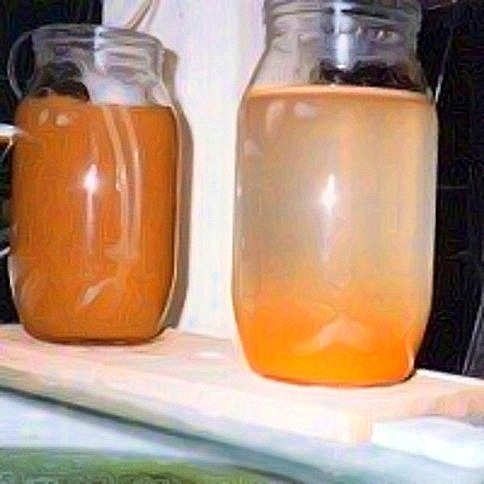
nauplii are bright orange and are located near the bottom of the hatching container or within the water column.
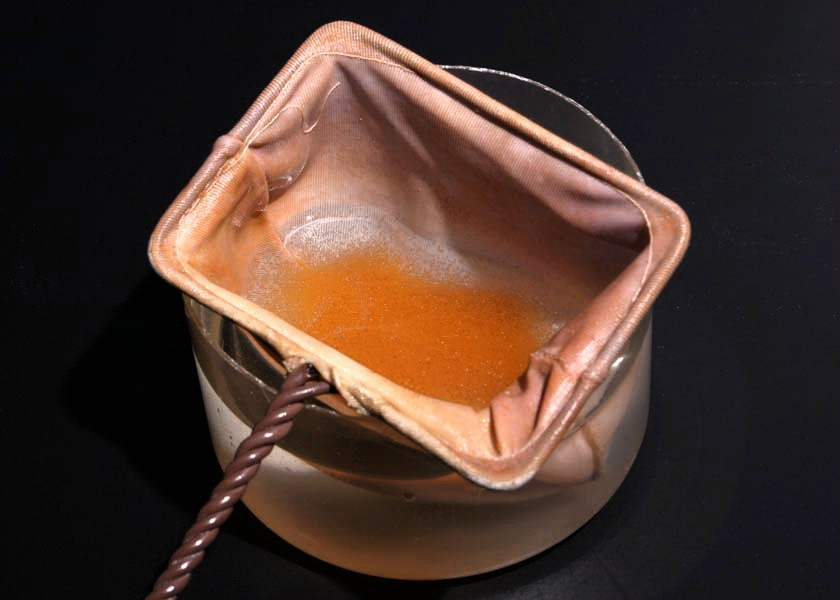
After the incubation period, turn off the aeration and allow the contents to settle for about 5 to 10 minutes. A distinct separation will occur; the unhatched cysts and egg shells will rise to the surface and be dark brown. Brine shrimp nauplii are bright orange and are located near the bottom of the hatching container or within the water column. Most of the newly hatched nauplii will accumulate just above the bottom. Siphon the shrimp into a fine mesh net (<120 µm) through a length of airline tubing, which has a short rigid extension (the depth of the jar) on the intake end. This makes it possible to position and siphon very accurately. This separation step is necessary, however, because small fry cannot digest unhatched cysts and shells, which can cause mortality if consumed. After rinsing the nauplii in a gentle stream of freshwater, which will remove any waste or salt residue, the nauplii can be fed to the fish. It is important to collect the nauplii quickly, because after 10 minutes or so, the oxygen levels of the water begin to drop quickly and the nauplii will begin to show signs of distress and die.
Discard the remaining contents of the hatching jar and wash with hot soapy water, rinsing well before use. The net should also be rinsed. Prepare fresh salt water for each new hatch. To have a fresh supply of brine shrimp daily at least two hatching containers should be used so that newly-hatched shrimp can be harvested daily.
Artemia nauplii are most nutritious while they contain the yolk sac and should be fed as soon as possible after hatching. Nauplii in their first stage of development can not take up food and thus consume their own food reserves. At 28°C, the freshly-hatched nauplii develop into the second larval stage within 12 hours. It is important to feed firstinstar nauplii to the fish rather than second-instar metanauplii which will have already consumed 25 to 30% of their food reserves within the first 24 hours after hatching. Moreover, instar II Artemia are less visible as they are transparent, are larger and swim faster than first instar larvae, and as a result consequently are less accessible as a prey. Furthermore they contain lower amounts of free amino acids.
Moulting of the nauplii to the second instar stage may be avoided by storing the freshly-hatched nauplii at a temperature below 10°C. This procedure decreases the metabolism of the nauplii, thereby preserving a higher nutritional value. Only slight aeration is needed in order to prevent the nauplii from accumulating at the bottom of the container where they would suffocate. In this way nauplii can be stored for periods up to more than 24 hours without significant mortalities. This technique allows not only a constant supply of high quality nauplii but also more frequent feeding for freshwater fish larvae.