
Infusoria
The term infusion animals (animalculæ) was introduced by the German naturalist, Martin Frobenius Ledermüller in 1763, to include all those microscopic animals that appeared in water in which hay had been steeped for several days. This was soon formalised to infusoria by Heinrich August Wrisberg in 1765. Wrisberg described what he took to be the process by which the decaying animal and vegetable matter in infusions produced infusoria. Many of these organisms would originally have been present as spores and cysts, so the infusoria that appeared typically included rotifers and other protozoa, as well as algae.
At the beginning of the nineteenth century infusoria comprised a vast array of organisms spanning in size and complexity from bacteria to small invertebrates including worms and crustacea found in lakes, ponds, and streams, as well as in infusions of decaying organic matter exposed to the air. Today the term ‘infusoria’ is mainly an informal aquarium hobby name that covers a wide diversity of microorganisms, including singlecelled, colonial and multicellular forms.
By far most ‘infusoria’ are found in freshwater free from actively-decomposing organic matter, rather than in those that contain organic substances in a putrescent state. They may be “benthic” (living in bottom sediments) or “epiphytic” (living on aquatic plants). They are an important link in detritus-based food webs in aquatic ecosystems and are consumed by other small animals, which are in turn preyed upon by larger organisms. Their principal importance is as consumers of bacteria. Infusoria feed on bacteria and organic detritus, hence when they present themselves in vegetable infusions, it is usually after decomposition. The decomposing organic matter feed the bacteria, which are even smaller than infusoria. They are not, however, absolutely confined to water; for there are a number of species which can maintain their existence in damp mud.
Many microorganisms can be collected in the wild and cultured as infusoria. Organic materials such as aquatic plants, leaf litter or pond sediment can be collected and added to a container that is then filled with water. After standing for a few days, the plant material decays and the infusoria will have come to the surface, where they can be siphoned off. A tendency of most infusoria is towards the light, and also to the surface. Such a culture will produce infusoria for a number of weeks, without any further treatment. When the infusoria begin to decline, they can be caused to increase again by the addition of small quantities of vegetable matter into the water to induce bacterial multiplication.
There are problems in collecting from the wild however, most notably the risk of introducing disease or pests into your culture. In addition to collecting organisms in the wild they may also be purchased as pure cultures from biological supply companies. Obtaining a starter culture from a fellow hobbyist is probably the simplest solution.
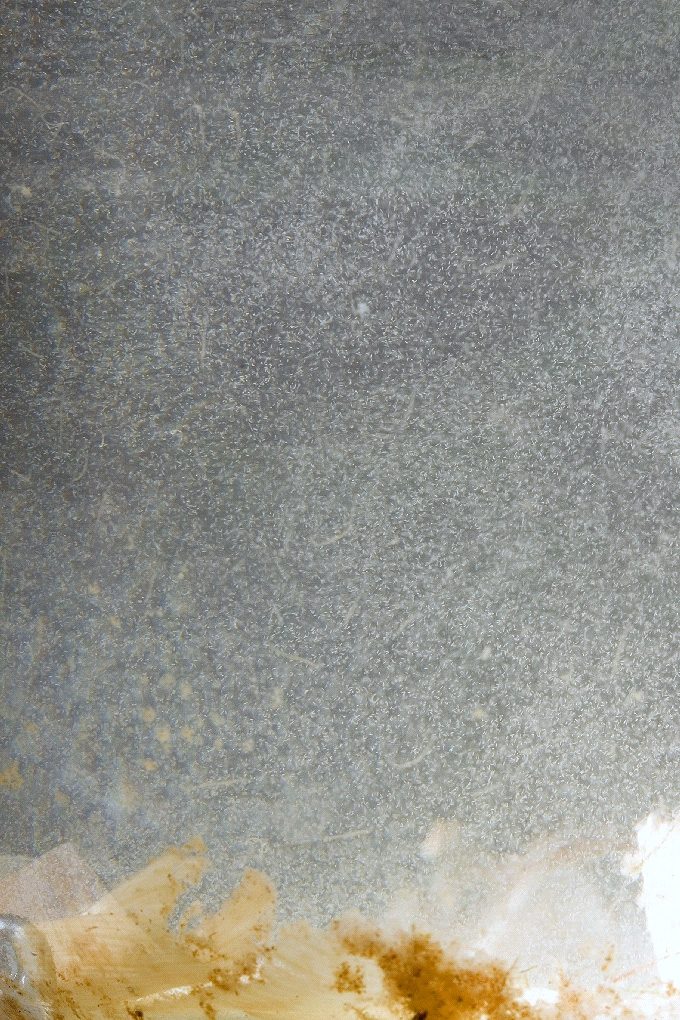
Most aquarium related cultures of infusoria are a collection of many microorganisms and can include microscopic algae, bacteria, protozoans, rotifers, and a host of other small organisms. Unless you are maintaining pure cultures in sterile conditions, your culture will have a mixture of protozoans and algae in greater or lesser degree. Variety in composition is one of the outstanding characteristics of infusions in which infusoria are to be cultured. There appears to be no single method of successful culturing. In general, small quantities of materials, usually organic, must be introduced into water to induce bacterial multiplication. These bacteria are the chief food supply of the infusoria, at least in the earlier stages of the culture.
Although infusoria have been cultured and fed to fish larvae for more than a hundred and fifty years, and many fish breeding articles advise infusoria as a first food for fish larvae, there have been very few articles published in the aquarium literature on how to successfully cultivate them. The procedure adopted by old time aquarists for obtaining a culture of infusoria was by boiling hay, lettuce, spinach or other vegetable matter and allowing the resultant infusion to decompose in the air for a while in the hope that various living beings developed therein. At best this was a hit and miss method and in many cases it simply didn't result in a successful culture.
Now the water in an aquarium which has been kept for any length of time necessarily becomes more or less charged with the effete matter of its inhabitants, which if allowed to accumulate, would soon render the fluid poisonous to every living thing within it. This result is happily averted by Infusoria, which feed upon the decaying substance in solution, while they themselves become in their turn the food of larger animals. Thus the presence of Infusoria in the tank may be considered a sign of its healthy condition, although their increase to such an extent as to give a milky appearance to the water is apt to endanger the well-being of the larger, though delicate creatures.
The peculiar phenomenon allured to arises from decaying matter, which should be sought after and removed with all possible speed. The whereabouts of such objectionable remains will be generally indicated by a dense cloud of Infusoria hovering over the spot. The milkiness, however, although it may look for the time unsightly, is ofttimes the saving of the aquarium ‘stock’. When these tiny but industrious scavengers have completed their task of purification, they will cease to multiply, and mostly disappear, leaving the water crystal clear.
I believe it is the absence or deficient supply of Infusoria that sometimes so tantalizingly defeats the attempts on many persons to establish an aquarium.” (John Harper, 1860)
The best way to bring about a successful culture is to make a vegetable based infusion similar to the above (slices of potato or banana skin works well) using water from a well-established aquarium or outdoor pond (that hasn’t been chemically treated). Cultures should be maintained indoors with sufficient daylight (but not sunlight) and kept warm (28°C). Cultures should not be covered if populations of maximum concentration are desired.
Aeration is helpful as the bacterial growth will consume most of the oxygen in the culture, inhibiting the growth of the infusoria. Aeration will also help to reduce any unpleasant odours produced by the decaying organic matter. Within a couple of days the water should turn cloudy with bacteria. Once the culture begins to clear a pale, ever changing cloud of tiny specks will be seen when a clear glass jar containing the infusion is held to the light. Although just visible to the naked eye, to see infusoria properly, a microscope is needed. At this stage you can begin feeding them to your fry.
When the culture is thriving well add a few pieces of vegetable matter, which will provide organic matter when the original culture is nearing exhaustion. Beef extract powder, lettuce leaves, cereal grains (rice, wheat, barley, oats, etc.), banana skin, hay, grass, skim milk powder, decaying aquatic plants and leaves, cabbage leaves, and mud are some of the materials which are reported to have been used.
Such diverse organic materials may be boiled in water, or they may be allowed to macerate. Slight variations of the above techniques require the introduction of algae, yeast, or bacteria into infusions such as the above. The culture will decline rapidly if the nutrients are completely used up. However, care should be taken with the amount added as too much could result in the water becoming depleted of oxygen and cause your infusoria to perish.
Culture water that is too rich in decomposing organic matter will simply encourage a bacterial bloom and an unpleasant odour may develop. Generally the culture will settle down again once the bacteria do their work. You could also use one of the commercial solutions devised expressly for feeding paramecia.
A healthy culture should be clear and somewhat odourless. A thriving culture can be maintained for months, but it’s always a good idea to start fresh cultures occasionally, because nothing crashes more unexpectedly than populations of infusoria. Once you have a good culture going it is a simple matter to prepare a series of cultures from the original one.
Feeding Infusoria
Infusoria are an excellent primary food source for newly hatched rainbowfish larvae. You can collect the infusoria with a syringe and feed part of the culture solution directly to the larval fish. Feed the larvae, according to their number, as often as possible in small quantities so as not to pollute the water. You should be able to tell when they are getting enough to eat because their stomachs will be distended.
The best way to collect infusoria and avoid adding any of the culture solution into the raising tank is to use a laboratory grade filter paper placed over a funnel and into an empty collection container. Pour the contents of the culture through the filter paper. The filtered medium will collect in the container and the infusoria will be concentrated on the filter paper. The infusoria are then washed off the filter paper with fresh water and fed to the fry. Return the filtered medium back to your culture container, as the culture will continue to reproduce.
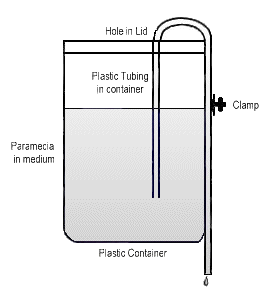
If it is desired to feed the culture to the fry over a predetermined period of time the following method can be used (Fig. 1): Drill a small hole in the screw-on lid of a clear plastic food container, the size of some small diameter plastic tubing. Push the tubing through the lid until it is about a centimetre off the bottom of the container. Fasten the tubing to the outside with some sticky tape. The container is then filled with infusoria culture and placed on the lid of the aquarium with one end of the tubing dangling over the surface of the aquarium. The culture is transferred into the aquarium by syphoning and the flow is regulated with an aquarium clamp. By leaving the end of the tubing, on the inside of the container, just above the base less detritus is picked up.
You can add some water-soluble vitamins to enhance the nutritional value of the infusoria a few hours before feeding. They will absorb them directly from the water. Most vitamin solutions designed for human babies generally contain all the necessary vitamins fish require.
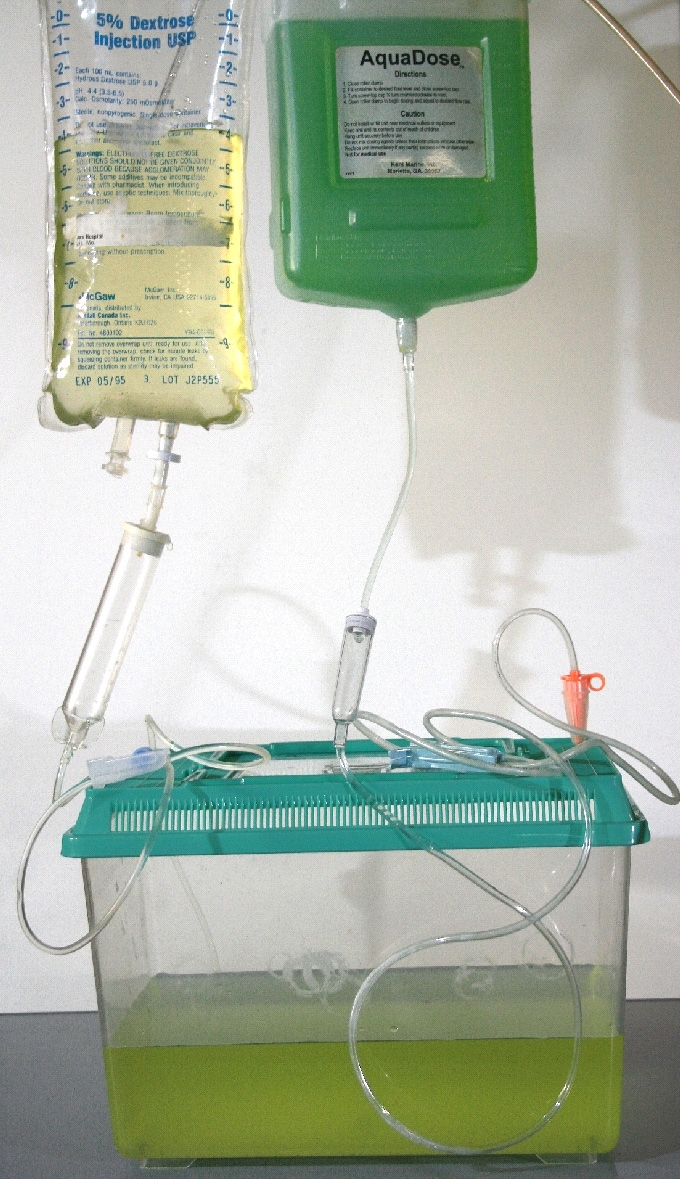
As an alternative feeding system you could use one of the commercially available AquaDose® systems, or medical intravenous infusion bag. These can also be used for feeding greenwater infusions, medications or any other aquarium additives.