
Leiopotherapon unicolor
Spangled Perch
Species Summary
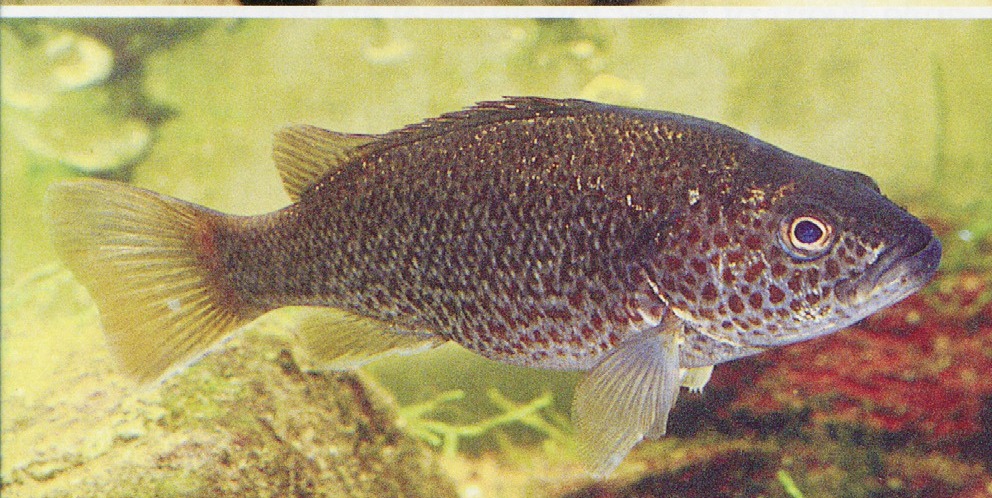
The most widespread of all Australia’s freshwater grunters, Leiopotherapon unicolor also goes by Spangled Grunter, Jewish Perch and Bobby (the last for the way it bobs an angler’s float while picking at bait). A typical small perch, greyish with a silver belly and a pattern of rusty bronze spots, it grows exceptionally to 25 cm (0.5 kg) but is generally caught around 15 cm; sexes look alike apart from differences in the urogenital papilla when in breeding condition. Like other grunters it can emit an audible grunt from its swim bladder when caught, the source of the family’s common name.
Distribution & Habitat
Leiopotherapon unicolor occupies the whole northern two-thirds of the Australian continent and virtually every type of water and substrate along the way — bore drains, dams, billabongs and natural streams alike. It is remarkably tolerant, recorded from 5–44 °C and pH 4.0–8.6, in salinities up to full seawater, and the literature holds genuinely strange accounts of the species surviving in near-boiling artesian bore water, apparent aestivation, and even “raining fish” — probably individuals swept up by willy-willies and dropped some distance away. Usually found in small schools near overhangs or snags, it often shares water with other grunters such as the Banded Grunter and Sooty Grunter.
Keeping & Caring
Although reasonably attractive in a subtle way, Leiopotherapon unicolor is not often kept in home aquaria, but is commonly sought for farm ponds and dams and so is often available through professional aquaculturists. A standard 60 cm tank suits an individual; groups need more room. Being quarrelsome and territorial, adequate hiding places such as tree roots and rocks are needed if housed with other large predators such as further grunters, Saratoga or ariid catfish. It feeds voraciously on all carnivorous fare, from live small fish and earthworms to frozen meat mixtures and prepared pellets, but tends not to tolerate plants well near its territory. Given secure covers against jumping, it settles into aquarium life well and lives for several years.
Breeding
One of the few grunters known to spawn readily in ponds, Leiopotherapon unicolor breeds in nature during summer, usually after rain, cued by lengthening days, rising temperatures and higher water levels; group spawning happens in shallows at night over soft substrate. In one documented pond-breeding method, conditioned breeders were held in an above-ground swimming pool about 30 cm deep, then had the water level raised by around 50 cm via a gravity feed from a higher pond — the fish began swimming actively against the resulting current and were soon spawning, though breeders excited by the inflow had to be stopped from jumping out or swimming up the feed pipe. Several thousand non-adhesive eggs may be laid per female on the pond bottom; with no parental care, breeders are removed once spawning is done. Fry hatch within two days and are feeding by day four, growing quickly given ample microorganisms, though cannibalism means regular culling and spreading across rearing ponds is needed to maximise numbers.
Compiled for Home of the Rainbowfish from ANGFA sources: B. Hansen, “The Spangled Perch — Leiopotherapon unicolor”, Fishes of Sahul 8, 1994, pp. 367–368.
References
- Short J.W. (1991) Predatory behaviour of the spangled perch, Leiopotherapon unicolor Gunther, on the river prawn, Macrobrachium australiense Holthius, under laboratory conditions. Fishes of Sahul 7: 300-302.