
Craterocephalus amniculus
Darling Hardyhead
Species Summary
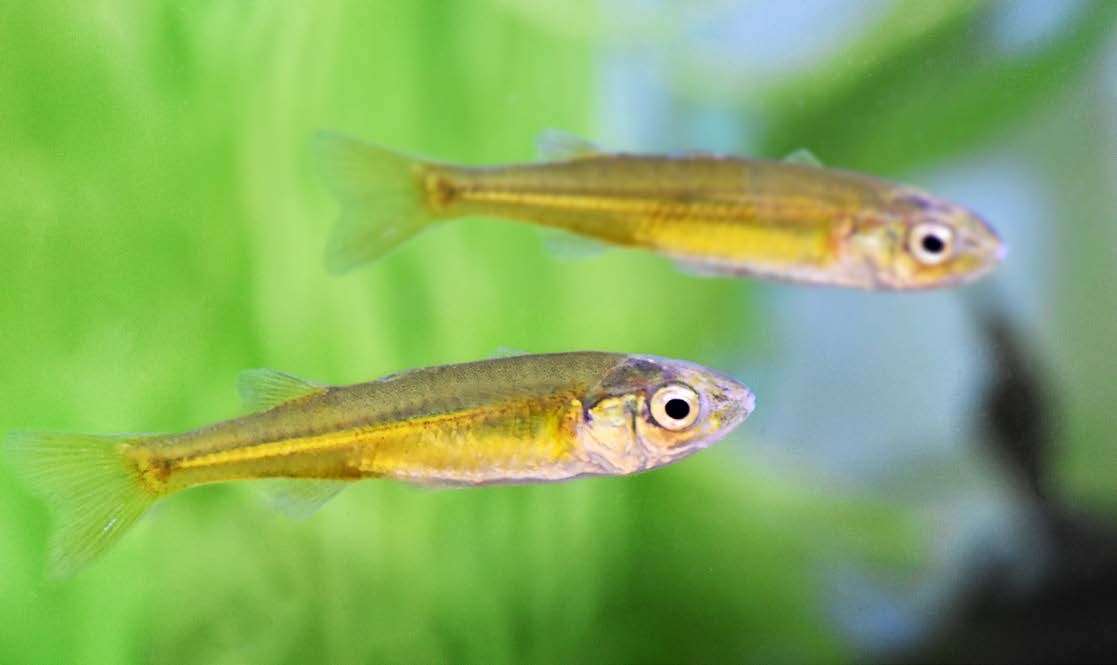
A small, little-studied hardyhead of the northern Murray–Darling Basin, Craterocephalus amniculus was long lumped in with the Lake Eyre Hardyhead (C. eyresii) until a 1990 review split that broad concept into four species: Darling Hardyhead, Murray Hardyhead (C. fluviatilis, from the southern basin), Lake Eyre Hardyhead proper (from around Lakes Eyre, Frome and Torrens) and Finke Hardyhead (C. centralis, from the Finke River). Even after that recognition it attracted little attention, and to date only one dedicated ecological study exists. It reaches a published maximum of 5.5 cm, though individuals to 8 cm have been observed.
Etymology
The genus name Craterocephalus combines the Greek krateros, strong, hard or sturdy, with cephalus, head — most likely a Latin rendering of “hardyhead”, an Australian name already used for silversides by at least 1881, well before the genus itself was formally named in 1912, rather than the other way around. The species name amniculus is Latin for a small creek or stream, describing exactly the kind of habitat this species favours.
Etymology compiled from C. Scharpf (2020), “Fishes of Sahul: An Etymological Survey (Part 3)”, Fishes of Sahul 34(2): 1568–1582, and etyfish.org.
Distribution & Habitat
Darling Hardyhead is known from three northern Murray–Darling river systems — from south to north, the Namoi, Gwydir and Macintyre — along with an isolated, now-probably-lost population in the coastal Hunter River system (none found there since 2003). It mostly lives in tributary creeks, streams and smaller rivers, often well into headwater country up to around 1,030 m elevation but also down to about 200 m, generally over rocky or sandy substrate that turns to finer mud at lower elevations. It tends to occur in simple, low-diversity fish communities alongside Mountain Galaxias, Freshwater Catfish, Western Carp Gudgeon and Southern Purple-Spotted Gudgeon; further downstream in the Namoi and lower Gwydir it shares water with a broader range of species including Unspecked Hardyhead (C. stercusmuscarum fulvus) and Australian Smelt.
Description & Biology
Like many Craterocephalus species, Darling Hardyhead reaches sexual maturity within its first year, and most adults appear not to survive long after spawning — though the presence of larger, 8 cm individuals suggests some live longer, perhaps two or three years, more like a rainbowfish. Spawning occurs in early spring over a comparatively short window for the genus. The diet consists mostly of aquatic insect larvae, microcrustaceans and organic detritus, and aquarium observations suggest the fish feeds largely by sifting through fine sediment.
Genetics & Conservation
Genetic studies have turned up a genuinely surprising pattern: Darling Hardyhead from the lower Gwydir River near Bingara carry a mitochondrial DNA lineage otherwise found only in Murray Hardyhead populations near Lake Alexandrina at the Murray River mouth in South Australia — more than 1,200 km away by river. Shared nuclear alleles between these populations point to genuine historical gene flow between the two species, contact that likely occurred somewhere between 10,000 and 100,000 years ago, though exactly how remains unclear. More detailed genetic work has since identified three distinct genetic groups within Darling Hardyhead itself: a Tenterfield Creek/Dumaresq River population clearly set apart from the rest; a divergent Gwydir River population; and a third group spanning the Namoi, Hunter and upper Macintyre systems.
The species was listed as Vulnerable on the IUCN Red List in 1996, later revised to Least Concern in 2019 — an assessment that turned out to badly underestimate what was coming. Within about nine months, an extreme drought across the New England region, followed by bushfires and blackwater fish kills over the 2019–2020 summer, wiped out or severely reduced a large share of the species’ known populations, to the point it would likely be listed in a considerably higher threat category if reassessed today.
Remarks
In December 2019, with fires burning across New South Wales and creeks disappearing under extreme drought, researchers from the University of Canberra mounted a rescue trip north from Canberra specifically to collect live Darling Hardyhead as an insurance population, since the species wasn’t covered by the state fisheries department’s official threatened-species rescue program at the time. Over six days they found many previously reliable sites completely dry, others reduced to single refuge pools already hit by blackwater fish kills, and recently burned catchments choked with ash. Some fish were eventually found in a single pool on Tenterfield Creek, found only after dark by spotlight; several other known populations, including the entire upper Gwydir River, yielded no fish at all. A few additional populations have been found since to have recovered after the drought, but most populations are yet to be properly resampled to check if the fish ever came back in some creeks or if they were lost.
Compiled for Home of the Rainbowfish from ANGFA sources: K. G. Moy, M. Jones & P. J. Unmack, “Dust, ash, blackwater and mud: what have they done to my Darling Hardyhead?”, Fishes of Sahul 34(2), June 2020, pp. 1550–1567.
References
- Adams M., S.D. Wedderburn, P.J. Unmack, M.P. Hammer and J.B. Johnson (2011) Congeneric assessment demonstrates the linked genetic histories of two threatened fishes (Atherinidae: Craterocephalus) in Australia's Murray-Darling Basin. Conservation Biology 25: 767-776.
- Crowley L.E.L.M. and W. Ivantsoff (1990) A review of species previously identified as Craterocephalus eyresii (Pisces: Atherinidae). Proceedings of the Linnean Society of New South Wales 112: 87-103.
- Majtánová Z., K.G. Moy, P.J. Unmack, P. Ráb and T. Ezaz (2019) Characterization of the karyotype and accumulation of repetitive sequences in Australian Darling hardyhead Craterocephalus amniculus (Atheriniformes, Teleostei). PeerJ 7: e7347.
- Moy K.G., G.G. Wilson and T.L. Ellison (2018) Life history and habitat preference in the Darling hardyhead, Craterocephalus amniculus (Teleostei, Atherinidae) in the northern Murray-Darling Basin, Australia. Austral Ecology 43: 476-487.
- Unmack P.J. and T.E. Dowling (2010) Biogeography of the genus Craterocephalus (Teleostei: Atherinidae) in Australia. Molecular Phylogenetics and Evolution 55: 968-984.