
Craterocephalus marjoriae
Marjorie’s Hardyhead
Species Summary
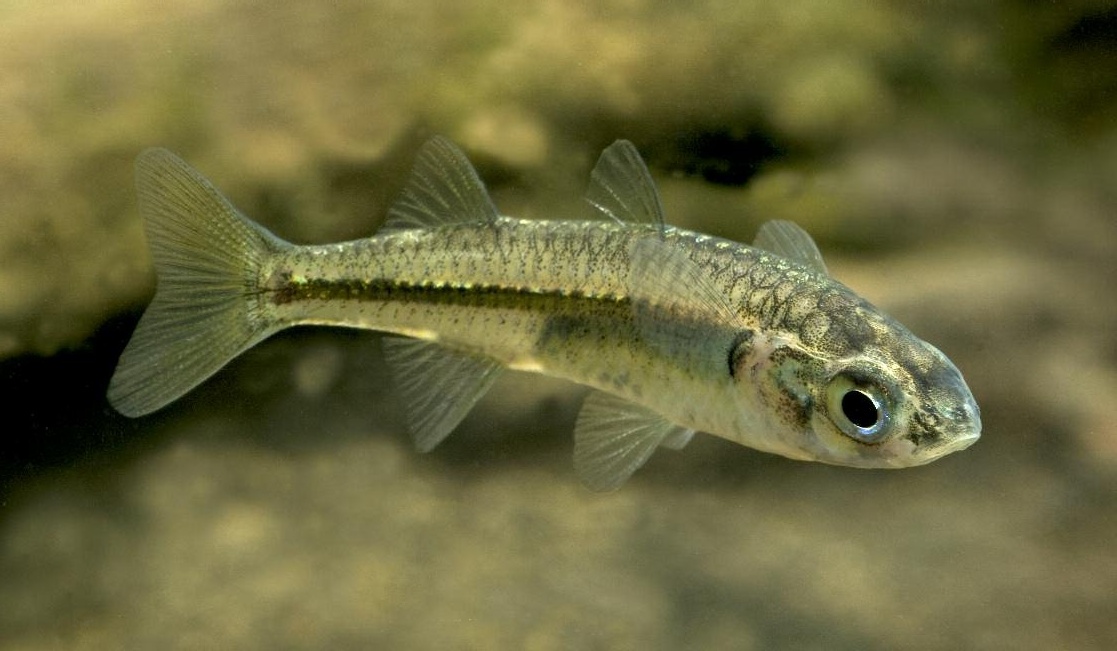
Gilbert Whitley described Craterocephalus marjoriae in 1948 without recording who it was named for; the best available evidence points to his sister, Marjorie Frewer, thanked for her help in a later memorial account of Whitley’s career. Plainer than showier relatives like the Flyspecked Hardyhead, it is nonetheless a genuinely interesting aquarium subject, and in the right stream can be the single most common fish present.
Etymology
Whitley never identified who he named this species for, but Marjorie Frewer, one of his sisters, remains the leading candidate. It would not have been a one-off gesture: in 1951 Whitley named another silverside — now considered a synonym of a different species — after Vera, another of his sisters.
Etymology compiled from C. Scharpf (2020), “Fishes of Sahul: An Etymological Survey (Part 3)”, Fishes of Sahul 34(2): 1568–1582, and etyfish.org.
Distribution & Habitat
Craterocephalus marjoriae has a patchy distribution through coastal drainages of north-eastern New South Wales (the Clarence River system) and south-eastern Queensland (the Nerang, Coomera, Albert, Logan, Brisbane, Mary and Burnett Rivers), generally favouring smaller mid- to upper-tributary streams over the larger river channels or small independent coastal creeks. It is common and widespread through the Mary and upper Brisbane systems, harder to find in the Nerang, Coomera and Burnett systems, and in parts of the Clarence system — the Boyd River, upper Mann River, Nymboida River around Dalmorton and lower Chandlers Creek — can be the most abundant fish species present wherever depth and substrate suit it. Older records from the Pine and Noosa systems are now considered misidentifications. It favours shallow water under 60 cm deep with coarse sand, gravel or cobble substrate and moderate flow, schooling in pools or side-channels among vegetation, and is generally absent where the bed is mostly large rock or fine sediment.
Keeping & Caring
Marjorie’s Hardyhead is rarely kept by hobbyists, partly due to its plain silver colouration and partly because it is simply not available in the aquarium trade — anyone wanting to keep it will need to collect their own stock, which, given how common it can be locally, is usually easy to do without denting the wild population. Freshly caught fish travel well in bagged or bucketed water with a little salt added. It settles into aquarium life readily, learning to take flake, granular and frozen foods without much fuss, and does well in a planted tank with good filtration and regular water changes. As a constantly moving bottom-forager it makes a useful clean-up crew alongside other small natives such as blue-eyes, picking over the substrate for scraps and helping keep algae in check, and gets along well with Flyspecked Hardyhead, glassperches, carp gudgeons, Australian Smelt, Pacific Blue-eye and smaller rainbowfishes such as Melanotaenia duboulayi, all species it shares water with in the wild. Given a tendency toward intestinal worm infestation, it may be worth worming newly acquired fish as a precaution. In nature seasonal temperatures range 8.4–31.7 °C, but 15–27 °C suits the aquarium well (it can overwinter outdoors down to about 7 °C), in moderately alkaline water around pH 7.2–8.0 and hardness 100–220 ppm; it stays in best condition in cooler water, since a constant food supply becomes more important as the metabolism speeds up in warmer conditions. Wild lifespan is typically 1–2 years, extending to at least 2.5 years in captivity.
Breeding
Not easy to sex at a glance: gravid females run heavier-bodied, and breeding males can show a heightened gold mid-lateral stripe with fine golden trim along the scale edges near the nape. Maturity is reached at a small size — around 38 mm in females and 39.5 mm in males — and wild spawning has been recorded from late winter through summer, peaking in spring, triggered by rising temperature and day length. Spawning in the aquarium has been observed from sunrise to mid-afternoon: the male swims behind the female nudging her belly, and she deposits eggs on aquatic plants at least 12 cm above the substrate as he fertilises them. Fish over about 40 mm may spawn over 3–5 days, laying a small number of relatively large eggs daily (2–15 eggs, 1.15–1.25 mm once water-hardened); there is no parental care, and eggs are vulnerable to being eaten by the parents themselves or tankmates. Eggs hatch after 6.5–7 days at 25–29 °C. Fry take microscopic foods such as infusoria at first, feeding near the surface before dropping down to feed like the adults at around 1 cm.
Remarks
Watching a school of Marjorie’s Hardyhead comb the substrate for food has been likened to watching a flock of chooks foraging — unshowy, but oddly relaxing to watch, and a nice bit of movement in the lower half of a tank otherwise dominated by surface-oriented fish.
Compiled for Home of the Rainbowfish from ANGFA sources: G. Briggs et al., “Fish in Focus: Marjorie’s Hardyhead Craterocephalus marjoriae”, Fishes of Sahul 31(4), December 2017, pp. 1205–1210; and G. P. Semple, “Marjorie’s Hardyhead, Craterocephalus marjoriae — notes on maintenance, reproduction and early development”, Fishes of Sahul 2(2), 1984, pp. 61–63.
References
- Milton D.A. and A.H. Arthington (1983) Reproduction and growth of Craterocephalus marjoriae and C. stercusmuscarum (Pisces: Atherinidae) in south-eastern Queensland, Australia. Freshwater Biology 13: 589-597.
- Pusey B.J., M.J. Kennard and A.H. Arthington (2004) Freshwater Fishes of North-Eastern Australia. CSIRO Publishing, Victoria.