
Melanotaenia eachamensis
Lake Eacham Rainbowfish
Species Summary
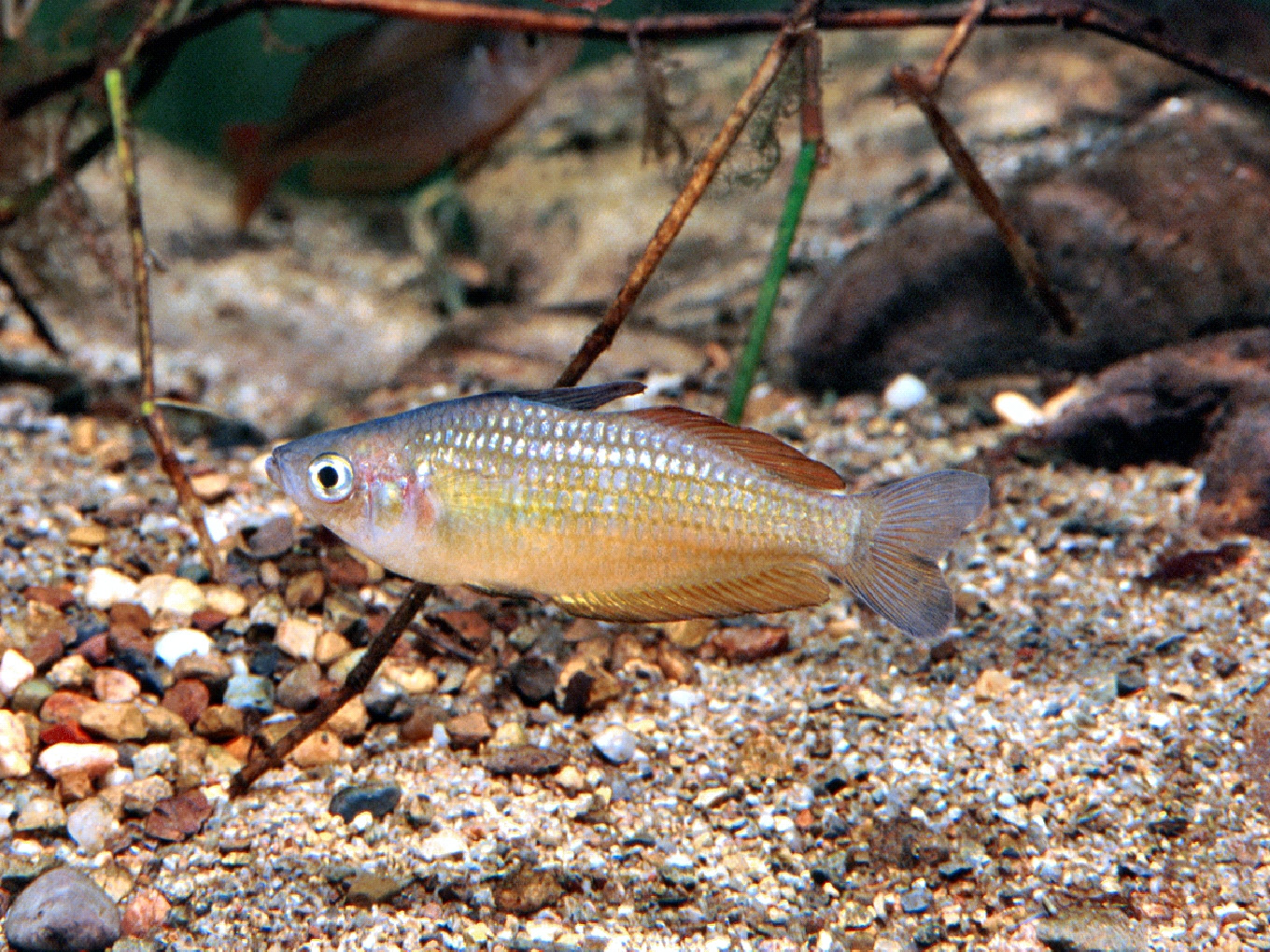
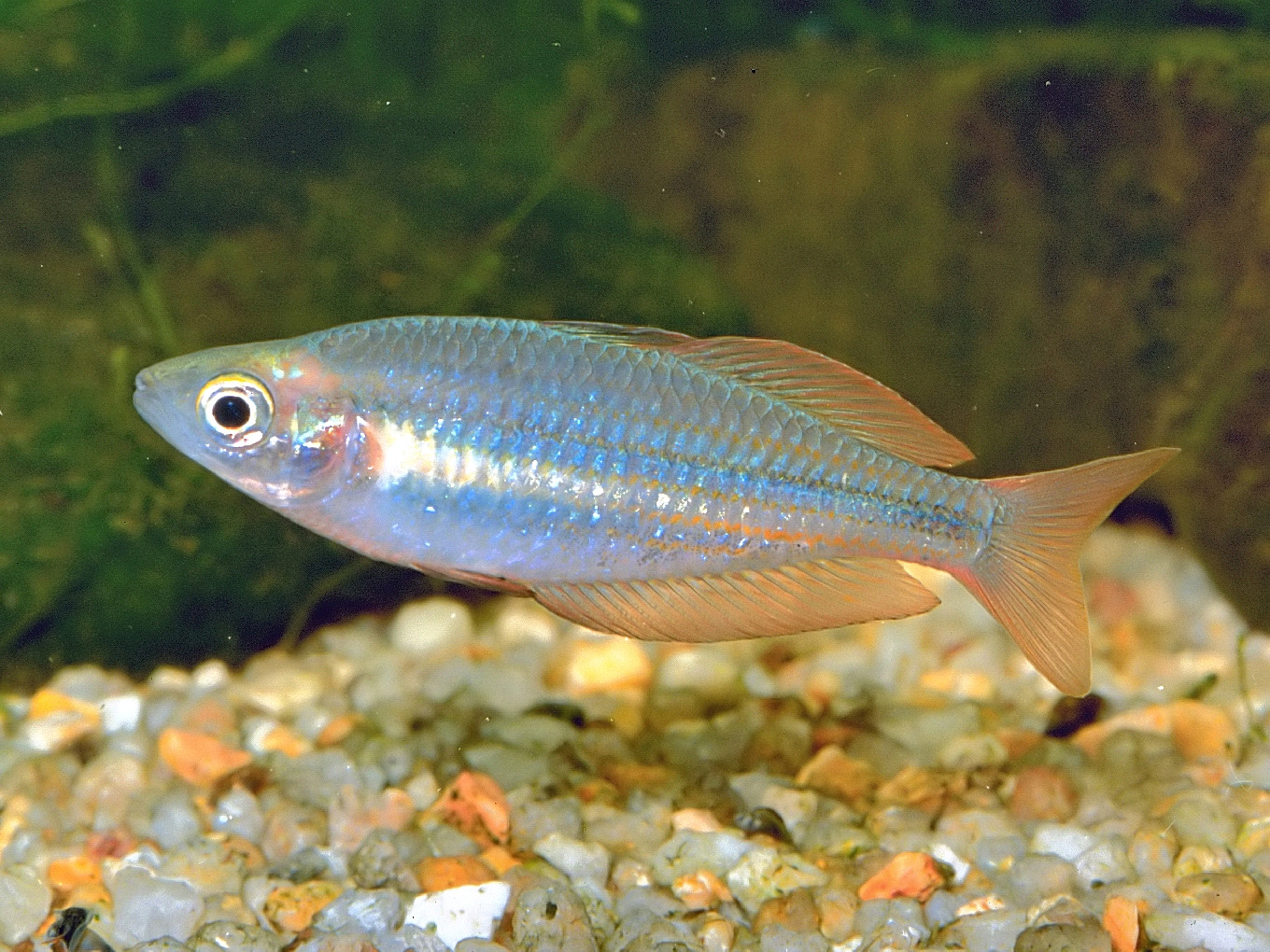
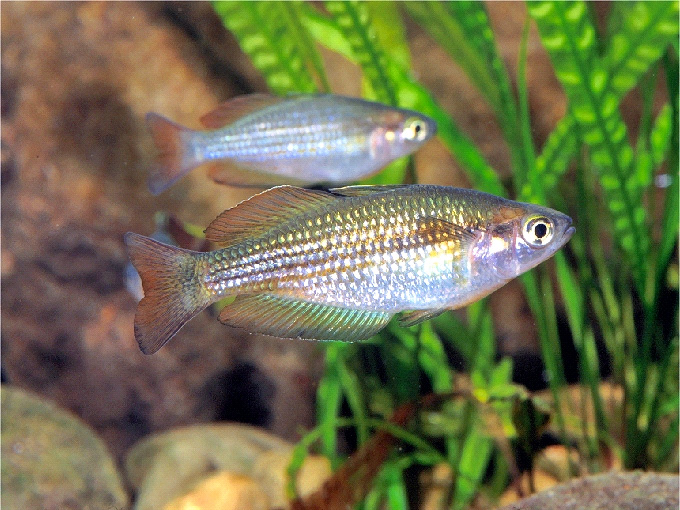
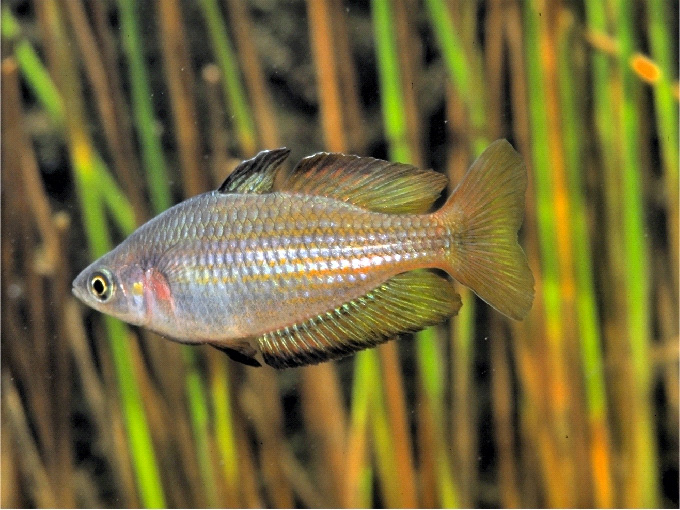
Melanotaenia eachamensis is a small species, slender and compressed but depth increasing with age. Two dorsal fins, very close together, the first much smaller than the second. May reach a maximum size of 8 cm SL, but usually less than 6 cm. Males can be distinguished from females on the basis of differences in colouration and shape of the dorsal, anal and ventral fins. The original males collected from Lake Eacham had an overall bronze body colouration. The first dorsal fin was jet black while the second dorsal and anal fins had a maroon red colouration. Females are rather plain compared with males and have smaller more rounded dorsal and anal fins. Gerald Allen and Norbert Cross described the new species on the basis of differences in colour and body shape from surrounding populations of Melanotaenia splendida splendida.
This species was formally described in 1982. A survey of Lake Eacham in 1978 revealed the existence of a rainbowfish along with a hardyhead (Craterocephalus stercusmuscarum) and a gudgeon (Mogurnda mogurnda). This survey and subsequent collection resulted in the rainbowfish being described as a new species and was thought to be endemic to the lake.
Etymology
The species name eachamensis is a suffix denoting place, referring to Lake Eacham, northern Queensland, the type locality.
Etymology compiled from C. Scharpf (2022), “Fishes of Sahul: An Etymological Survey (Part 5), the rainbowfishes (continued)”, Fishes of Sahul 36(4): 1968–1992, and etyfish.org.
Distribution & Habitat
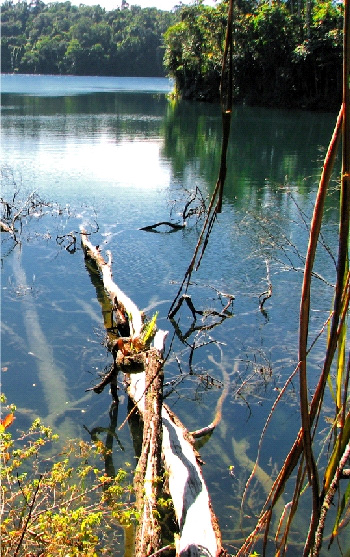
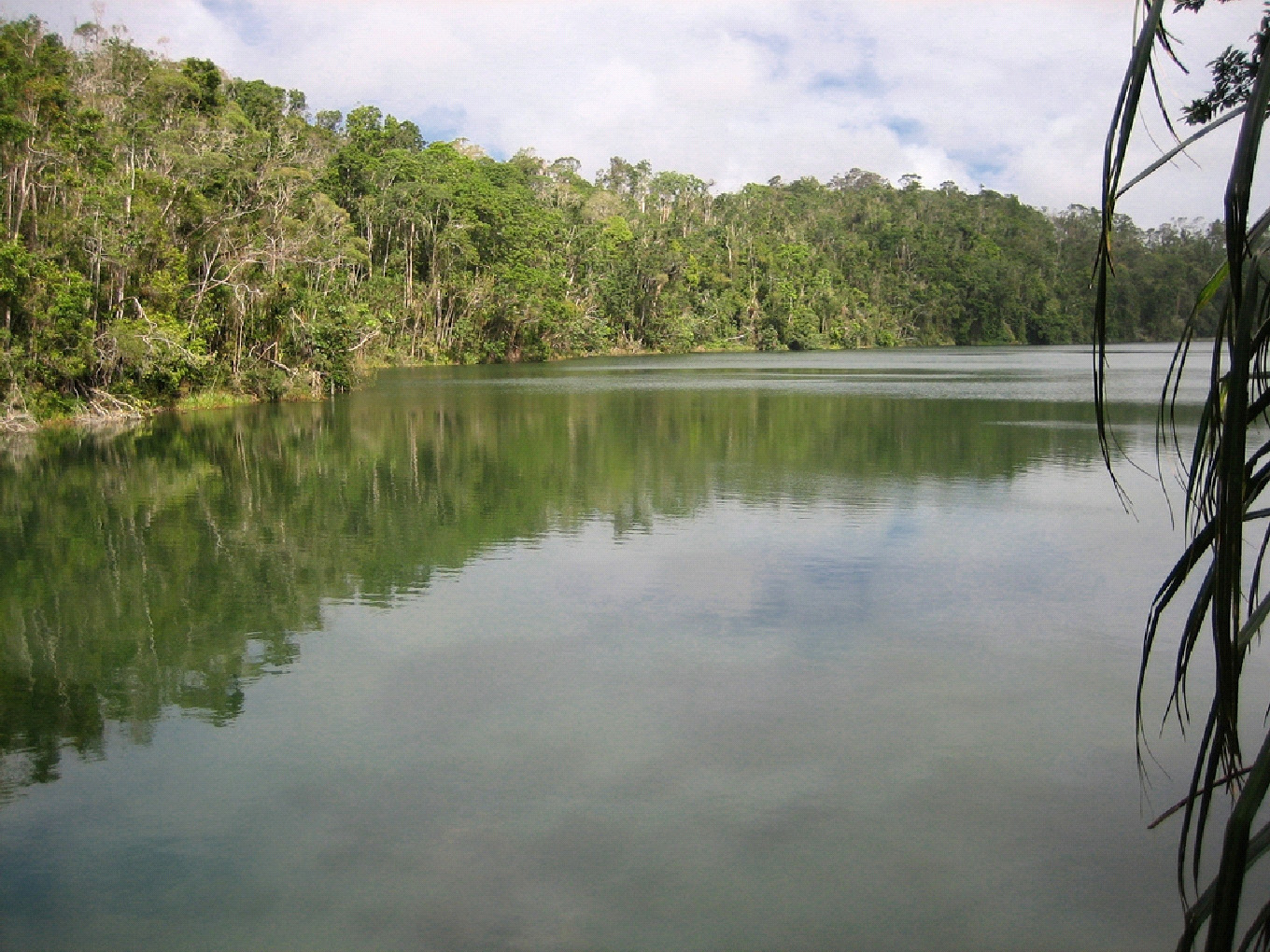
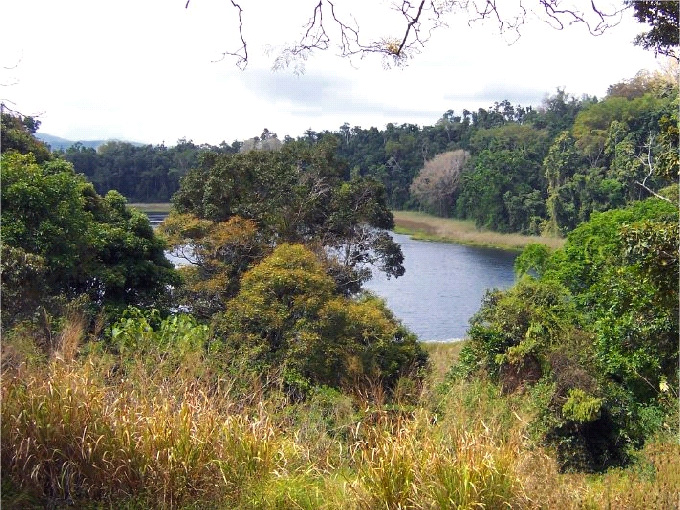
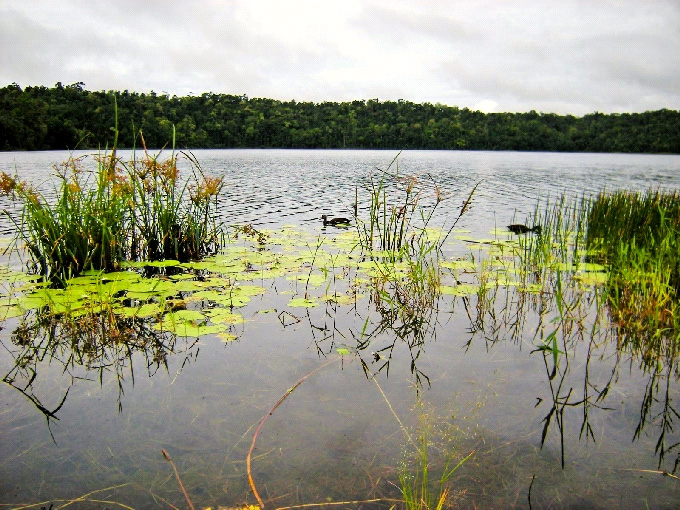
Melanotaenia eachamensis were initially found in Lake Eacham, a 43 ha crater lake located on the Atherton Tablelands about 40 km south-west of the north Queensland town of Cairns. The lake has a northeast-southwest length of around 1.5 km and 1 km wide. Water in the lake is supplied entirely from the catchment area within the crater rim. The water of the lake is neutral with a low level of dissolved salts. The lake is permanent and deep, and fluctuates seasonally with a maximum depth of 65.5 m during the wet season.
Remarks
Melanotaenia eachamensis is without doubt the most wellknown Australian rainbowfish. This is not because it is the most desirable species to keep but because it was believed to be the first Australian freshwater fish species to ever become extinct. It was one of the most widely publicised examples of the impact of translocated fishes.
Melanotaenia eachamensis were initially collected from Lake Eacham, a crater lake located on the Atherton Tablelands about 40 km south-west of Cairns in northern Queensland. The lake has a northeast-southwest length of around 1.5 km and 1 km wide. Water in the lake is supplied entirely from the catchment area within the crater rim. The water of the lake is neutral with a low level of dissolved salts, with water temperatures between 18–28°C. The lake is permanent and deep, and fluctuates seasonally with a maximum depth of 65.5 metres during the wet season.
There are a number of volcanic crater lakes or lake remnants located on the Atherton Tablelands including Lynch’s Crater, Strenekoff’s Crater, Mobo Crater, Bromfield Swamp, Lake Barrine, Lake Eacham and Lake Euramoo. Three of these volcanic lakes (Eacham, Barrine and Euramoo) occur within close proximity of each other. Lake Euramoo has a relatively small catchment area of about 4500 m2 with no inflow or outflow channels. The lake has a water depth averaging around 20 metres in the northern end and 16 metres in the southern end, though there are seasonal fluctuations in water depth of between 2 and 3 metres. Lake Barrine is on average 67 metres deep. It is about 1 km in diameter, has a shoreline of almost 4.5 km and is the largest of the natural volcanic lakes in the area.
The surrounding area of both Lake Eacham and Lake Barrine contain creeks that flow into Tinaroo Dam (Barron River) but are not associated with the lakes themselves. Both of these lakes are very close to the impoundment area of Tinaroo Dam into which Wright Creek and Congoo Creek flow. Lake Barrine has flood-flow connections to Toohey Creek, an upper tributary of the Mulgrave River.
Melanotaenia eachamensis is a small rainbowfish species. They may reach a maximum size of 8 cm SL, but are usually less than 6 cm. They have a slender and compressed body with depth increasing with age. Melanotaenia eachamensis is not an overly attractive species but it does have its own distinctive colour and characteristics. They can be very colourful when kept in a suitable captive environment. The original males collected from Lake Eacham had an overall bronze body colouration. The first dorsal fin was jet black while the second dorsal and anal fins had a maroon red colouration. Males can be distinguished from females on the basis of differences in colouration and shape of the dorsal, anal and ventral fins. Females are rather plain compared with the males and have smaller more rounded dorsal and anal fins.
Gerald Allen collected the Lake Eacham rainbowfish in 1978 and they were described as M. eachamensis in 1982, although it was considered to be closely related to the widespread Melanotaenia splendida. Allen and Cross described the new species on the basis of differences in colour and body shape from surrounding populations of M. splendida. In his original description of M. eachamensis, Allen points out this very close relationship, and makes clear that it is defined as being separate only because it falls outside the range of parameters for M. splendida on several counts.
Small freshwater fish species had been reported from Lake Eacham as early as 1925. The first report of rainbowfishes in Lake Eacham, however, was in 1965 by members of the Townsville Aquarium Society. They were generally considered not to be as brightly coloured as other rainbowfishes from the coastal regions. They were never collected however, (well, not officially anyway), and there is no record of them having being maintained in the hobby in those early years. Allen and Cross’s description of the Lake Eacham rainbowfish helped to stimulate interest in keeping the fish and fortunately a few specimens were collected for the aquarium hobby in 1980 and 1982 before they disappeared from the lake and were still being maintain by some hobbyists, otherwise this fish would have been lost forever.
Surveys of Lake Eacham in 1973, 1974 and 1978 revealed the existence of a rainbowfish along with a hardyhead (Craterocephalus stercusmuscarum) and a gudgeon (Mogurnda mogurnda). Melanotaenia eachamensis were abundant within the lake at the time, but during surveys in 1983, 1984 and 1985 four native fish species (Amniataba percoides, Glossamia aprion, Nematalosa erebi and Toxotes chatareus) were found in the lake. All these fish were presumed to have been translocated to the lake by person or persons unknown.
In 1987, Barlow et al. surveyed the lake but failed to locate any rainbowfishes, although the four introduced species were plentiful. Apart from the complete absence of M. eachamensis, the survey also failed to locate any gudgeons or any specimens of the native crayfish (Cherax cairnsensis), which had been very abundant in the lake in the early 1980’s. Thus, two of the three fishes (and potentially a crayfish as well) naturally occurring in the lake disappeared during the same period that four translocated native fishes established breeding populations there. The decline of the rainbowfishes in the lake must have been very dramatic, as I visited Lake Eacham in early 1984 and large numbers of rainbowfishes were still visible, particularly around the floating pontoon that was accessible from the shore.
As a result of the 1987 survey, M. eachamensis was declared “extinct in the wild” (some remained in captivity) at the 1987 Australian Society for Fish Biology Conference. Thus, within a few years of its formal recognition, the Lake Eacham rainbowfish was regarded as the first freshwater fish in Australia to have become extinct since European settlement.
This extinction was attributed to a harmful interaction with the translocated species, in particular predation by the mouth almighty (Glossamia aprion). Although other rainbowfish species coexist with the translocated species elsewhere in northern Australia, it was assumed that being isolated from predators, M. eachamensis was unable to survive.
In addition to the above translocations, Lates calcarifer were collected there in 1990–1991. Hephaestus fuliginosus and M. splendida have also been translocated there and are still present. Ironically, M. splendida are now present in large numbers and another species, believed to be an exotic has also been observed. All these fish species have been stocked into the lake unofficially. The natural condition of the lake has also declined and sadly it is no longer the pristine lake it once was.
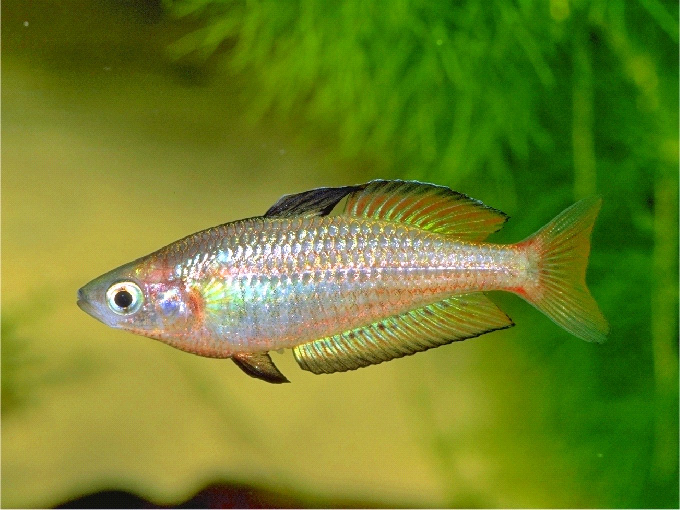
Immediately after the “extinct-in-the-wild” announcement in 1987, members of the Australia New Guinea Fishes Association (ANGFA) at their first national conference in Sydney undertook a survey of members throughout Australia, which revealed the existence of a number of small captive populations of M. eachamensis. These stocks were designated as the ‘Bowman’ and ‘Tappin’ populations. ANGFA instigated a captive-breeding program known as “Project Eachamensis” to stimulate and actively encouraged the establishment of new captive populations. Within two years, numerous ‘Bowman’ and ‘Tappin’ populations were established in the Australian hobby. In addition, eggs were sent to North America and Europe where populations were established, and the species was considered secure in captivity.
Much finger pointing followed as to who was responsible for the demise of the Lake Eacham rainbowfish until public embarrassment got the better of all and government funding was found to investigate the genetic distinctiveness of M. eachamensis and to evaluate the genetic composition of existing captive stocks with a view to re-establishing the rainbowfish back into its natural habitat. Not only was this the first reported extinction of a native fish but Lake Eacham is situated in a National Park under control of the Queensland National Parks administration and also in a World Heritage area under the control of the Wet Tropics Management Authority.
A number of young M. eachamensis were supplied to the Walkamin Research Station (inland from Cairns) to establish a research and breeding stock. A similar number of specimens were supplied to Sydney’s Taronga Park Zoo Aquarium for display, to heighten public awareness, and for breeding stock; however, owing to a mycobacteria disease outbreak this group all died several years later.
At Walkamin Research Station a breeding pond was set aside and within 18 months several thousand rainbow fish had been produced. In November 1989, 3,000 M. eachamensis bred from captive stocks were released into the lake but none could be located in surveys just three months later and throughout 1990. As this reintroduction attempt was unsuccessful, and the removal of the translocated fishes from Lake Eacham were considered unlikely, there were no further attempts to restore M. eachamensis to the lake.
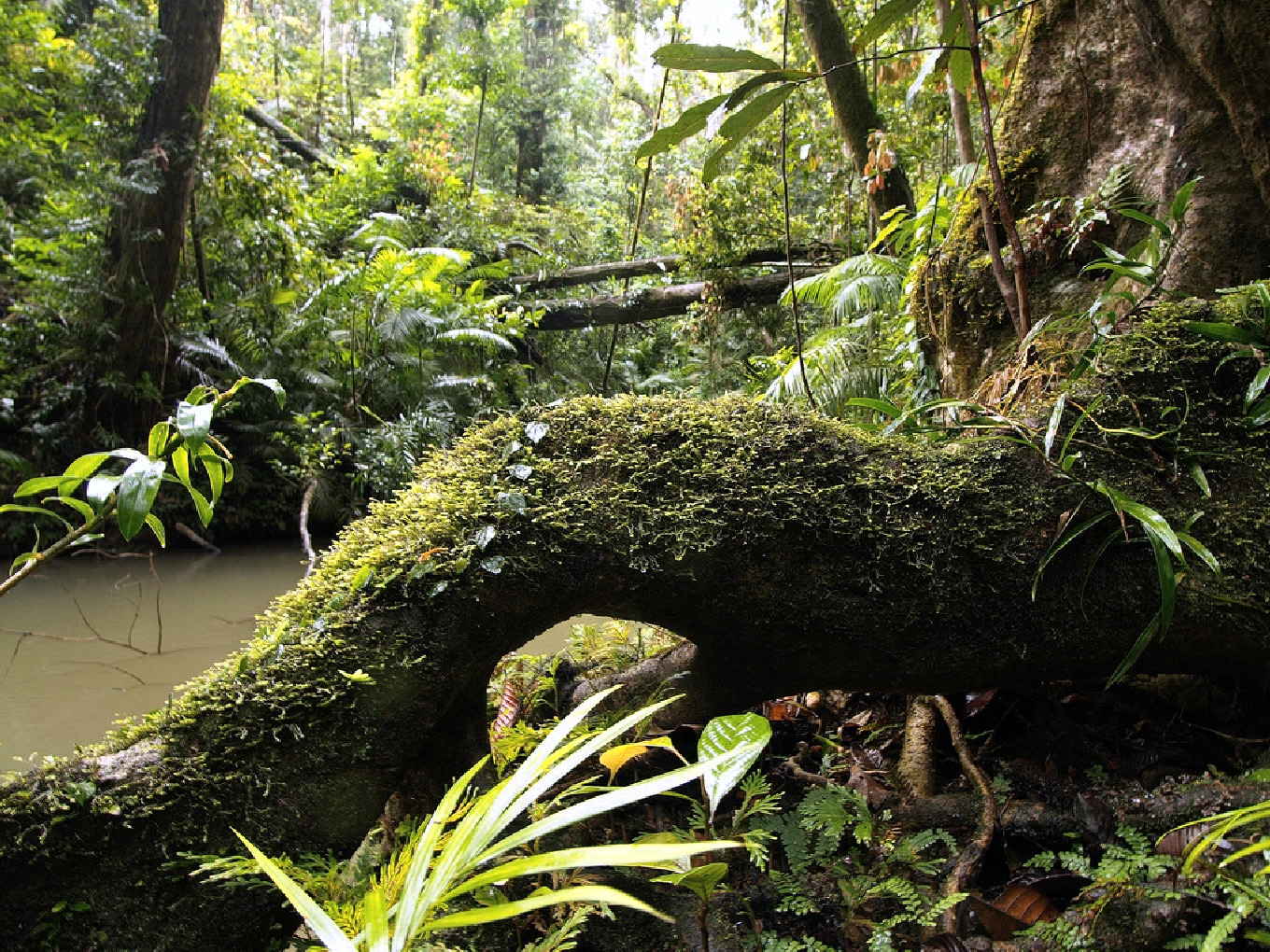
In the meantime, while this fascinating chronicle of events was evolving, ANGFA member, David Liddle was exploring a number of streams on the Atherton Tablelands looking for rainbowfishes and discovered an “eachamensis” look-alike in Dirran Creek (an upland tributary of the North Johnstone River), located about 22 km south of Lake Eacham. Another unusual rainbowfish species was also found in Lake Euramoo, a crater lake situated about 14 km north of Lake Eacham.
In 1991, Crowley and Ivantsoff conducted an electrophoretic analysis of a number of the captive-bred Lake Eacham rainbowfishes and reported that they could not distinguish electrophoretically between M. eachamensis and M. splendida. However, studies by Moritz et al. (1995) reported contrasting conclusions. mtDNA analyses of rainbowfish collections from catchments adjacent to Lake Eacham and captive bred specimens confirmed M. eachamensis as a separate species distinguishable from M. splendida from surrounding areas. Furthermore, it was concluded that both Lake Euramoo and Dirran Creek, and possibly Charappa Creek (an upland tributary of the South Johnstone River) exhibited a ‘pure’ lineage with M. eachamensis. Lake and stream populations were also genetically distinct and these differences were retained in captive bred populations. Following on from there, a flurry of scientific work was undertaken that resulted in a better understanding of this species complex and the distribution of the scattered populations. As well, fascinating behavioural research revealed that the long isolation of some of these populations robbed them of protective predator avoidance responses and this led to accelerated losses and their ultimate rapid extinction by translocated (but still native) predators.
Lake Barrine also contained rainbowfishes of uncertain identity, although these were listed as M. splendida at the time. However, in a brief survey of Lake Barrine in 1991 numerous Glossamia aprion were found, but no rainbowfish. As Lake Barrine has a flood-flow connection to the upper Mulgrave River via Toohey Creek, the rainbowfish in Lake Barrine may have been the common M. splendida or if the waterfalls in the upper Mulgrave River and Toohey Creek prevented colonisation by M. splendida, they may have been another form of rainbowfish. Rainbowfish from Lake Euramoo were analysed as part of the genetic studies of the Lake Eacham rainbowfish (Zhu et al. 1998, McGuigan et al. 2000). However, no specimens from Lake Barrine were included in the study as the researchers could not locate any there. A number of predatory native fishes have also been translocated into Lake Barrine. Incidentally, translocated native predators also now occur in Dirran Creek.
In 1983, I obtained wild-caught specimens of another rainbowfish of uncertain identity from Mobo Crater. Mobo Crater is located between Lake Euramoo and Lake Barrine. This fish was being distributed within the rainbowfish hobby as M. eachamensis (Mobo Crater) as late as 1999, but the original wild-caught fish looked nothing like the Lake Eacham rainbowfish. This form however, now seems to have disappeared from the aquarium hobby in Australia. Limited stocks are available in Europe.
As a representative of ANGFA, I attended a ‘Lake Eacham Rainbowfish Workshop’ in Cairns during September 1995. This workshop was attended by representatives from Walkamin Research Station, Queensland Fisheries Management Authority, University of Queensland, Queensland Department of Environment & Heritage, Queensland Department of Primary Industries, Wet Tropics Management Authority, James Cook University, Sydney’s Taronga Zoo, and the Australia New Guinea Fishes Association. At this workshop, a number of problems had to be taken into account before developing a conservation strategy for M. eachamensis. However, while it was considered desirable that the Lake Eacham Rainbowfish be returned to the lake, the eradication of the translocated fishes from Lake Eacham was considered unlikely to be achievable, economical or sustainable using existing technology. It was also recommended that the conservation status of M. eachamensis be downgraded from “extinct-in-the-wild” to vulnerable under the Nature Conservation Act 1992.
Using an analysis of morphological and meristic characters, Pusey et al. (1997) believed M. eachamensis to be even more widespread, occurring in many upland and several lowland tributaries and reaches of the North and South Johnstone Rivers; in upland tributaries of the Herbert River; upper Tully River and the upper Daintree River. Subsequent genetic work (Zhu et al. 1998, McGuigan 2000, McGuigan et al. 2000, Hurwood and Hughes 2001) suggested that at least some of these occurrences are not M. eachamensis but either unusual variants of M. splendida, M. utcheensis or populations displaying alleles (one member of a pair or series of genes that occupy a specific position on a specific chromosome) of more than one species.
Rainbowfishes from Utchee Creek, a tributary of the South Johnson River, had long been recognised by rainbowfish enthusiasts as being different, although scientifically known as M. splendida. The above mentioned research found that most of the specimens studied from this stream were phenotypically indistinguishable from M. eachamensis. However, additional research indicated that the ‘Utchee Creek’ variety was indeed a distinct species, and they were formally described as Melanotaenia utcheensis, with populations known from Utchee, Fisher, Rankin and Short Creeks in the North and South Johnstone catchments (McGuigan 2001).
Genetic analysis also revealed M. eachamensis occurred in Bromfield Swamp in the North Johnstone River headwaters (McGuigan 2000). Bromfield Swamp occupies a partially breached crater and is very shallow. Bromfield Swamp is an explosion crater, from which water drains from an outlet on the east side. The swamp, which is 500 metres in diameter is approximately 45 metres below the rim of the crater, and was once surrounded by tropical rainforest.
Zhu et al. (1998) also found populations that contained a mixture of alleles from M. eachamensis and M. splendida, in other locations such as an irrigation channel from Tinaroo Dam (Walkamin “eachamensis”), Streets Creek (Kuranda Reds), upper Barron, and other tributaries of the North and South Johnstone Rivers such as Williams Creek and Ithaca Creek. The finding of fish with M. eachamensis alleles in irrigation channels of Tinaroo Dam would probably represent a translocation of these species to the upper Barron River catchment. The unusual distribution of M. eachamensis alleles demonstrated by Zhu et al. (1998) may also suggest that it was translocated to other locations, and raises the possibility that even Lake Eacham may not have been their original habitat.
On the Atherton Tablelands there are apparently at least three species of rainbowfish (M. splendida, M. eachamensis and M. utcheensis) which all live within close proximity of one another. It has been suggested that M. utcheensis and M. eachamensis were the original inhabitants of the region and M. splendida may have invaded relatively recently. It has been suggested that the dispersal of rainbowfishes between the various river systems on the Atherton Tablelands had occurred due to rearrangements of the streams (e.g., river capture) at some stage in the past. The species boundaries of all three species are not well defined and recent evidence suggests that at least some populations have hybridised in the streams of the Cairns-Atherton region.
Rainbowfishes are notoriously easy to hybridise in an aquarium and although there is not a lot of evidence of this in the wild, it may have more to do with the fact that it just hasn’t been recorded, rather than it not actually occurring. Male rainbowfishes in captivity are not very choosy when it comes to spawning with females even if the females are a “different” species.
In general, rainbowfishes evolve into different species and subspecies after becoming geographically isolated from others, adapting to their different environments, and changing over time through the process of natural selection. Geographic populations of rainbowfishes have been isolated from each other for perhaps thousands of years. They have gradually evolved physical changes that reflect that adaptation. However, despite the research that has been undertaken to date, the specific status and distribution of M. eachamensis still remains unclear.
Remarks
I obtained about twelve wild-caught specimens of M. eachamensis in May 1982. These were placed in a single species aquarium, and in September 1982 they were spawned. During 1983–84, I distributed large numbers of tank-raised young adults to interested aquarists as well as some retail and wholesale outlets. However, like many other rainbowfish keepers, in those early years, the advent of the more colourful New Guinea rainbowfish found their way into my aquariums and my stock of M. eachamensis slowly faded away. In 1987, following their reported extinction-in-thewild I once again obtained stock from the original collector, who still had some specimens from the 1982 collection, and was once again spawning this remarkable fish. I continued to maintain a small captive population until February 2000.
Despite the research that has been undertaken to date however, it is my opinion that these “genetic” look-a-likes of M. eachamensis don’t physically look like the original fish collected from Lake Eacham and maintained by myself for many years. While I would agree that the fish from Dirran Creek are very similar, the rest of the so-called “Melanotaenia eachamensis” look nothing like the original Lake Eacham Rainbowfish. I also have doubts about the validity of some of the “M. eachamensis” being maintained in the Australian hobby today. The problem is that many of these “look-a-likes” have and are being distributed and bred under the umbrella name “eachamensis” and present captive stocks do not look like the original fish. I suspect that there are very few genuine descendants of the original “Lake Eacham” rainbowfish still in existence. There may be some original stock in Europe and North America if they haven’t been contaminated with the “look-a-likes” as they have in the Australian hobby.
Another problem with rainbowfishes kept in captivity is that instead of natural selection, selection is done by the aquarist; because only a relatively small number of fish can be kept, the aquarist tends to select for those which grow best and look best under aquarium conditions. In the long term, the fish being kept may be genetically a long way from the original wild fish, and may even look very different. It’s possible that the Lake Eacham form of M. eachamensis is no longer a viable population.
Rainbowfishes occupy such a wide variety of habitats that we couldn’t reasonably expect evolution to have resulted in a neat, uncomplicated, uniform species. I like to think that rainbowfishes exist in nature as unique populations irrespective of the name they carry. Many things in nature cannot be rigidly and accurately categorised and the Lake Eacham population is worthy of our attention and preservation. Whether or not these “look-a-likes” are truly M. eachamensis, emphasis should be placed on retaining the known pure populations of the Lake Eacham Rainbowfish and protecting these from interbreeding with the related species. Therefore, specific names based on the locality where each is found should be used by rainbowfish enthusiasts to identify each form. Where populations need to be identified, they should be sold and distributed by inclusion of a form or population identifier in brackets following the species name e.g., Melanotaenia eachamensis (Dirran Creek).
Despite the above developments, captive breeding programs can and do have an important impact on the conservation of threatened species, and the preservation of their natural habitats. Such programs must, however, be part of a well coordinated approach involving all interested groups. I guess we can all learn a lesson from this and that is not to translocate any fish from one habitat to another and not to release any unwanted aquarium fish into a natural environment. If you have aquarium fish that you no longer require then please return them to the shop where you purchased them or dispose of them humanly.