

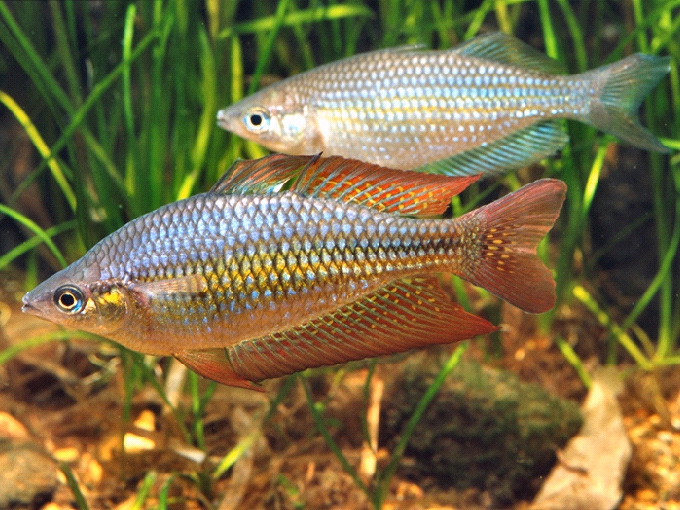
Melanotaenia splendida splendida
Eastern Rainbowfish Nematocentris splendida Peters, 1866 Strabo nigrofasciatus Kner & Steindachner, 1867 Aristeus fitzroyensis Castelnau, 1878 Aristeus rufescens Macleay, 1881 Melanotaenia nigrofasciata Ogilby, 1896 Rhombatractus fitzroyensis Ogilby, 1896 Rhombatractus rufescens Ogilby, 1896 Melanotaenia splendida splendida Allen, 1980
Species Summary
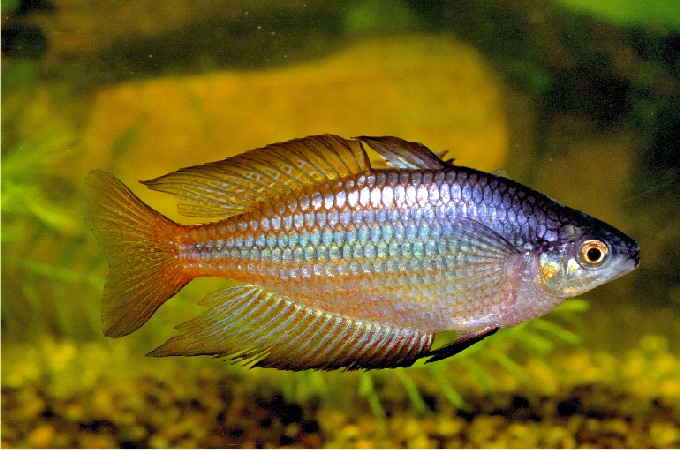
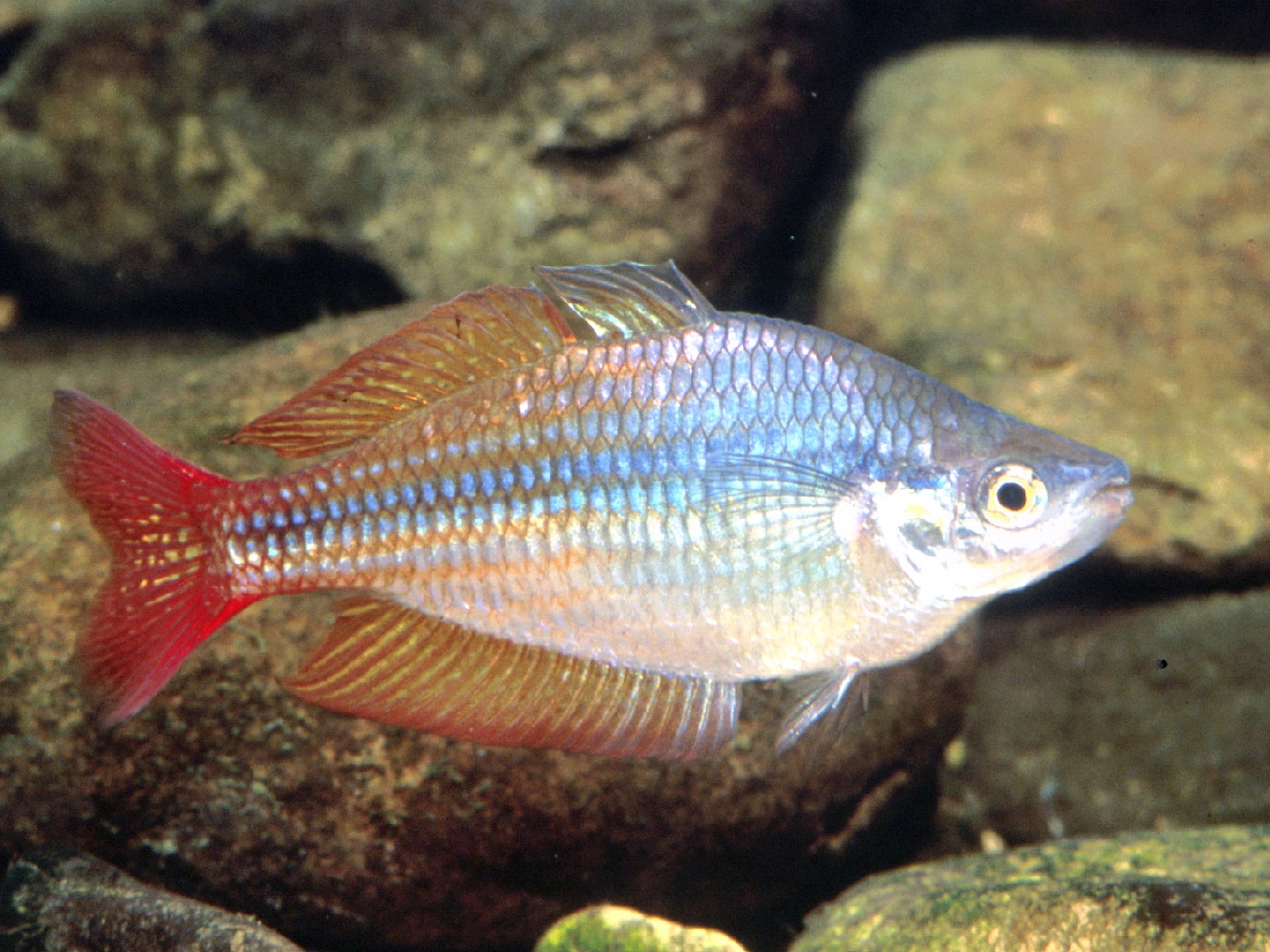
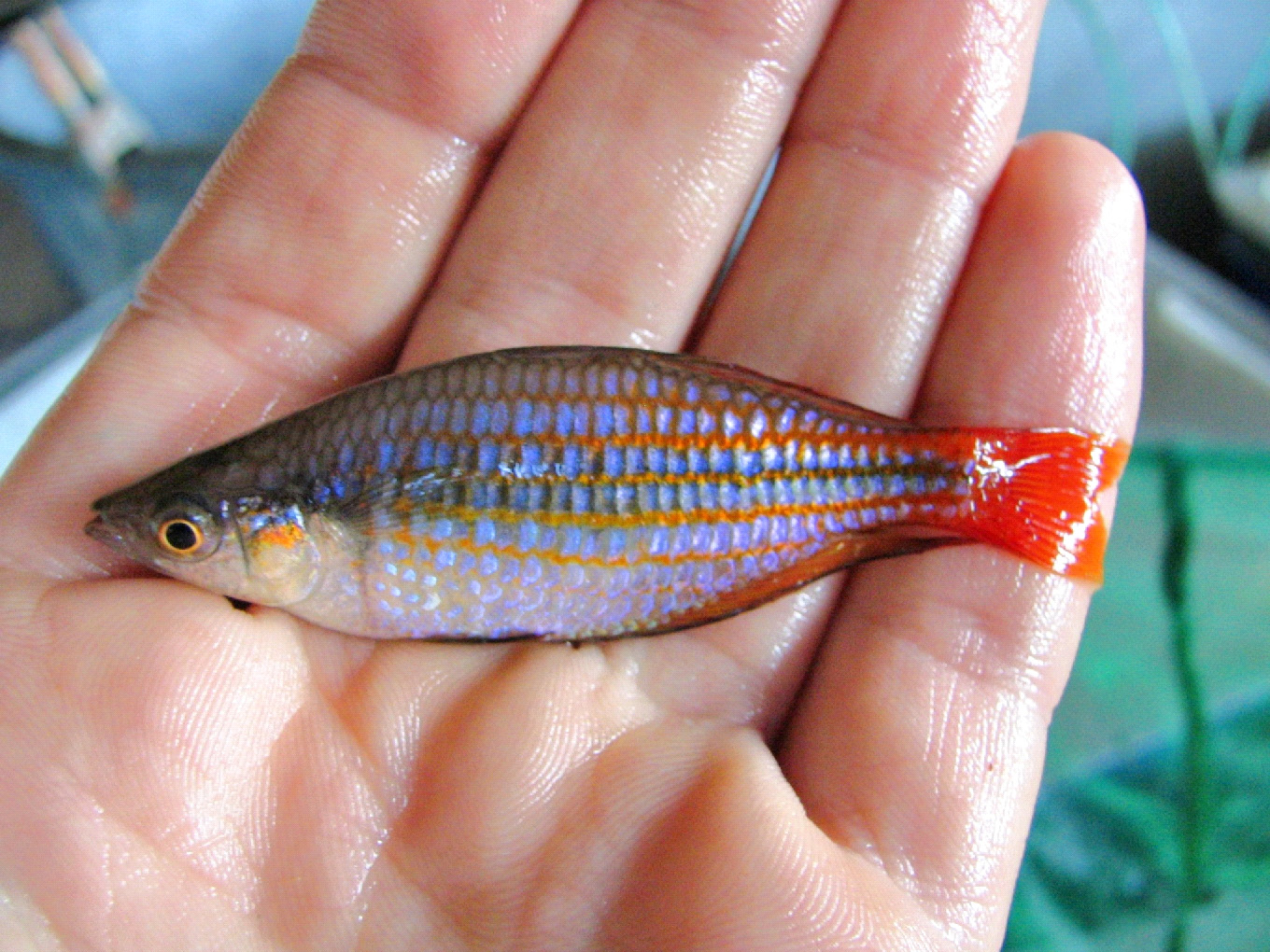
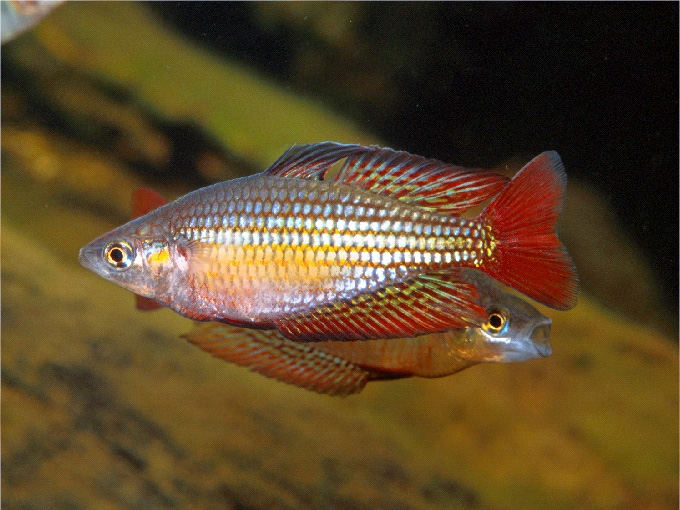
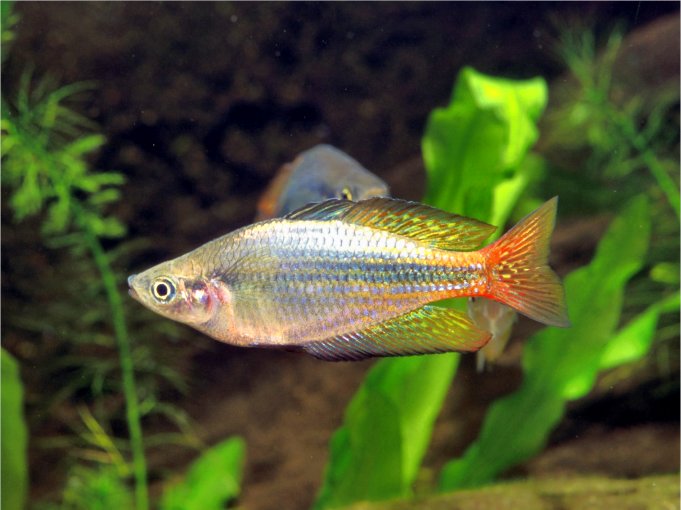
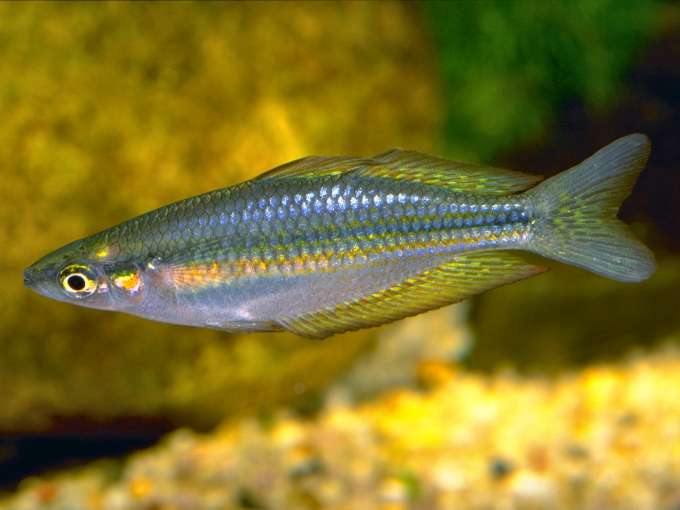
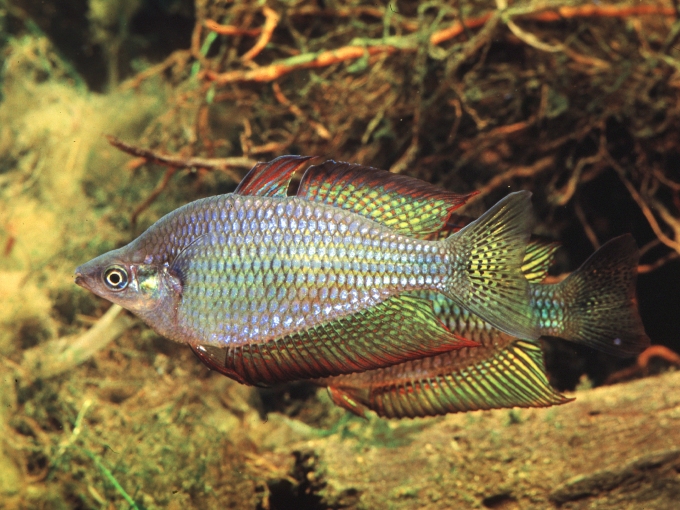
Melanotaenia splendida subsp. splendida were originally collected from the Fitzroy River in central Queensland and scientifically described as Nemacentrus splendida in 1866. The basic body colouration is overall pale bluish-green, olivaceous to yellowish, grading to white on the lower sides. Each horizontal scale row is separated by a narrow orange to reddish stripe. The scales on the side of the body usually have a bluish-green, yellowish-red or purplish sheen. The mid-lateral stripe can be faded black to deep yellowish anteriorly, and bluish-green or brownish-green on the caudal peduncle. Other body stripes can be yellow, green, blue or red. There is usually an orange or yellow spot on the opercula. The dorsal, caudal and anal fins can be red and yellow chequered or orange-yellow with bright red spots on their membranes, with faint black edges. Other forms can have a blue-green body with yellow-green fins, with dark flecks and a dark border. However, colour is extremely variable and will depend upon the mood of the fish, water conditions and diet. Females and juveniles have plain silvery bodies and fins that are either translucent or only faintly coloured compared to the brighter colours of males.
Genetic studies beginning in the mid 1990’s (Zhu et al. 1994) revealed the existence of significant genetic variation between populations of M. s. splendida that occur in the upland streams of north Queensland. In particular, these studies highlighted the degree of isolation of upland populations from the lowland populations. Subsequent genetic research (McGuigan et al. 2000) suggested that at least some of these species are unusual variants of Melanotaenia splendida - or populations displaying genes that have traits of more than one species. As a direct result of some of this research, the Utchee Creek Rainbowfish (Melanotaenia utcheensis) was described as a new species in 2000, with populations known from Utchee, Fisher, Rankin and Short Creeks in the North and South Johnstone River catchments (McGuigan 2001).
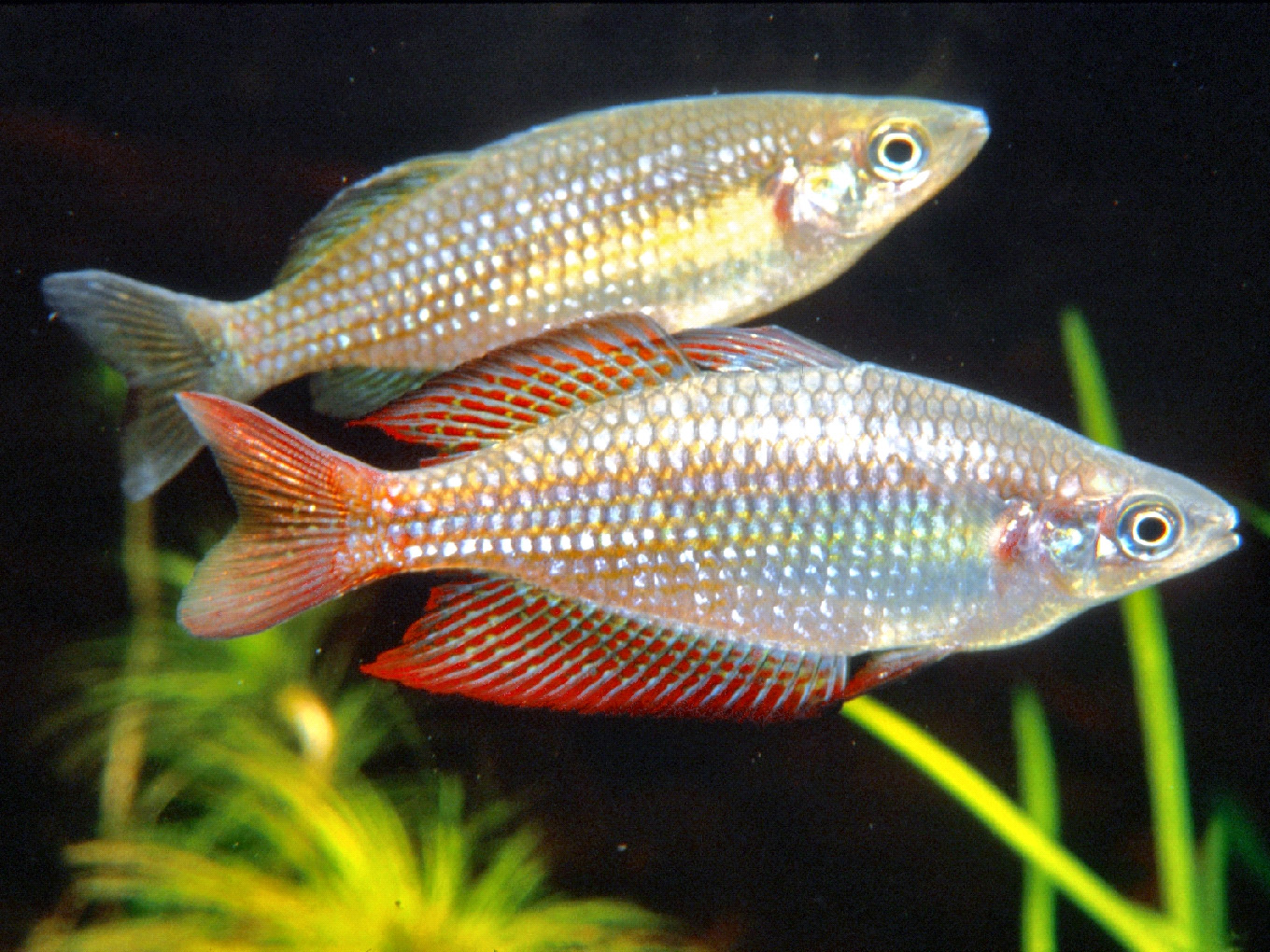
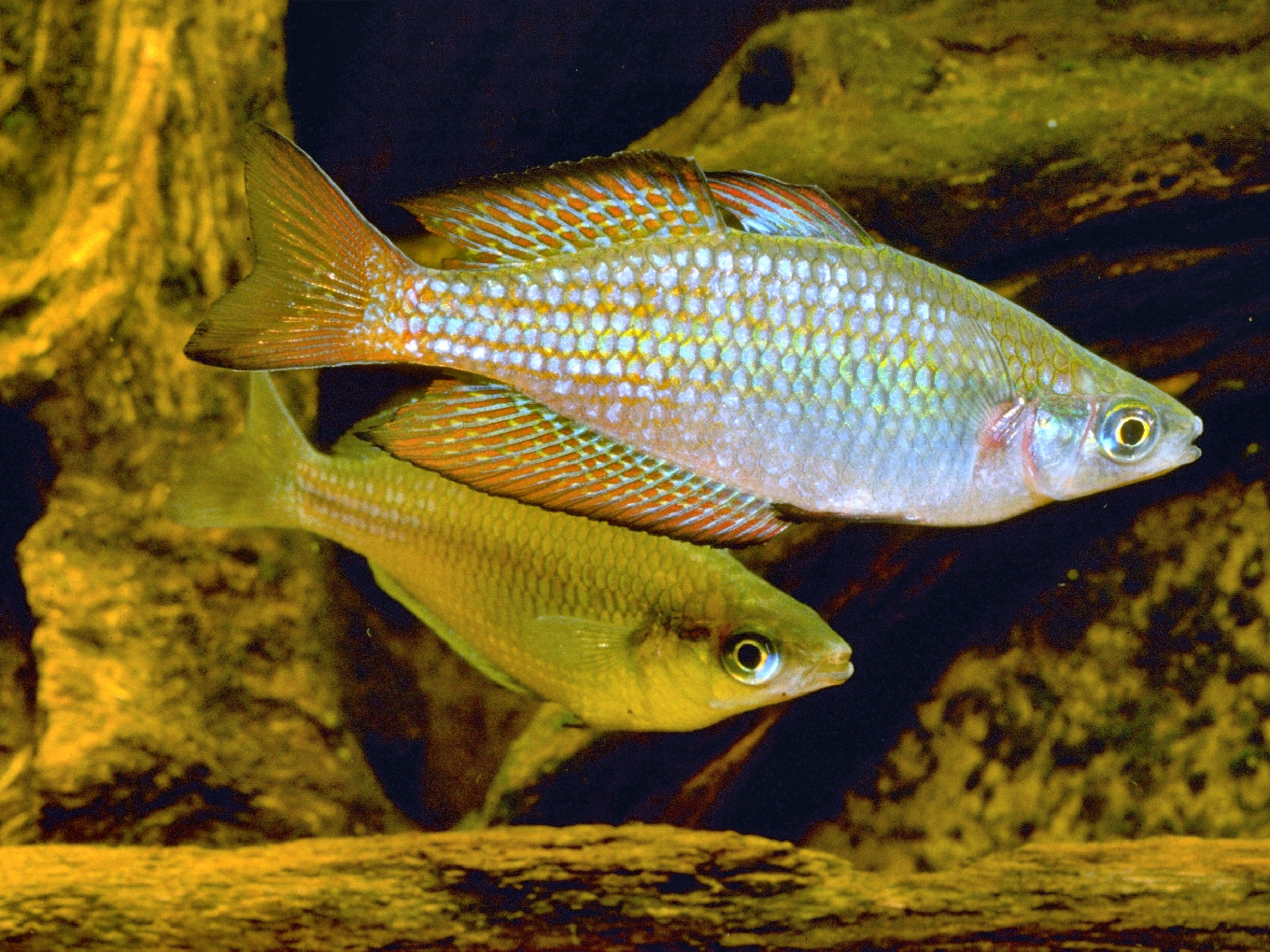
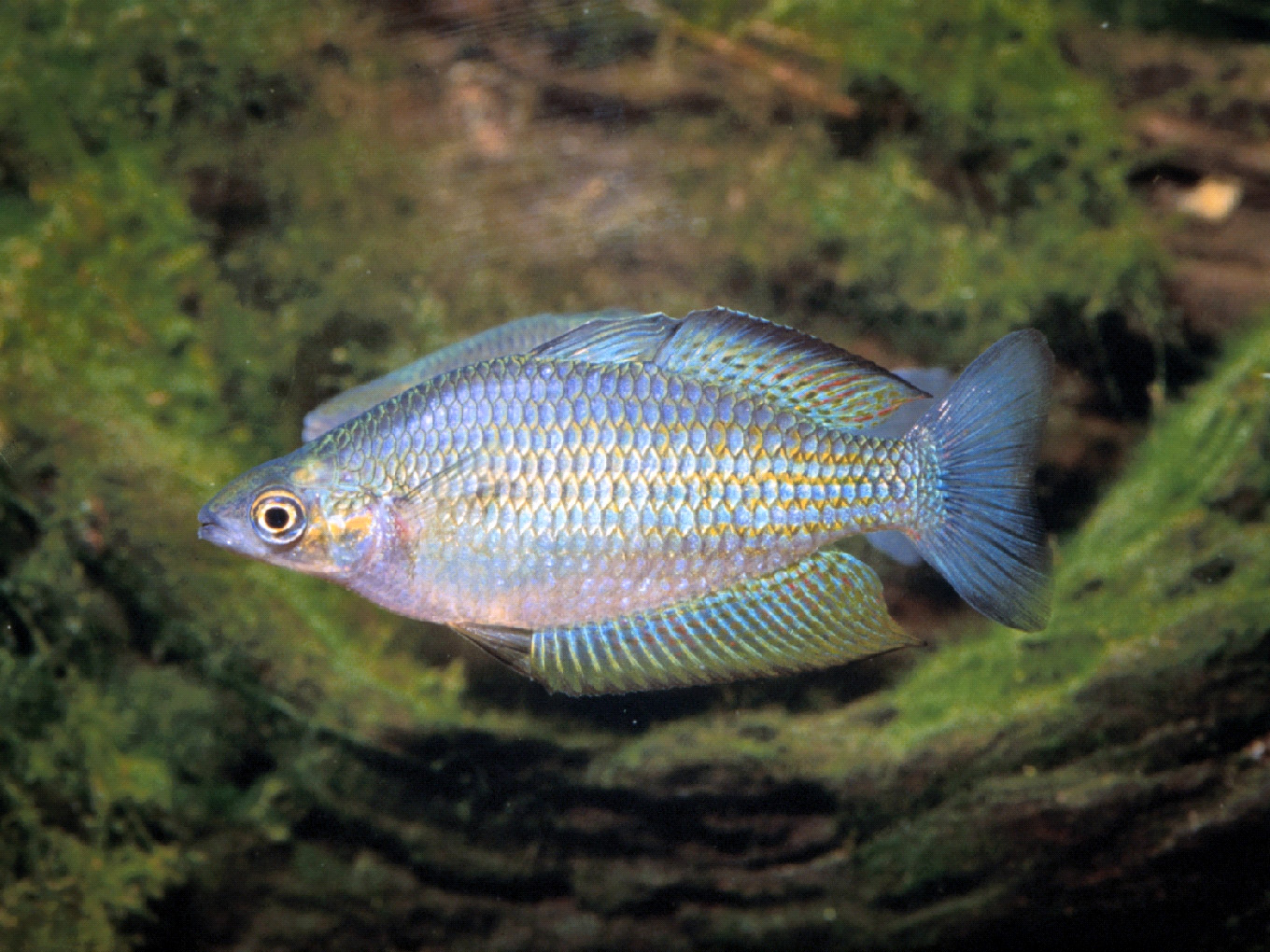
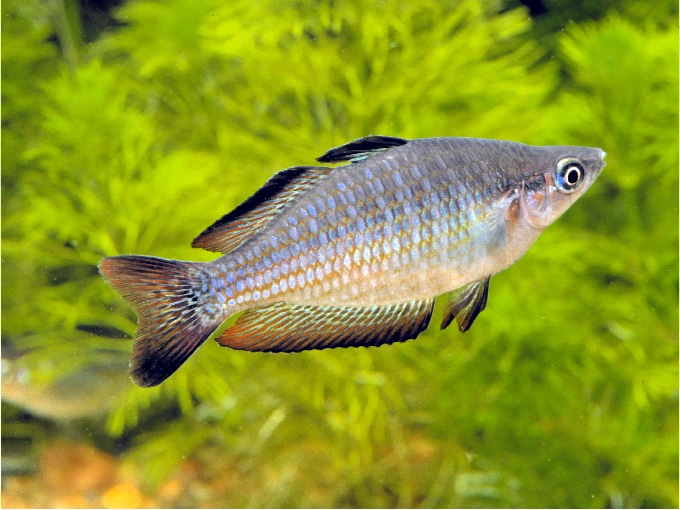
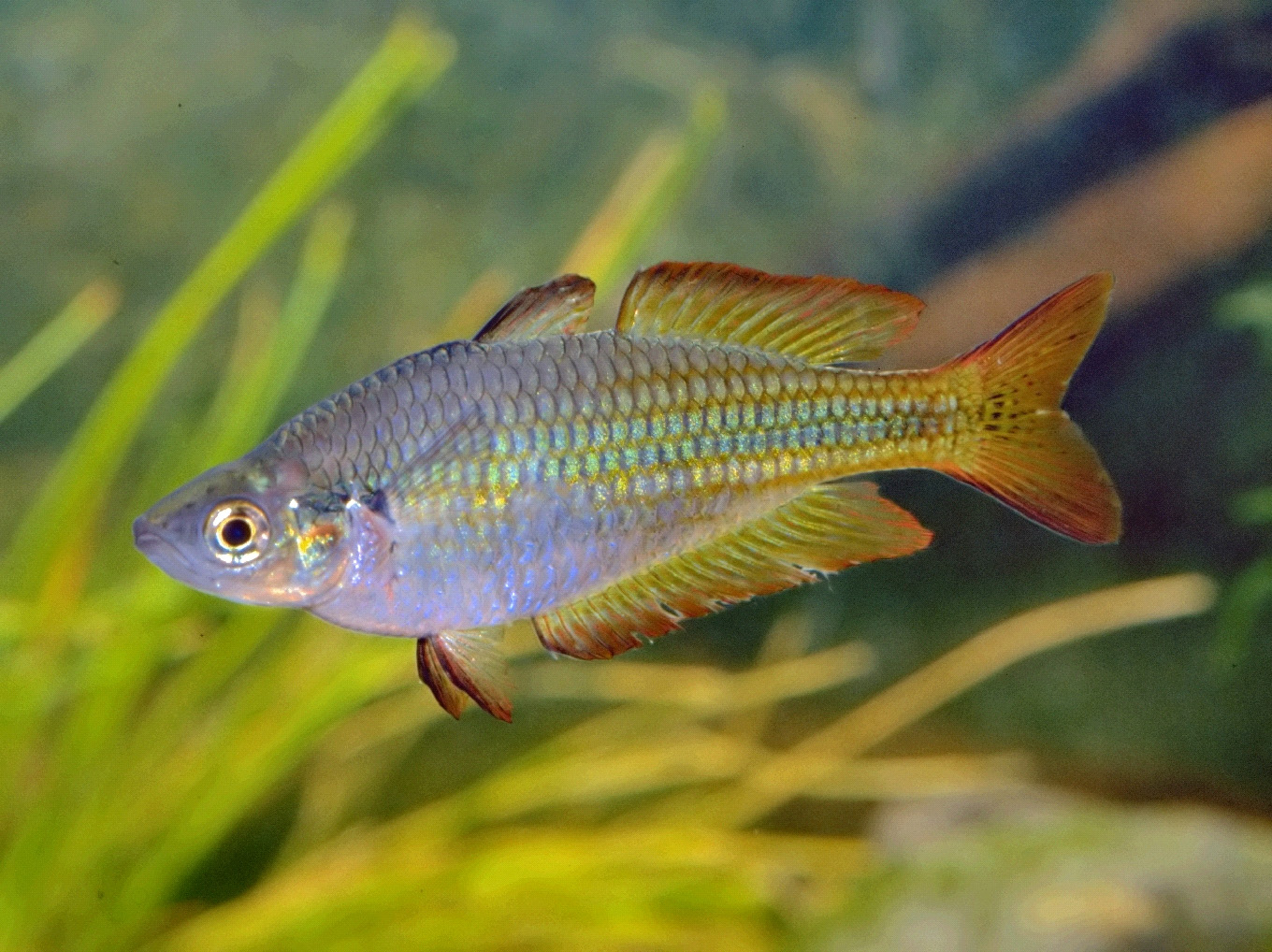
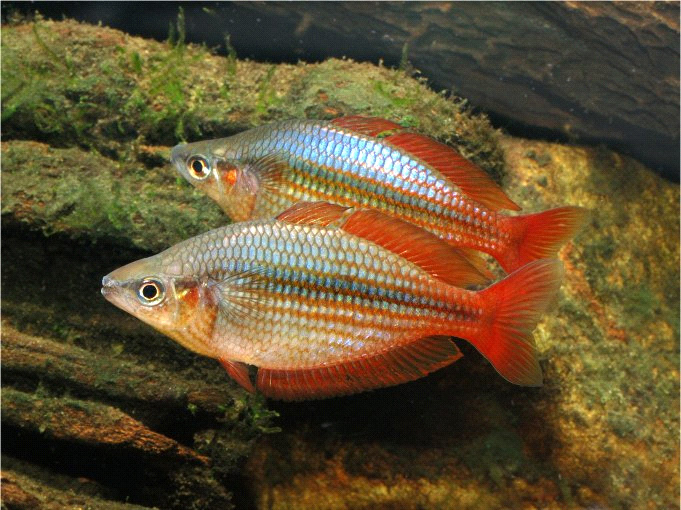
Rainbowfish from upstream sections of the Burdekin River have long been considered to be a distinct species by rainbowfish enthusiasts, and are known in the hobby as the Burdekin Rainbowfish (Running River or “zigzag” form). This form is believed to also be present in other tributaries draining the Paluma Range, notably the Fanning River.
There are other informally recognised forms of “splendida” such as the Davies Creek Rainbowfish, Kuranda Reds and Miskin Creek Rainbowfish. However, despite the research that has been undertaken to date, the specific status and distribution of M. s. splendida still remains unclear.
Etymology
The species name splendida is Latin for splendid, grand or admirable, described as a “beautiful brownish-red” fish with a silver lateral band, yellowish pectoral fins, violet ventral fins with black tips, and the second dorsal and anal fins marked with violet-red longitudinal lines and dark edges.
Etymology compiled from C. Scharpf (2022), “Fishes of Sahul: An Etymological Survey (Part 5), the rainbowfishes (continued)”, Fishes of Sahul 36(4): 1968–1992, and etyfish.org.
Distribution & Habitat
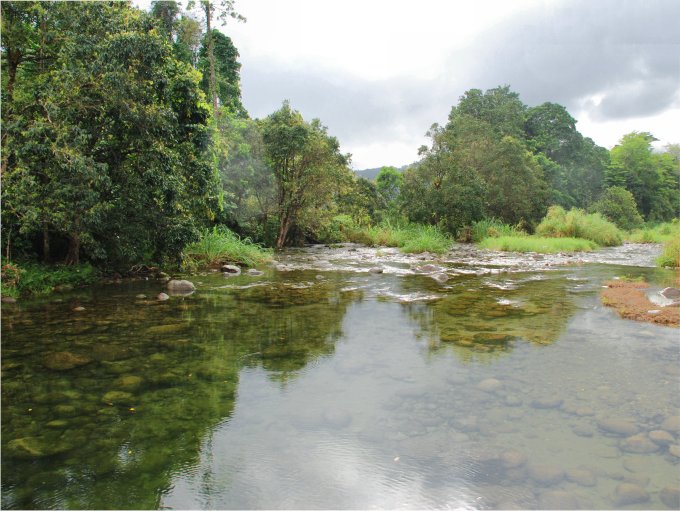
Melanotaenia s. splendida are found in streams east of the Great Dividing Range along the coast of Queensland from Deepwater Creek a small coastal stream located between the cities of Bundaberg and Gladstone extending up the east coast to around the Lockhart and Stewart Rivers on Cape York Peninsula. Scrubby Creek, just south of the Lockhart River, appears to be the northernmost location for this species.
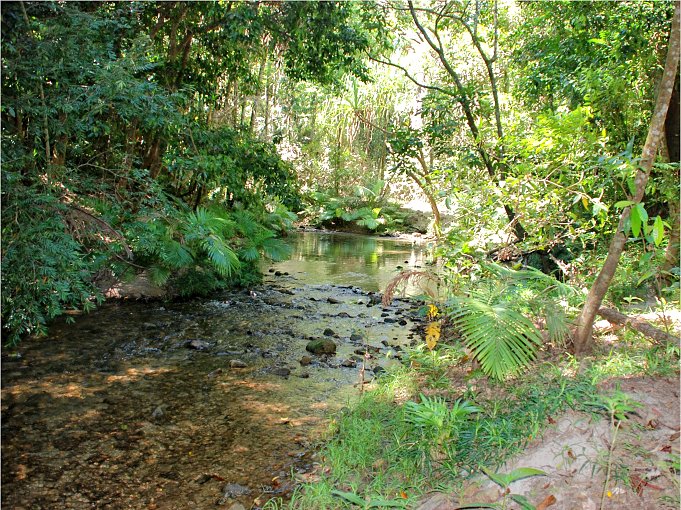
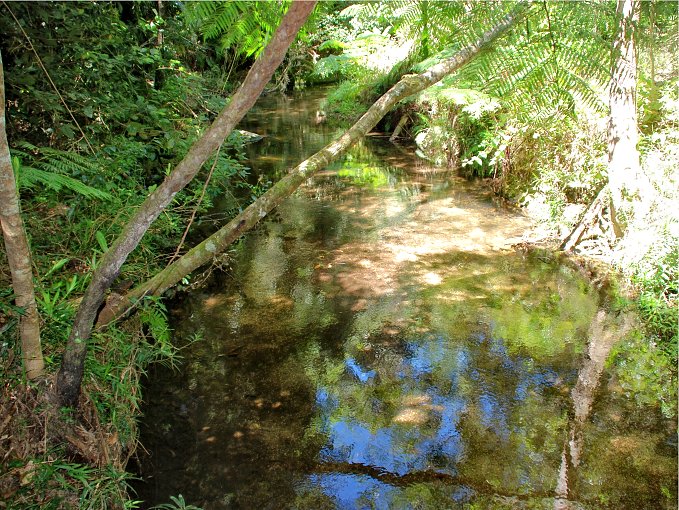
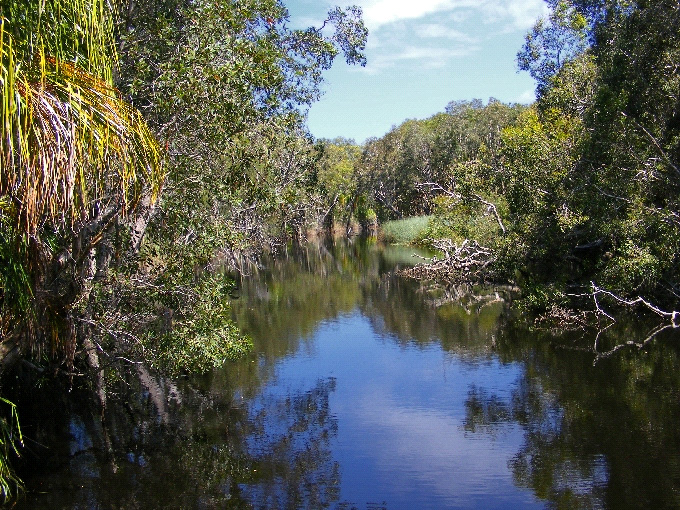
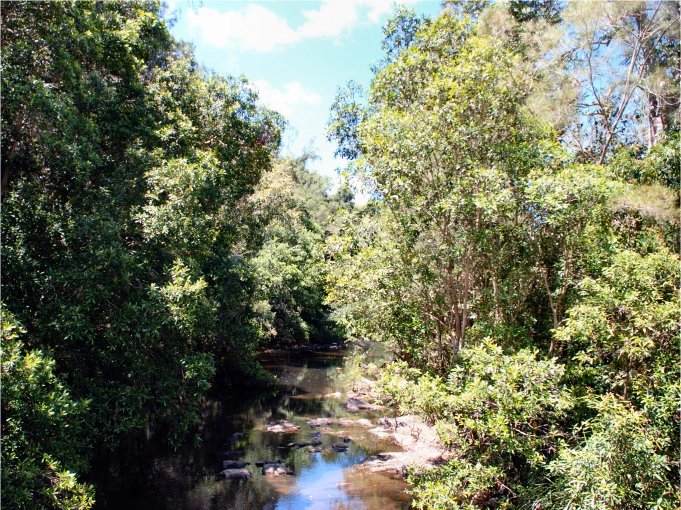
Melanotaenia s. splendida are usually abundant in almost every kind of freshwater habitat, from slow-moving streams, swamps, lakes and clear flowing rivers. They are most abundant in open reaches of zero to low flow containing abundant instream vegetation and cover, and an intact riparian zone. They are less abundant in riffle/rapid habitats.
Abundance varies significantly over the seasons; being greatest after the wet season (which enhances recruitment) but will decline greatly as flow decreases during drought condition.
Melanotaenia s. splendida are frequently found in company with M. maccullochi, M. trifasciata, Cairnsichthys rhombosomoides, and Pseudomugil species. Their natural environment is subjected to seasonal variations with water temperature (12–36°C), pH (5.0–9.2), and hardness levels varying considerably. This wide range of water conditions matches the wide distribution of the species.
Melanotaenia duboulayi inhabits the coastal drainages of the east coast of northern New South Wales from the Macleay River region to Baffle Creek north of the Bundaberg region in Queensland. It may be that these two species live sympatrically in some locations. Natural hybrids of M. splendida and M. duboulayi have been reported from Deepwater and Mullett Creeks.
Remarks
Melanotaenia s. splendida were introduced to the international hobby in an article by Paul V. Loiselle in the March, 1970 edition of “The Aquarium” magazine under the name Nematocentris splendida.
References
- Allen G.R., S.H. Midgley and M. Allen (2002) Field Guide to the Freshwater Fishes of Australia. Western Australian Museum / CSIRO Publishing, Perth, 394 pp.
- Badger A.C. (2004) The effects of nutrition on reproduction in the Eastern Rainbowfish, Melanotaenia splendida splendida. Masters (Research) thesis, James Cook University.
- Beumer J.P. (1979) Reproductive cycles of two Australian freshwater fishes, the spangled perch, Therapon unicolor Gunther, 1895 and the east Queensland rainbowfish Nematocentris splendida Peters 1866. Journal of Fish Biology 15: 111-34.
- Humphrey C., D.W. Klumpp and R.G. Pearson (2003) Early development and growth of the eastern rainbowfish, Melanotaenia splendida splendida (Peters) I. Morphogenesis and ontogeny. Marine and Freshwater Research 54: 17-25.
- Kefford B.J., et al. (2006) Predicting salinity-induced loss of biodiversity. Project No: RMI 12 Final Report to Land and Water Australia.
- McGuigan K., et al. (2000) Phylogenetic relationships and historical biogeography of melanotaeniid fishes in Australia and New Guinea. Marine and Freshwater Research 51: 713-723.
- McGuigan K.L. (2001) An addition to the rainbowfish (Melanotaeniidae) fauna of north Queensland. Memoirs of the Queensland Museum 46: 647-655.
- Peters W. (C.H.) (1866) [original description].
- Zhu D., et al. (1994) Sequence evolution and phylogenetic signal in control-region and cytochrome b sequences of rainbow fishes (Melanotaeniidae). Molecular Biology and Evolution 11: 672-683.