

Melanotaenia kamaka
Kamaka Rainbowfish
Species Summary
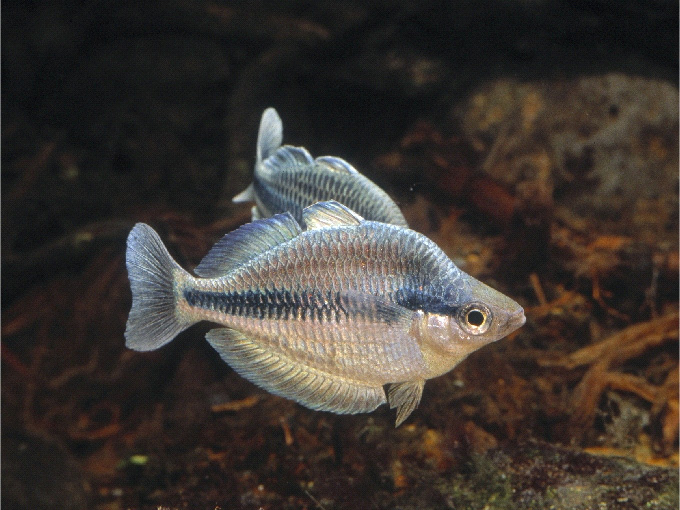
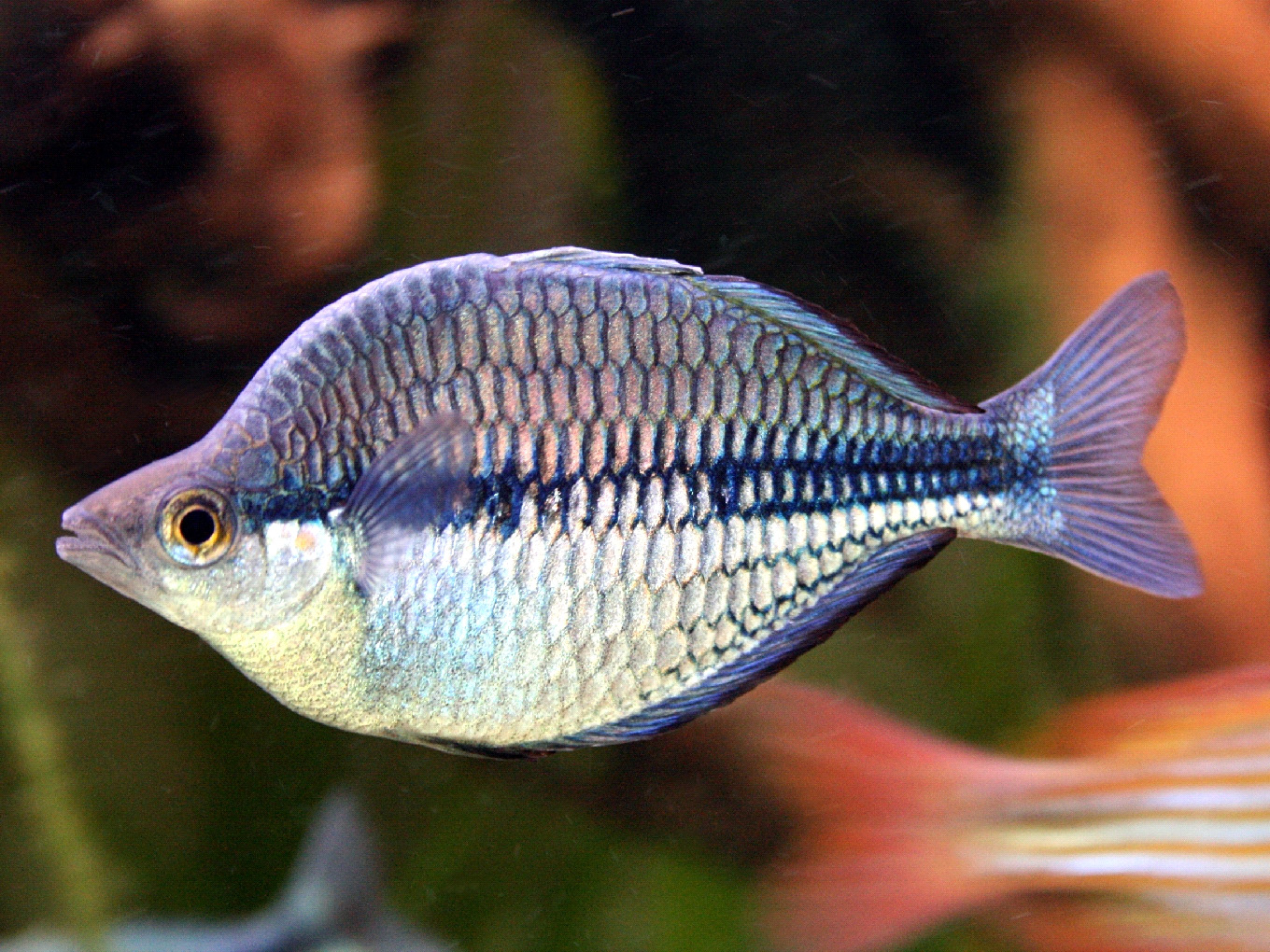
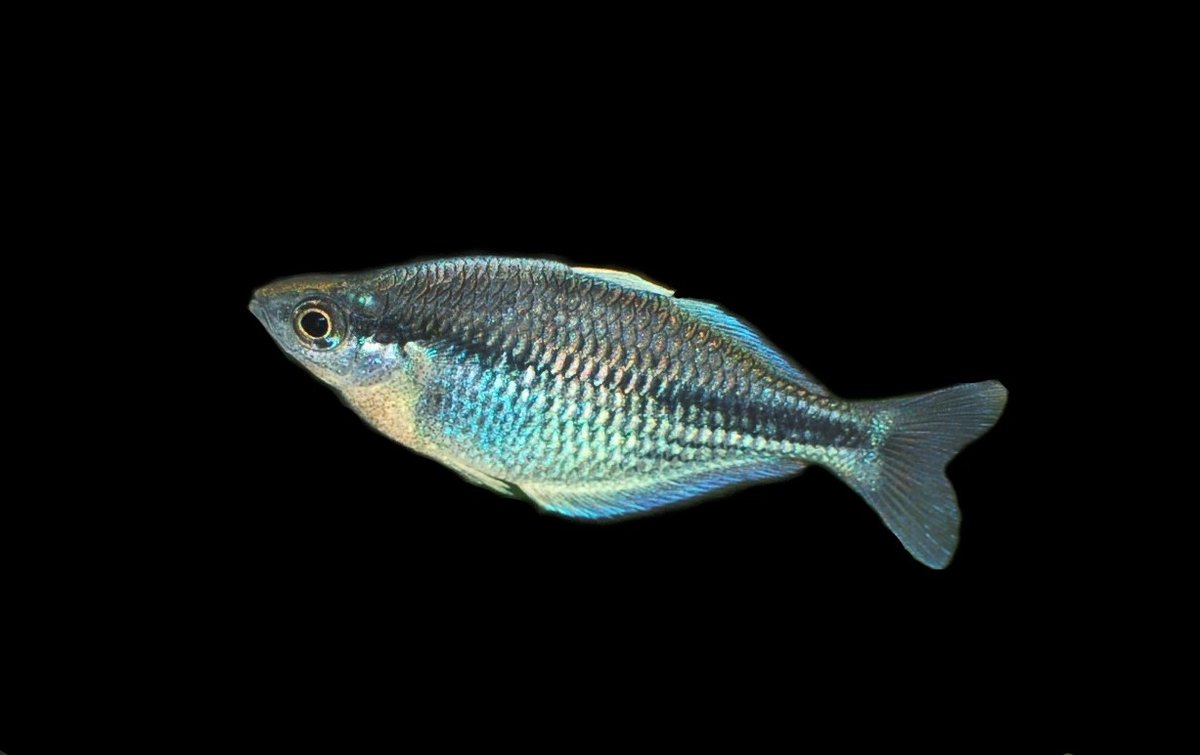
Melanotaenia kamaka have a silver-blue colouration on the upper back, grading to silver white on lower half; upper half of body of males frequently flecked with silver; body scales with narrow dark outline, more intense on two midlateral scale rows; males can expand melanophores of these two rows, forming blue to blackish midlateral stripe on posterior part of body, including caudal peduncle; blue to blackish patch usually present, especially on mature males, between the upper rear corner of eye and region under the pectoral fin; first dorsal, pelvic, and anal fins whitish; second dorsal and caudal fins translucent with bluish suffusion; pectoral fins translucent; female fin colouration generally more diffuse and more translucent compared to males.
Besides the colour differences mentioned above, females often exhibit a diffuse midlateral stripe, about one and a half scales wide and extending from the eye to the base of the caudal fin. Fin shape differences between sexes are not as apparent as in most other members of the genus, but as in most Melanotaenia there is a pronounced difference in body depth. Males increase in body depth with advanced age. They may reach a maximum size of 8 cm, but are usually less than 6 cm.
Etymology
The species name is a local name for Lake Kamakawaiar, Irian Jaya, New Guinea, where it appears to be endemic.
Etymology compiled from C. Scharpf (2022), “Fishes of Sahul: An Etymological Survey (Part 5), the rainbowfishes (continued)”, Fishes of Sahul 36(4): 1968–1992, and etyfish.org.
Distribution & Habitat
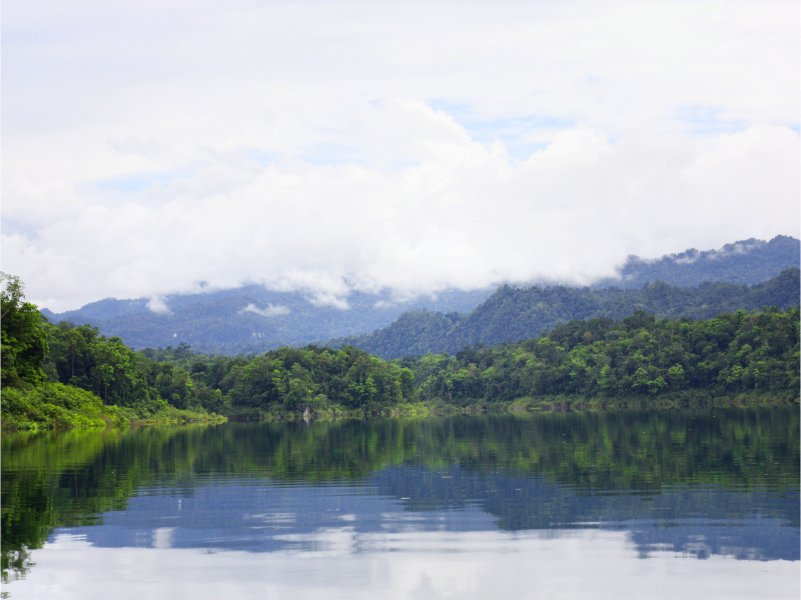
This species is apparently restricted to Lake Kamakawalar, the largest of three main lakes, and several smaller ones just inland from Triton Bay, West Papua. The Triton lakes are situated on the southern coast of West Papua, immediately east of the Bomberai Peninsula and about 50 km due east of the seaport of Kaimana. The lakes are surrounded by high limestone hills and lie just inland from Triton Bay. There are three main lakes: Kamakawalar, Laamora, and Aiwasa. Kamakawalar (usually referred to as Kamaka) lies less then 5 km from the coast and is separated from the second lake, Lakamora, by a distance of about 7 kilometres. The third lake, Aiwasa, lies only a few hundred metres from Laamora. The lakes do not appear to have any outlet streams and drainage is presumably subterranean. The following measurements were recorded in July 1995: water temperature 28.9°C; pH 8.0; and conductivity 220 µS/cm.
Remarks
Heiko Bleher collected this species in June 1995 together with Paola Pierucci and Patrick de Rham. The species was named kamaka, the name used by inhabitants of Triton Bay for Lake Kamakawalar, the type locality.
References
- Allen G.R. & S.J. Renyaan (1996) Three new species of rainbowfishes (Melanotaeniidae) from the Triton Lakes, Irian Jaya, New Guinea. Aqua, Journal of Ichthyology and Aquatic Biology 2 (2): 13-24.