

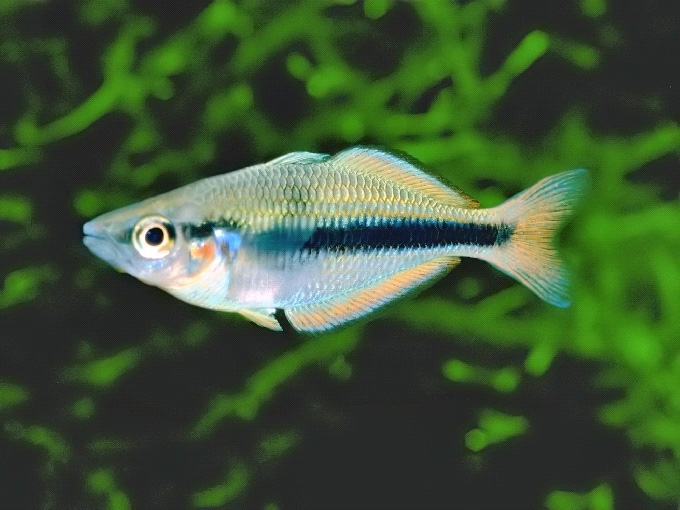
Melanotaenia oktediensis
Oktedi Rainbowfish
Species Summary
Melanotaenia oktediensis were initially collected by C.R. Boyden from the Ok Tedi River at Tabubil, Papua New Guinea during the Cambridge Expedition in 1974. In 1975, Dr. Tyson Roberts collected them from the lower portion of Karamonge Creek, a tributary of the Ok Tedi River during an ichthyological survey of the Fly River and mistakenly identified them as Melanotaenia vanheurni, a species found in the Mamberamo basin, northern New Guinea. After examining specimens in the Zoologisch Museum, Amsterdam and the American Museum of Natural History, New York, Allen and Cross recognised them as a distinct species and named them M. oktediensis after the Ok Tedi River. Melanotaenia oktediensis have a body colouration that is coppery brown above a prominent mid-lateral line and pale mauve to white below. They may reach a maximum size of 12 cm, but usually less than 10 cm.
Etymology
The species name oktediensis is a suffix denoting place, referring to the Ok Tedi River, Fly River system, Papua New Guinea, the type locality.
Etymology compiled from C. Scharpf (2022), “Fishes of Sahul: An Etymological Survey (Part 5), the rainbowfishes (continued)”, Fishes of Sahul 36(4): 1968–1992, and etyfish.org.
Distribution & Habitat
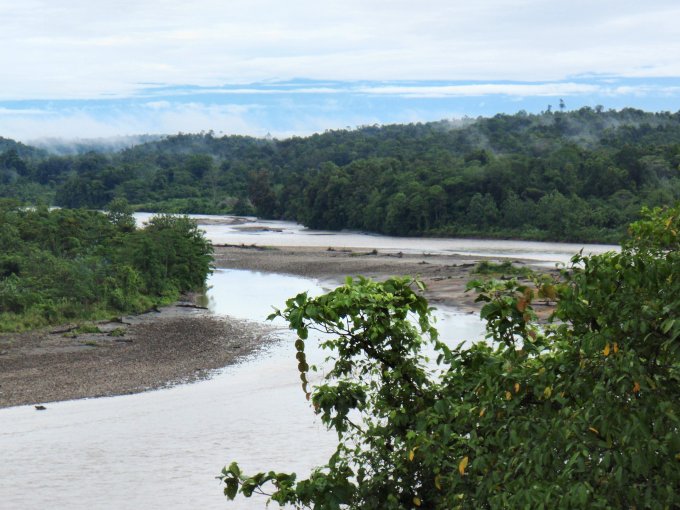
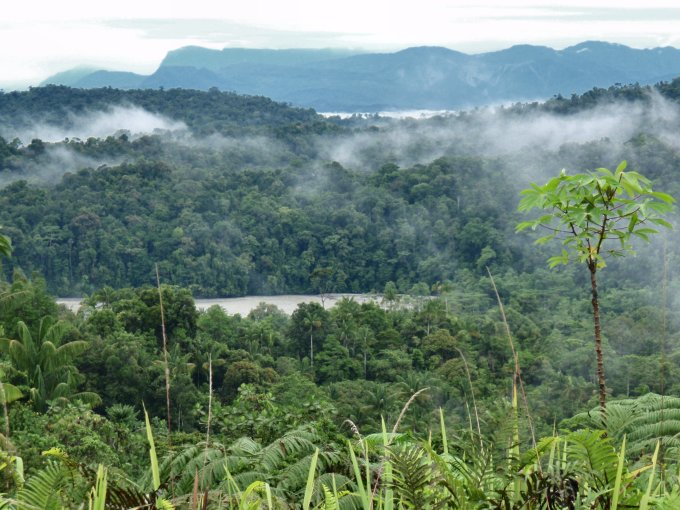
Melanotaenia oktediensis have been found in tributaries of the Ok Tedi River (Ok Menga, Ok Ma, Karamonge Creek), which is one of the main headwater streams of the upper Fly River system. They are rather uncommon in the main river, which is mostly populated by Melanotaenia splendida rubrostriata.
The tributaries of the Ok Tedi River are cool, clear, relatively fast flowing rainforest streams with rocky bottoms. Water conditions reported from this habitat are temperature 17–24° Celsius, pH 7.3–8.7, hardness 20 to 80 ppm and a high dissolved oxygen content of 6.9–10.0 mg/L.
Remarks
Live specimens were introduced to the Australian hobby in 1982 and were spread to Europe and Northern America, but they have never been readily available.
As a result of the mining operations, the riverine system is under significant stress. More than half the fish species formerly resident in the Ok Tedi are no longer there. Of note is the apparent increase in the distribution of Melanotaenia goldiei (trifasciata) in the tributary streams of the lower Ok Tedi, which is in contrast with the reduced southward extent of the related endemic Melanotaenia oktediensis. Melanotaenia oktediensis was only collected at 7 sites in the Ok Tedi above Ningerum during a survey in 2005. This may indicate species replacement within this genus in the Ok Tedi subcatchment. However, tributaries of the Ok Tedi (i.e., Ok Mart, Ok Menga) continued to support a relatively diverse range of species, and continue to provide a refuge area from which species could recolonise the Ok Tedi post mine closure.
References
- Allen G.R. & N.J. Cross (1980) Descriptions of five new rainbowfishes (Melanotaeniidae) from New Guinea. Records of the Western Australian Museum 8(3): 377-396.
- Allen G.R. (1991) Field guide to the freshwater fishes of New Guinea. Christensen Research Institute, Madang, Papua New Guinea.
- Boyden C.R., B.E. Brown, R.F. Drucker and S.J. Tutt (1975) Ok Tedi Environmental Study. Report of the 1974 Cambridge Expedition to the Western District Papua New Guinea.
- Richards S.J. and N. Whitmore eds. (2015) A rapid biodiversity assessment of Papua New Guinea's Hindenburg Wall region. Wildlife Conservation Society Papua New Guinea Program. Goroka, PNG.