
Melanotaenia sahulensis
Sahul Rainbowfish
Species Summary
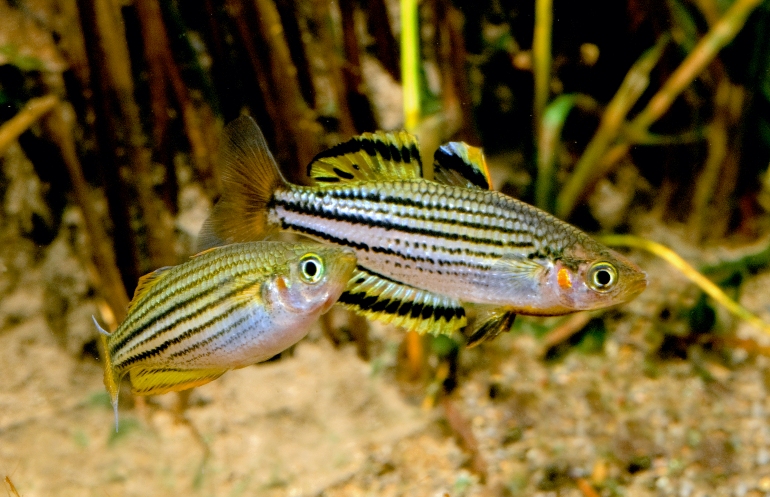
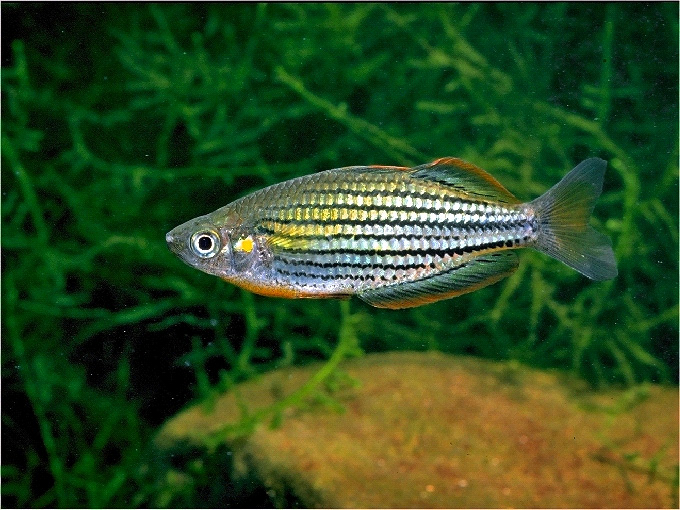
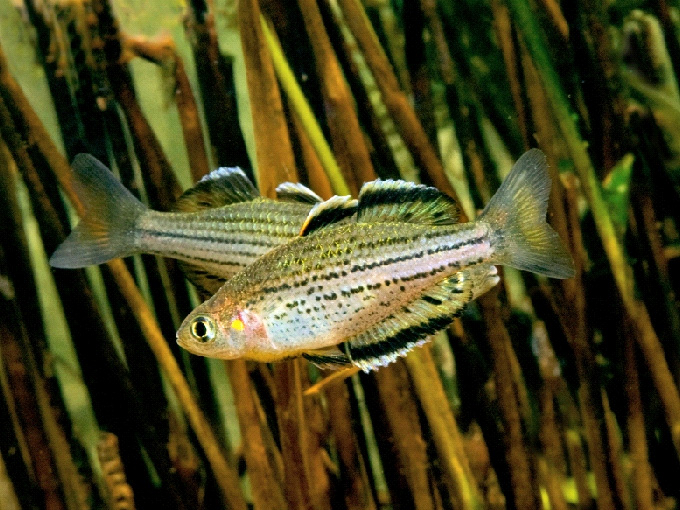
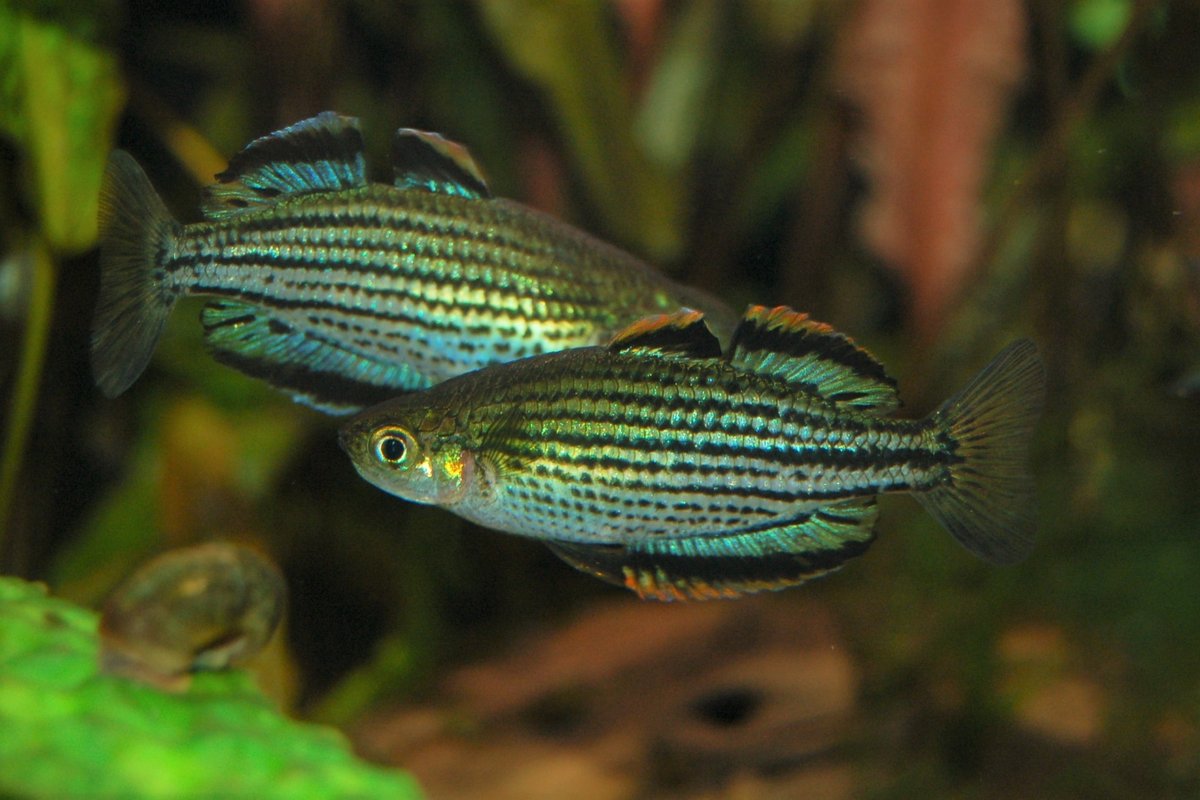
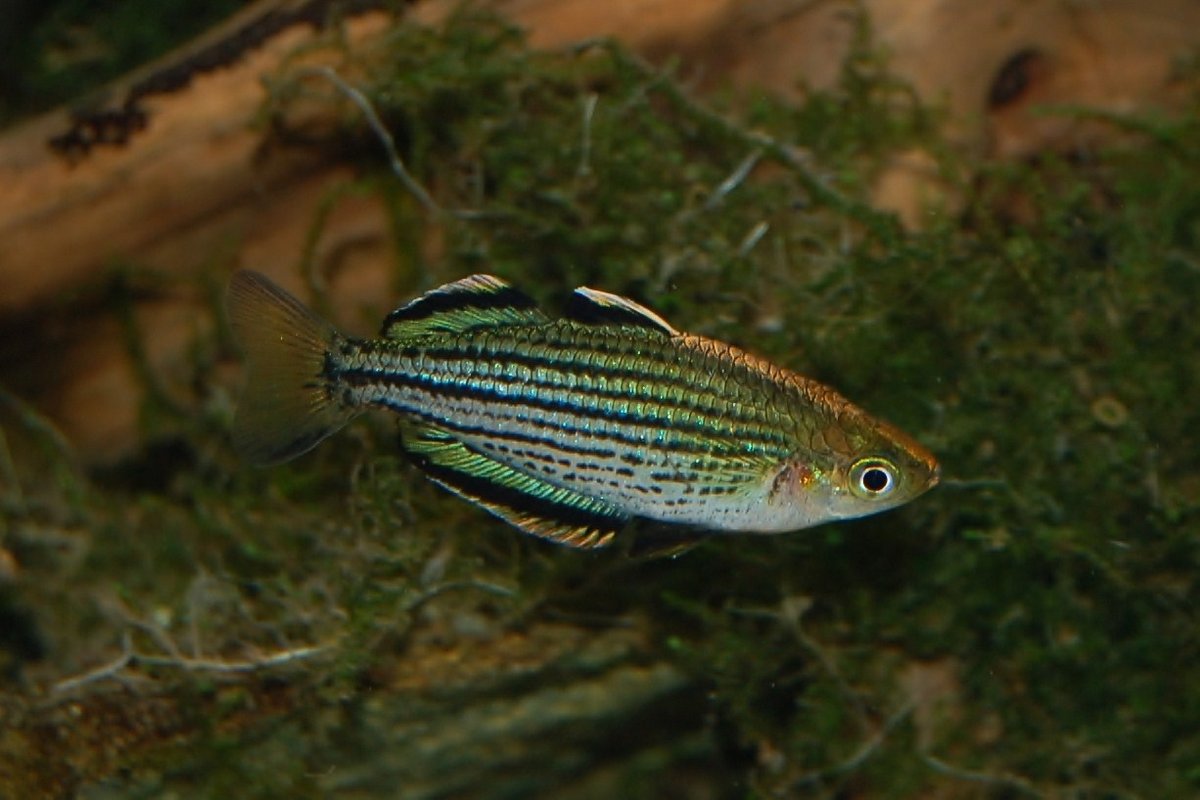
Melanotaenia sahulensis, the Sahul Rainbowfish, is one of two new species split in 2019 from the broadly defined M. maccullochi. It occurs across northeastern Cape York Peninsula, the Torres Strait and southern New Guinea, and is well known to aquarists as the ‘Skull Creek’ form, long kept and traded under the name M. maccullochi. It is readily told from its former namesake by a silver-grey (rather than brownish) body with bold, complete black stripes, and by dorsal and anal fins with a thick dark submarginal band creating a distinctive tri-tone colour pattern.
Etymology
The species name sahulensis is a suffix denoting place, referring to the Pleistocene-era continent Sahul, which comprised the land masses of Australia and New Guinea connected under low sea level, reflecting the modern distribution of this species in northeast Cape York Peninsula and southern central New Guinea; the name is also a tribute to ANGFA, which has done much to promote and document native fishes of the region, especially rainbowfishes.
Etymology compiled from C. Scharpf (2022), “Fishes of Sahul: An Etymological Survey (Part 5), the rainbowfishes (continued)”, Fishes of Sahul 36(4): 1968–1992, and etyfish.org.
Distribution & Habitat
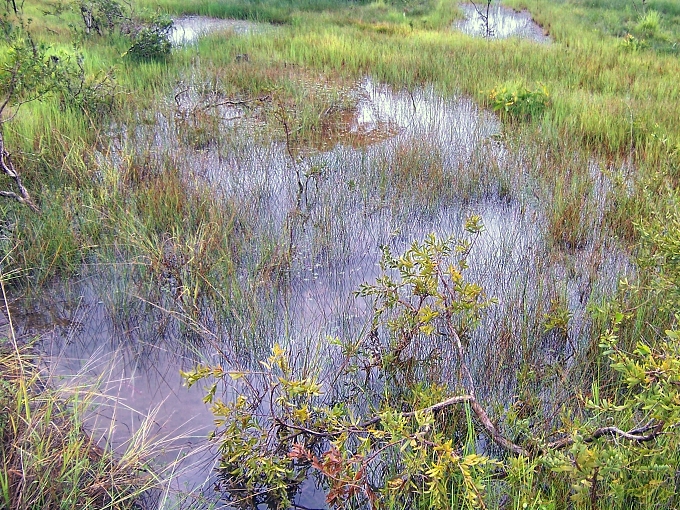
Melanotaenia sahulensis ranges across the northern and eastern parts of Cape York Peninsula — including the Jardine River, Bamaga area, Shelburne Bay and south to Scrubby Creek — and Moa Island in the Torres Strait, then on to southern New Guinea from the Pahoturi and Bensbach river systems (including the mid-Fly) in Papua New Guinea to the Merauke area of Indonesia. It occupies a range of lowland habitats including large floodplain systems, small swampy creeks, dune lakes and Pandanus swamps, generally in clear, acidic water (pH about 5.5–7).
Description
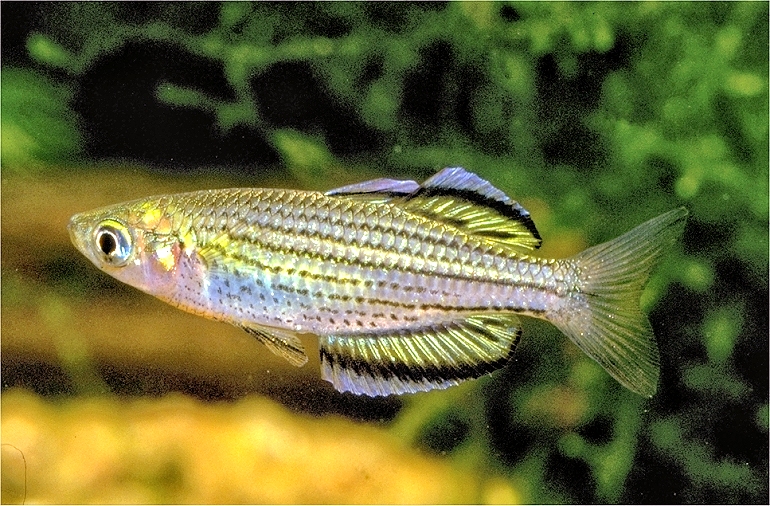
Wild fish reach at least 40.6 mm SL and grow somewhat larger in captivity (to around 50 mm SL). Body silver-white to grey, becoming bolder with age, with seven or eight black stripes that are typically full and well defined even in females. The dorsal and anal fins show a distinct tri-tone pattern: a pale to bright fin margin, then a thick dark grey to black submarginal band, with yellow to orange colour below the band. Fin-margin colour varies regionally from white (Moa Island, Sigabaduru) through white-orange (Skull Creek) to red (western Papua New Guinea) — the red-edged form first entered the Australian aquarium hobby in the 1990s from Bensbach or Morehead stock.
Comparison with the Other Former ‘Maccullochi’ Populations
The silver-grey base body colour, bold black stripes and thick tri-tone fin banding readily separate Melanotaenia sahulensis from the brownish, plain-finned M. maccullochi. The red-finned Papua New Guinea colour form of Melanotaenia sahulensis can superficially suggest M. maccullochi, but the black body stripes, silvery body tone and banded fin pattern remain diagnostic. It differs from the tiny M. wilsoni in its much larger size and silver-grey rather than purple-striped colouration.
Remarks
This distinctive colour form has been recognised as different from typical M. maccullochi since its discovery in the early 1980s, and was strongly supported as a separate species by mitochondrial genetic studies well before its formal description.
Account compiled for Home of the Rainbowfish from M. P. Hammer, G. R. Allen, K. C. Martin, M. Adams & P. J. Unmack (2019), “Two new species of dwarf rainbowfishes (Atheriniformes: Melanotaeniidae) from northern Australia and southern New Guinea”, Zootaxa 4701(3): 201–234.
References
- Hammer M.P., G.R. Allen, K.C. Martin, M. Adams and P.J. Unmack (2019) Two new species of dwarf rainbowfishes (Atheriniformes: Melanotaeniidae) from northern Australia and southern New Guinea. Zootaxa 4701(3): 201-234.