

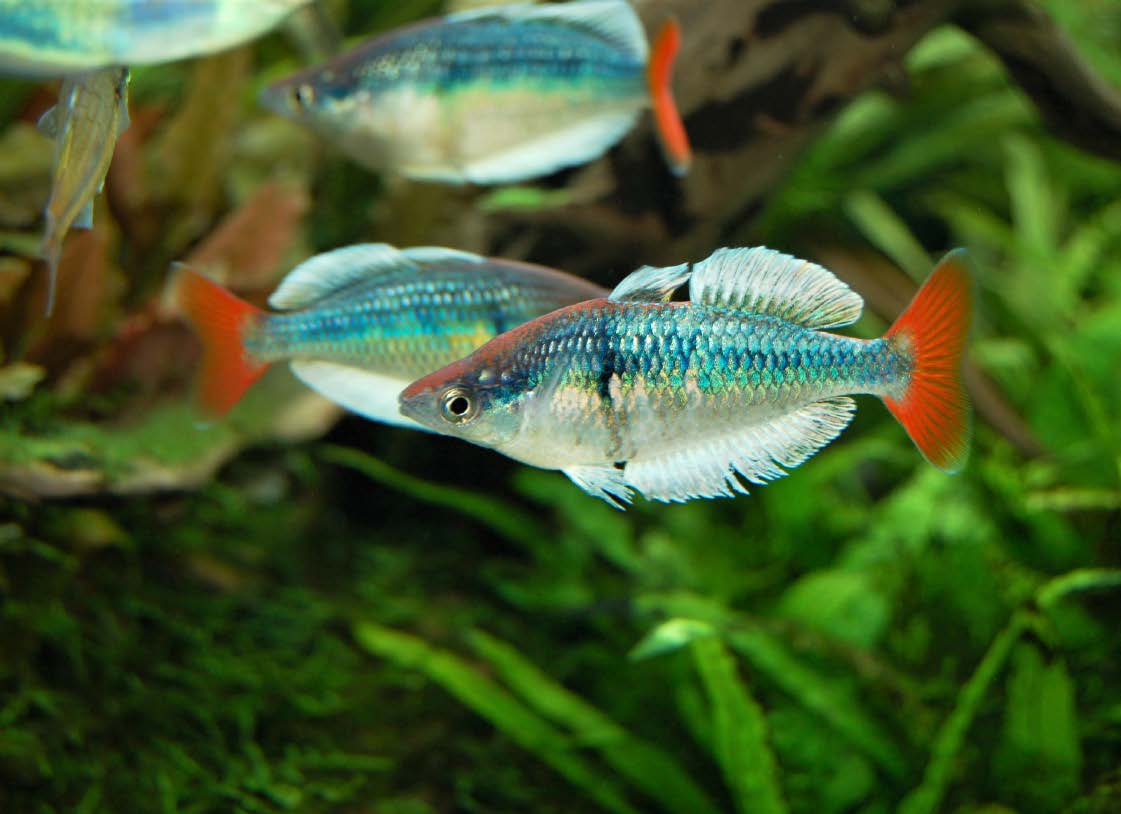
Melanotaenia sp. “Kali Tawa”
Kali Tawa Rainbowfish (also “ekor merah”, Indonesian for “red tail”)
Species Summary
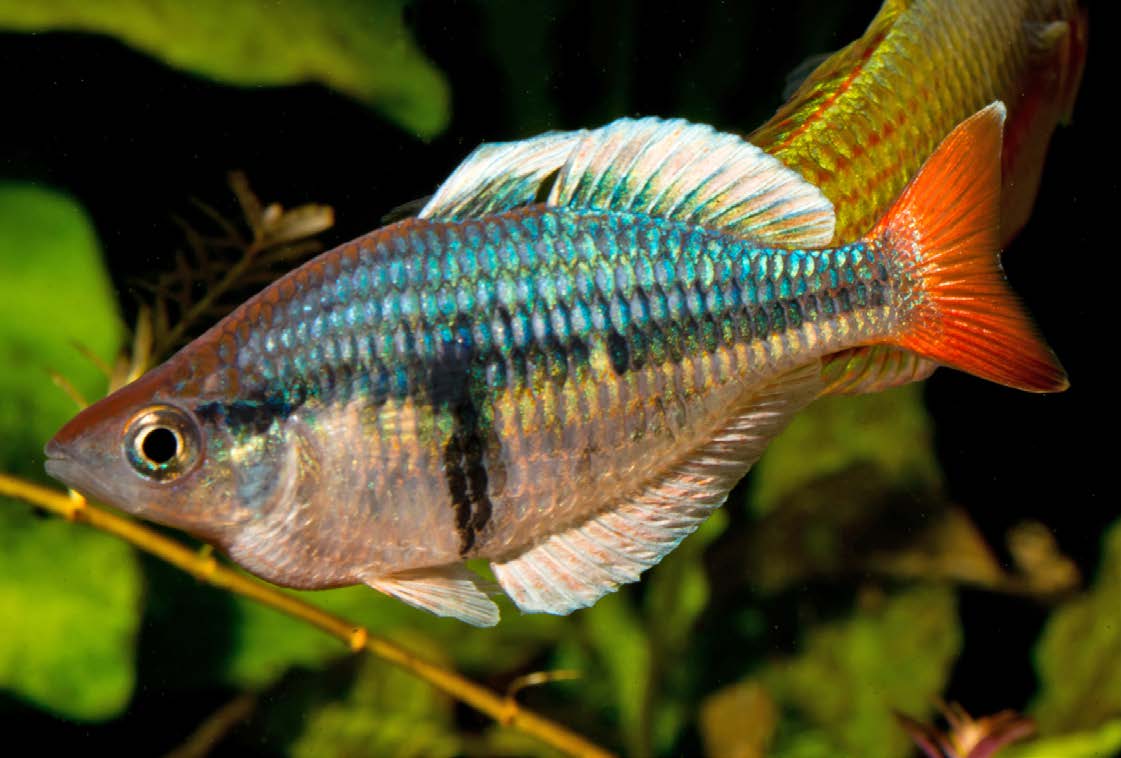
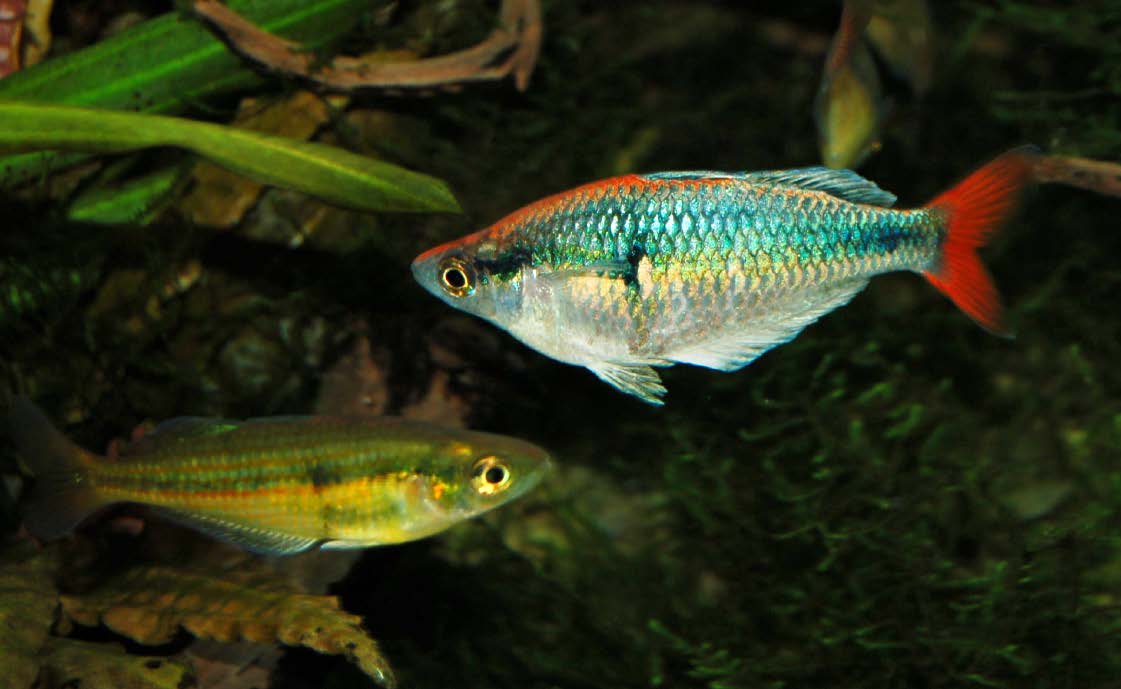
Melanotaenia sp. “Kali Tawa” is a small, brilliantly coloured, undescribed rainbowfish known only from a tributary creek of the Lengguru River, in the rugged karst country behind Triton Bay, Kaimana Regency, West Papua Province, Indonesia. Adult males are a striking combination of iridescent blue back, white dorsal and anal fins, and a blood-red caudal fin, with a bright orange-red mating stripe low on the flank and a single bold black bar near the base of the anal fin. It was collected live in July 2019 by a travelling party of Indonesian, German and Dutch aquarists, but had already been glimpsed years earlier — without anyone being able to reach it — in field photographs from an Indonesian-French scientific expedition, posted to an online expedition logbook and later uploaded to a public DNA-barcoding database. Genetic data place it very close to Melanotaenia mairasi, collected from the neighbouring but topographically isolated Lake Furnusu basin, and for a time the two were even merged under a single database entry; whether “Kali Tawa” is best understood as a distinct species or a strongly differentiated population of M. mairasi remains an open, actively discussed question.
Found Twice: A Story in Two Parts
The story of how this fish came to be known reads almost like two separate discoveries that only later turned out to be the same fish. Starting in 2007 and continuing in 2010, 2014 and 2017, an Indonesian-French research team led by R. Hadiaty, L. Pouyaud and Kadarusman conducted a series of major biodiversity expeditions into the Vogelkop and Lengguru regions of Papua, discovering and later describing several new rainbowfish species along the way. During the 2014 and 2017 trips the team posted daily updates to a dedicated online logbook. Berlin-based rainbowfish enthusiast Christophe Mailliet, following the site avidly, came across a photograph of a Papuan team member holding a bag of live fish: several large M. cf. ammeri alongside one much smaller, metallic bluish fish with white fins and a striking red tail. The accompanying log entry placed the find in tributary streams reached by walking about 12 km up a road from the village of Lobo, at the mouth of the Lengguru River in Triton Bay — but with no realistic way for an overseas hobbyist to follow up, the sighting remained just a tantalising photograph for years.
The trail picked up again when Mailliet began browsing the online genetic database BOLD Systems and found that the same expedition team had uploaded DNA-barcode records for several rainbowfish populations, some already described and some not. Among the undescribed entries, filed under the informal label Melanotaenia sp. “ekor merah” (“red tail” in Indonesian), were more photographs of the same red, white and blue fish. Mailliet shared all of this with his long-time friend Johannes Graf, a familiar contributor to Fishes of Sahul who has himself co-discovered several rainbowfish species. When Graf travelled to Papua with Gary Lange and Wim Heemskerk in 2019 and had the chance to visit Lobo and the Lengguru valley himself, the two stayed in regular contact by WhatsApp — though Graf had no phone signal at all once actually in the Lengguru valley, leaving Mailliet to wait anxiously for news. On 15 July 2019 Mailliet finally received word, and photographs, confirming the fish had been found and collected alive.
Collecting It: The 2019 Field Account
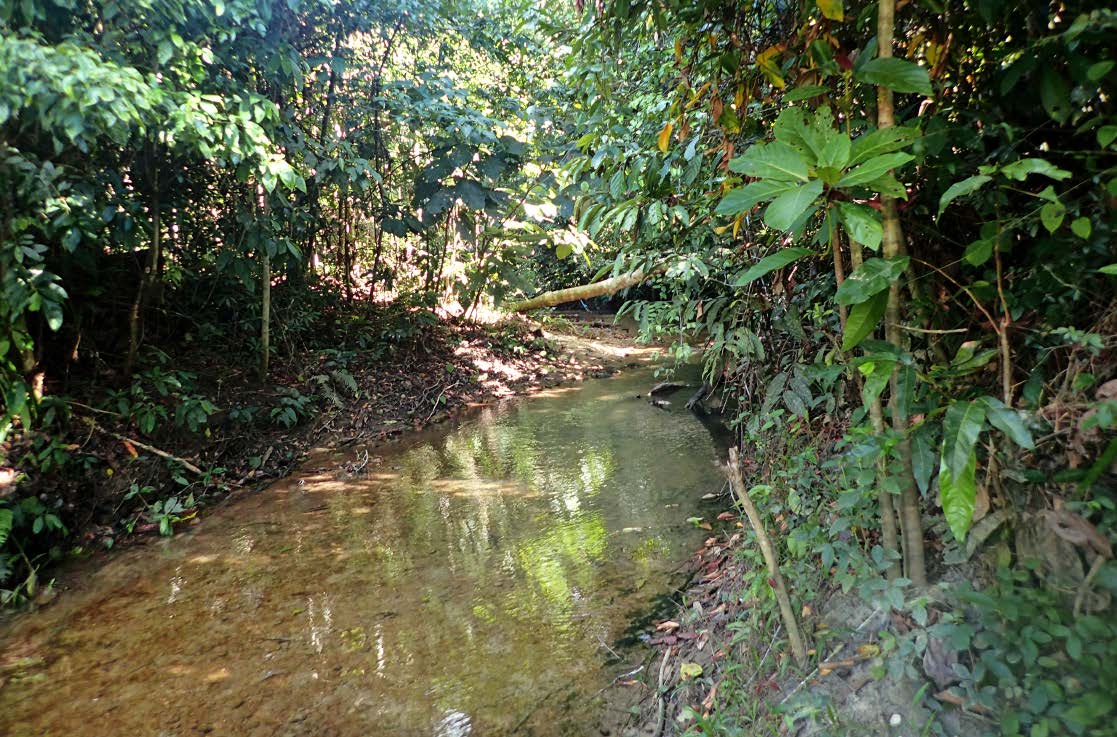
Graf’s own account of the trip describes reaching Lobo by boat and then chartering a construction truck — the only vehicle the village could offer, its starter motor broken so that it had to be jump-started by rolling it downhill — to travel up the rough road into the Lengguru valley. Local information suggested three creeks crossed the road before it ended; by the time the party reached the second, it was already too late in the day to press on to the third, so they set the seine net in its inviting pools instead. The first fish through the net looked like Melanotaenia ammeri, a species already known from a site some 65 km away at Gusimawa in Arguni Bay — an odd distance for the same fish to turn up, but not impossible in this rugged, karst-riddled landscape. Then came the fish they were really hoping for: a rainbowfish with a bright red tail. Working upstream to a wider pool with both flowing and calm water, the team noticed the M. cf. ammeri stayed mostly in the current while none of the red-tailed fish appeared there — suggesting the two species might be partitioning the habitat much as Chilatherina alleni and Melanotaenia rubrivittata do in the Wapoga River further north. Netting the quiet, root-tangled margin of the pool instead confirmed it: twenty fish in one haul, the new red-tailed rainbowfish among them. Until it is formally described, the team resolved to call it simply by the name of the place they found it: “Kali Tawa.”
Distribution & Habitat
Melanotaenia sp. “Kali Tawa” is known only from tributary creeks of the Lengguru River, reached by an unsealed road running inland from Lobo village at the mouth of the Lengguru in Triton Bay, Kaimana Regency, West Papua Province, Indonesia — part of the same rugged limestone karst country, riddled with isolated valleys, that has made the wider Lengguru region such a productive source of newly discovered rainbowfishes. Subsequent data lodged with BOLD Systems by the Indonesian-French expedition team indicate the fish occurs at several locations further up the Lengguru valley, which itself becomes a raging torrent in its lower reaches. The valley is separated from the Lake Furnusu basin, home of the closely related M. mairasi, by a range of high mountains — a formidable barrier that, if the two populations really do prove to be one species, must have been breached or bypassed at some point in the geological past.
Description
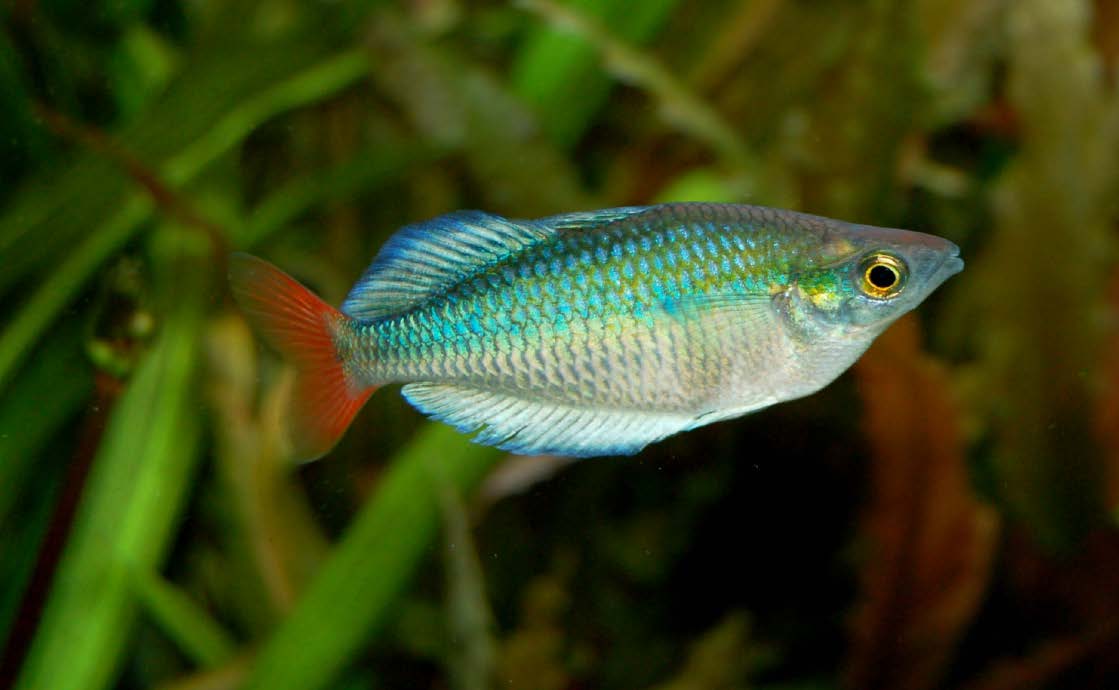
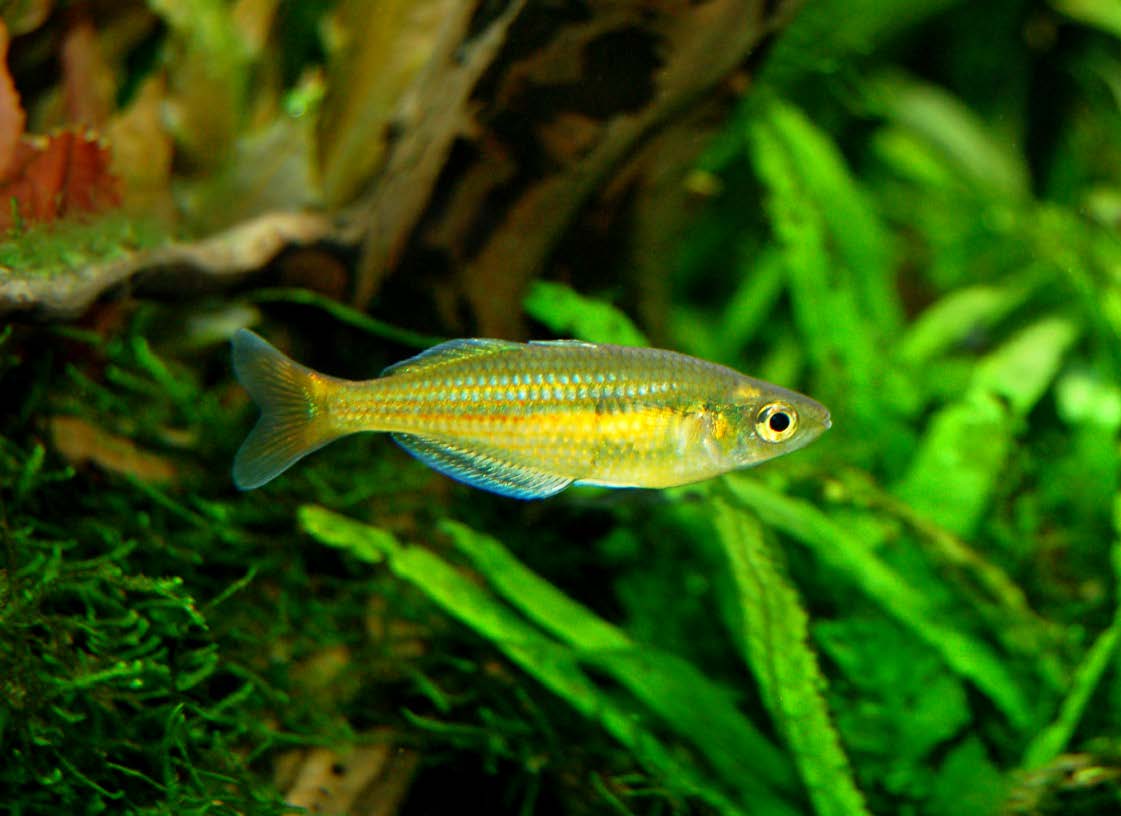
Adult males are unmistakable: an iridescent blue back and flanks, white dorsal and anal fins, and a caudal fin of vivid blood red, with a single bold black bar in the lower half of the body at about the level of the anal-fin base, and a bright orange-red stripe that intensifies during mating. Females are far plainer, golden-olive with faint striping and none of the males’ vivid colour, and — notably compared to M. mairasi, where the sexes are closer in size — markedly smaller-bodied than the males. Both sexes are smaller overall than M. mairasi, and the fin shape also differs between the two forms; taken together with the more subdued male colour pattern, these differences are what convince observers who have kept both fish side by side that they are dealing with two distinct species, whatever the genetic data eventually settle.
Relationship to Melanotaenia mairasi
The taxonomic status of Melanotaenia sp. “Kali Tawa” is still unresolved. In early 2020, all of the expedition team’s Melanotaenia sp. “Kali Tawa” specimen records on BOLD Systems were reassigned to the entry for M. mairasi, reflecting how closely the two group together genetically; DNA-based “tree” analyses available through the database show them as very close relatives. A subsequent paper by Arida et al. (2021), applying DNA barcoding to survey the biodiversity of the Bird’s Head Peninsula, referred to the combined populations as a single “M. mairasi group,” based on the same BOLD-lodged specimen data. Melanotaenia mairasi is itself considered an evolutionarily distinctive, “ancient” lineage within the rainbowfishes (Kadarusman et al. 2012), apparently forming its own branch together with Melanotaenia sp. “Kali Tawa”. Despite the close genetic relationship, the two are readily told apart by eye — besides the size and fin-shape differences noted above, M. mairasi carries a distinctive three-coloured, red-white-black dorsal and anal fin pattern unlike any other known rainbowfish, a feature Melanotaenia sp. “Kali Tawa” entirely lacks. Whether these amount to two genuinely separate species, or one variable species split by a mountain range, is a question that still awaits a proper, formal comparison.
Keeping & Caring
In the field notes from the 2019 trip, Melanotaenia sp. “Kali Tawa” was described as an easy fish to keep, settling in without any problems and mixing readily with other species in the aquarium. Mailliet received his first captive-bred offspring, sourced from Graf’s original broodstock, in early 2020, and by his own account could not stop looking at the photographs of the fish for days beforehand — a measure of just how sought-after this species has become among rainbowfish specialists since its rediscovery. General care follows the same lines as other small New Guinea rainbowfishes of the Melanotaenia group: a well-planted aquarium, stable water quality and a varied diet. Given its striking colour and modest size, Mailliet himself predicted it would not be surprising to see Melanotaenia sp. “Kali Tawa” become as popular in the hobby as Melanotaenia praecox, one of the most widely kept New Guinea rainbowfishes there is.
Remarks
“Kali” is simply the Indonesian word for river or creek, so “Kali Tawa” is properly a place name rather than a description of the fish itself; “ekor merah” (“red tail”), the alternative label seen on BOLD Systems records, describes it directly and is the name most likely to turn up when searching hobbyist and database sources. A third, related but visibly distinct undescribed form, Melanotaenia sp. “Lengguru”, was found by the same 2019 travelling party elsewhere in the Lengguru valley and is not covered by this account. As with so many of the rainbowfishes still being turned up in the Bird’s Head and Lengguru region, its wild habitat lies in country that remains genuinely remote and difficult to reach, which for now affords it some incidental protection from the habitat pressures affecting more accessible New Guinea streams.
Account compiled for Home of the Rainbowfish from J. Graf (2021), “Around Vogelkop”, Fishes of Sahul 35(1): 1690–1705, and C. Mailliet (2022), “Helping find new rainbowfish in West Papua, through online research”, Fishes of Sahul 36(4): 1962–1967, which in turn cite E. Arida, H. Ashari, H. Dahruddin, Y. S. Fitriana, A. Hamidy, M. Irham, A. Riyanto, S. Wiantoro, M. S. A. Zein, R. K. Hadiaty & F. Krey (2021), “Exploring the vertebrate fauna of the Bird’s Head Peninsula (Indonesia, West Papua) through DNA barcodes”, Molecular Ecology Resources 21: 2369–2387, and Kadarusman, N. Hubert, R. K. Hadiaty, Sudarto, E. Paradis & L. Pouyaud (2012), “Cryptic diversity in Indo-Australian rainbowfishes revealed by DNA barcoding: implications for conservation in a biodiversity hotspot candidate”, PLoS ONE 7(7): e40627.