

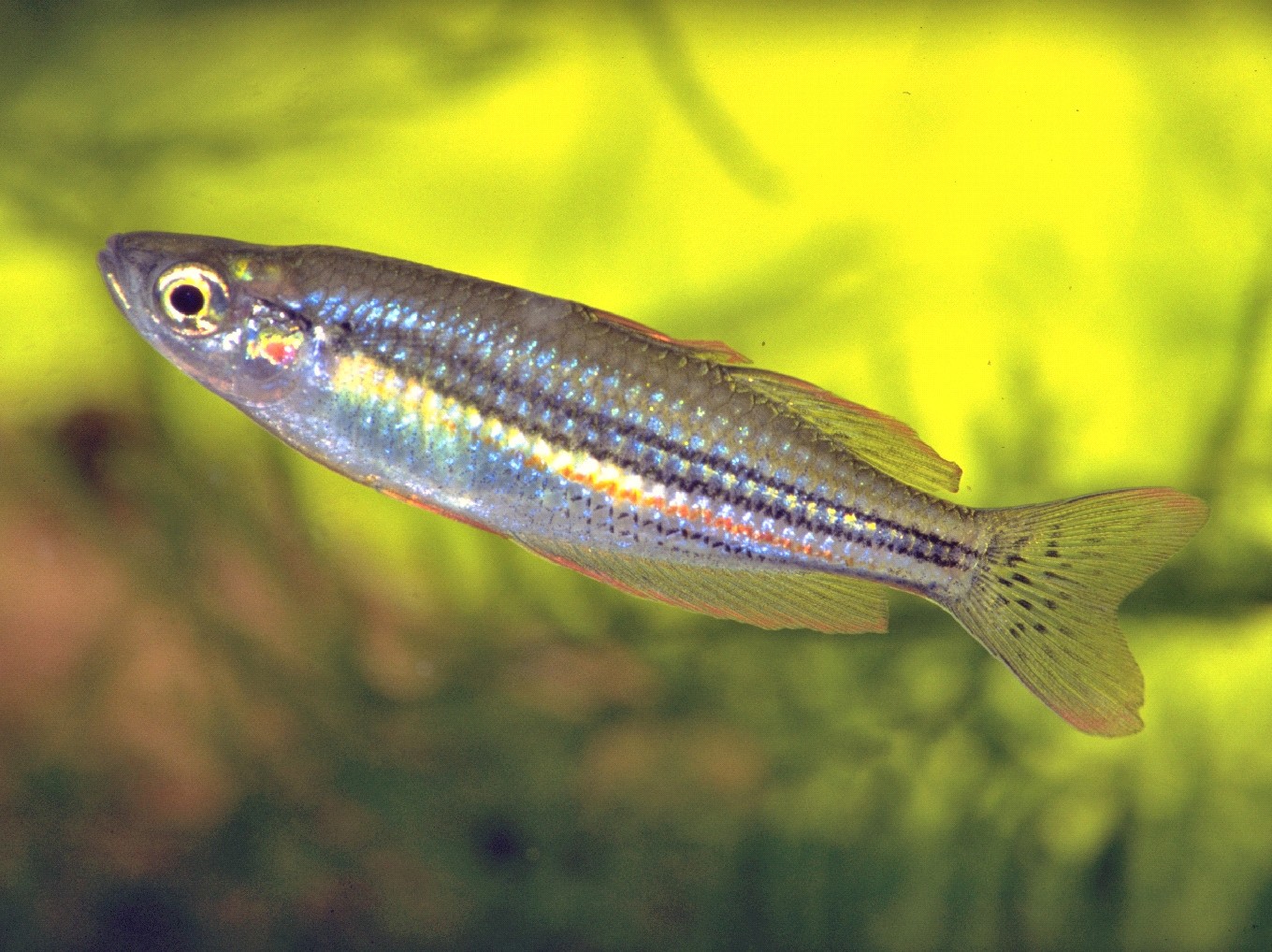
Melanotaenia exquisita
Exquisite Rainbowfish
Species Summary
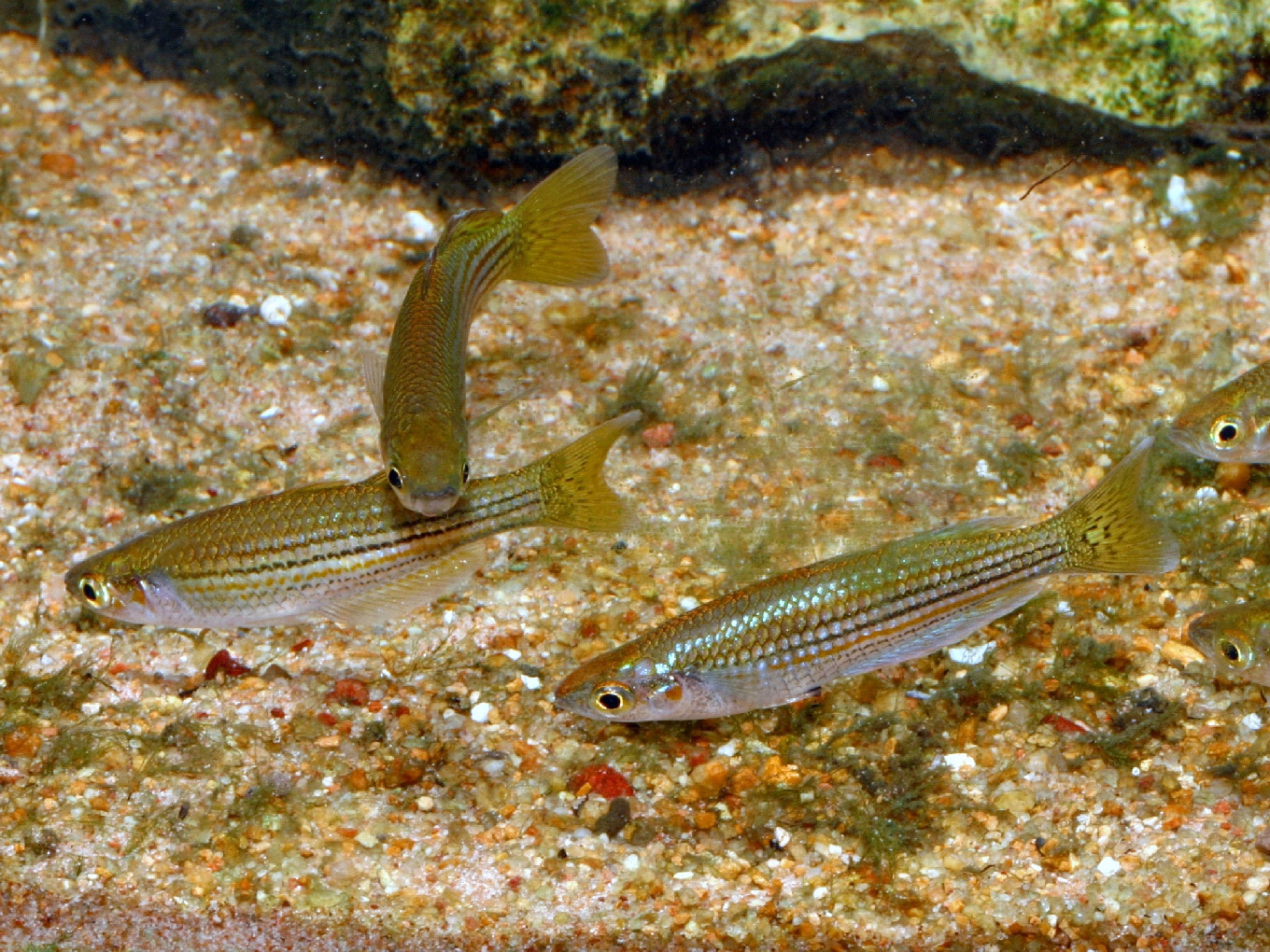
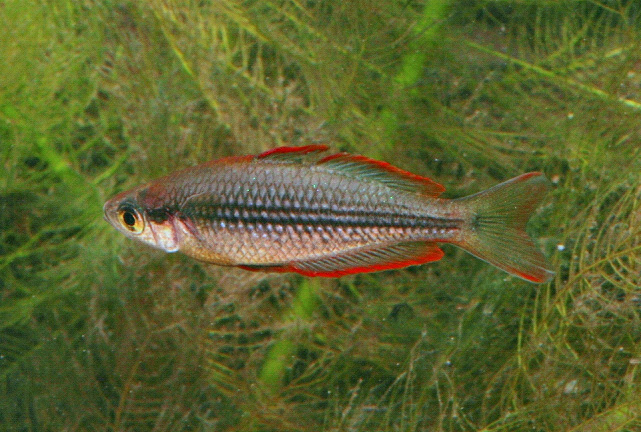
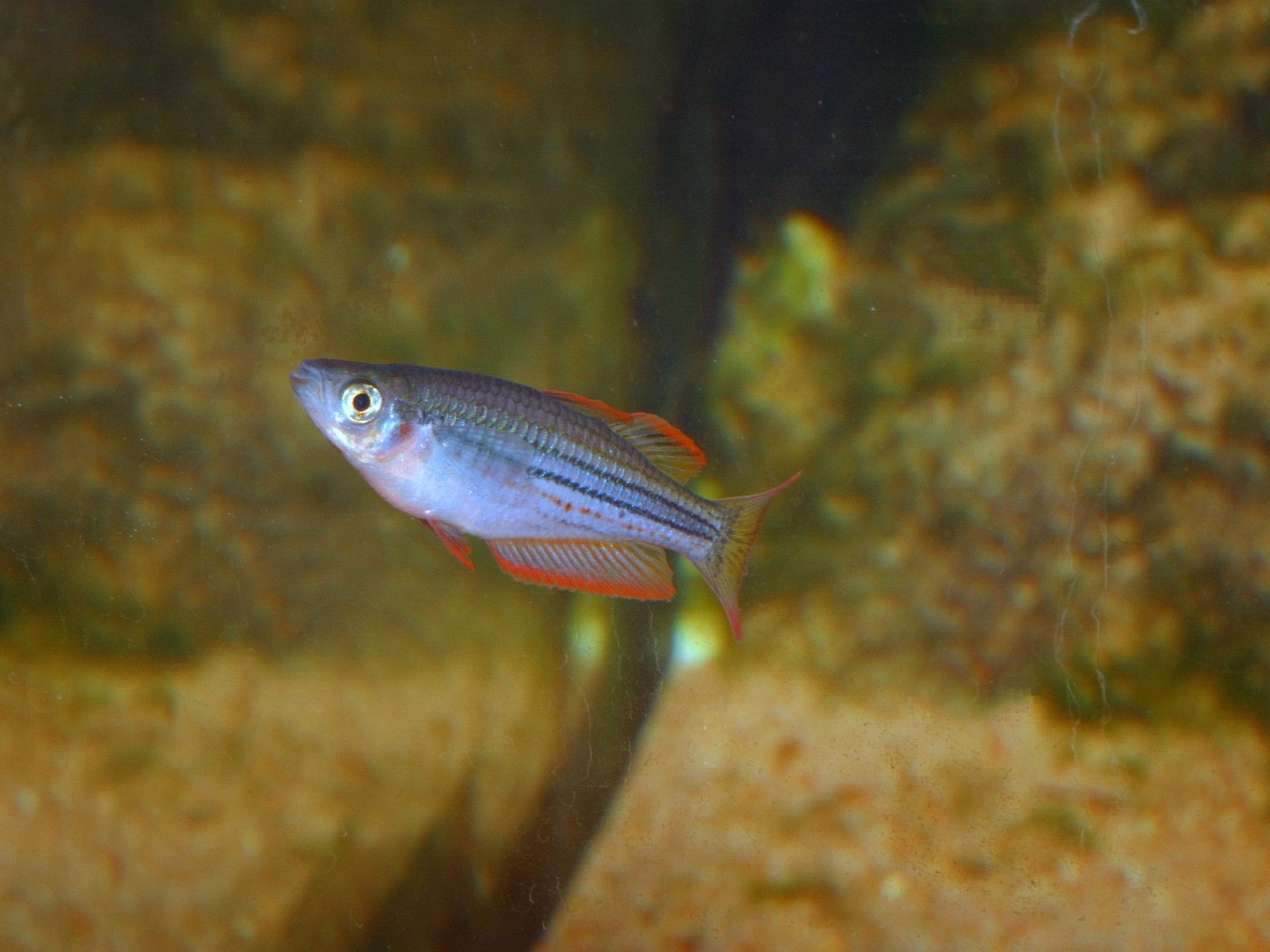
Melanotaenia exquisita have a slender and compressed body. Two dorsal fins, very close together, the first much smaller than the second. Mature males have a higher first dorsal fin, which overlaps the origin of the second dorsal fin when depressed. Females have smaller rounded dorsal and anal fins. May reach a maximum size of 9 cm, but usually less than 8 cm. Adults are olive on the back and silvery white on the lower half. There is a pair of prominent stripes running along the middle of the side with a red stripe just below. A pair of dark zigzag stripes is situated between the red stripe and base of the anal fin. The dorsal, anal, and caudal fins are edged with red, frequently with small black spots. Males are relatively slender compared to that of most other rainbowfishes.
Etymology
The species name exquisita is Latin for fine or exquisite, referring to its colouration and overall appearance.
Etymology compiled from C. Scharpf (2022), “Fishes of Sahul: An Etymological Survey (Part 5), the rainbowfishes (continued)”, Fishes of Sahul 36(4): 1968–1992, and etyfish.org.
Distribution & Habitat
Melanotaenia exquisita was originally collected in 1977 by Gerald Allen and Geoff Evans from the Edith River about 1 km upstream from Lake Malkyullumbo, Northern Territory. At the time Melanotaenia exquisita were believed to occur only in the Northern Territory. However, in 1986 more of these exquisite fishes were collected in the King George River in the Kimberley region of Western Australia by Ray Leggett and Graham Heidke. Then in 1997, another population was discovered by Bruce Hansen in Bindoola Creek, a small stream that flows into the Pentecost River in the Cambridge Gulf in the far north-eastern Western Australia. Since then a number of populations have been found.
Preliminary genetic studies of Melanotaenia exquisita from Bindoola Creek have shown some clear differences from other known populations. Further genetic and morphological studies may justify its recognition as a distinct species.
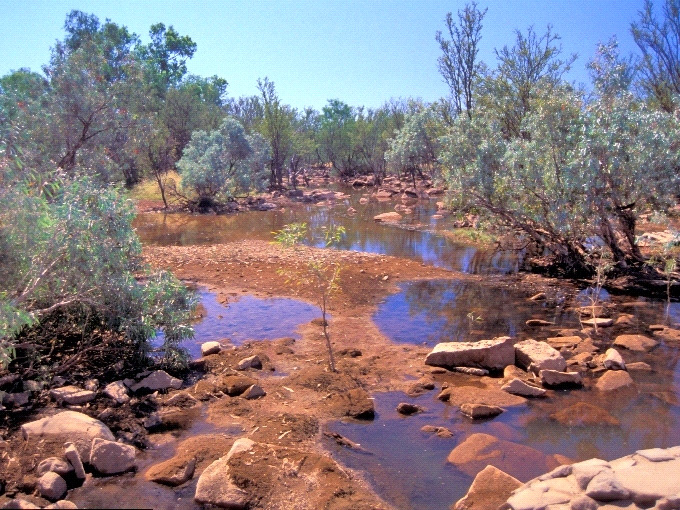
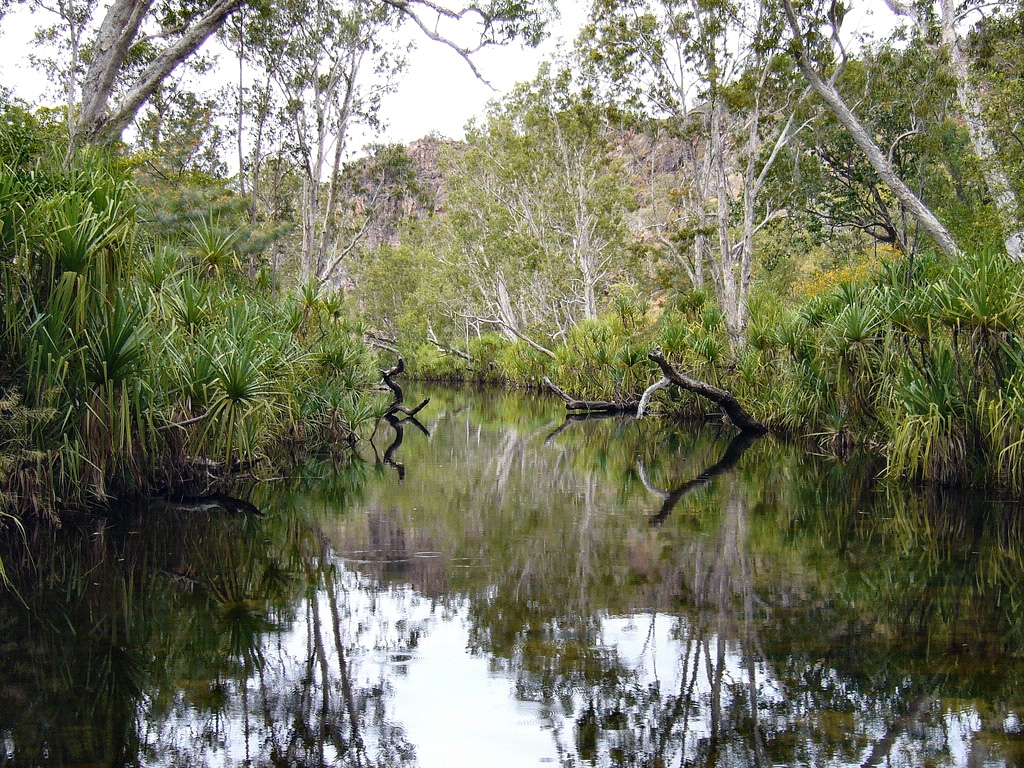
Melanotaenia exquisita typically inhabit small, clear, swiftflowing streams, often congregating in rock pools at the base of small waterfalls such as Jim Jim Falls in the South Alligator system and Seventeen Mile Falls in the Katherine system (plus the King George Falls in Western Australia). They also occur in the still waters of Lake Malkyullumbo at the base of Edith Falls.
Remarks
Another rainbowfish species known in the hobby as “Waterfall Creek Exquisita” comes from above the Gunlom Falls (also known as UDP Falls or Waterfall Creek Falls) in Kakadu National Park. Gunlom Falls is a waterfall on Waterfall Creek about 200 km east-southeast of Darwin in the Northern Territory. Waterfall Creek flows into the South
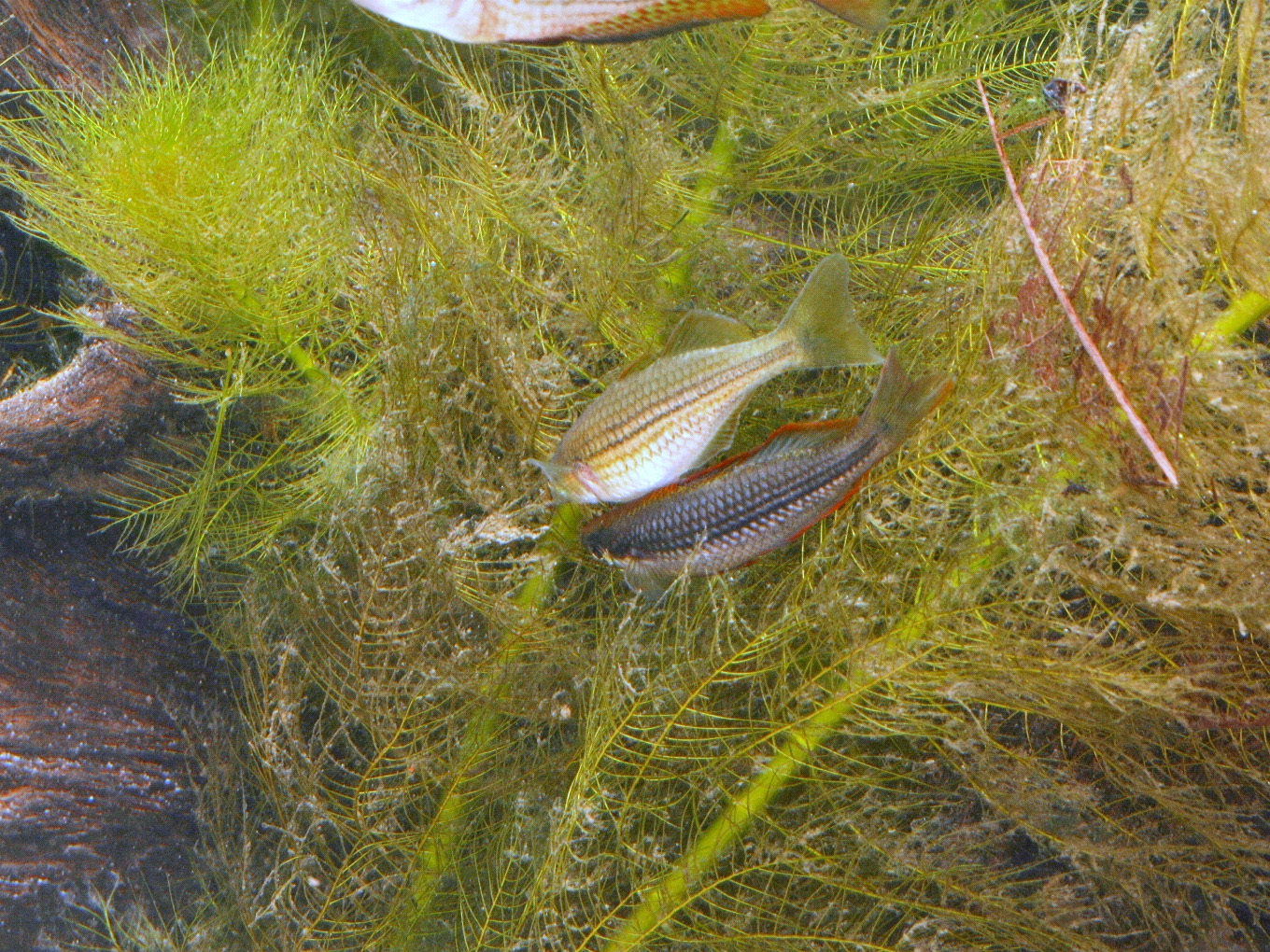
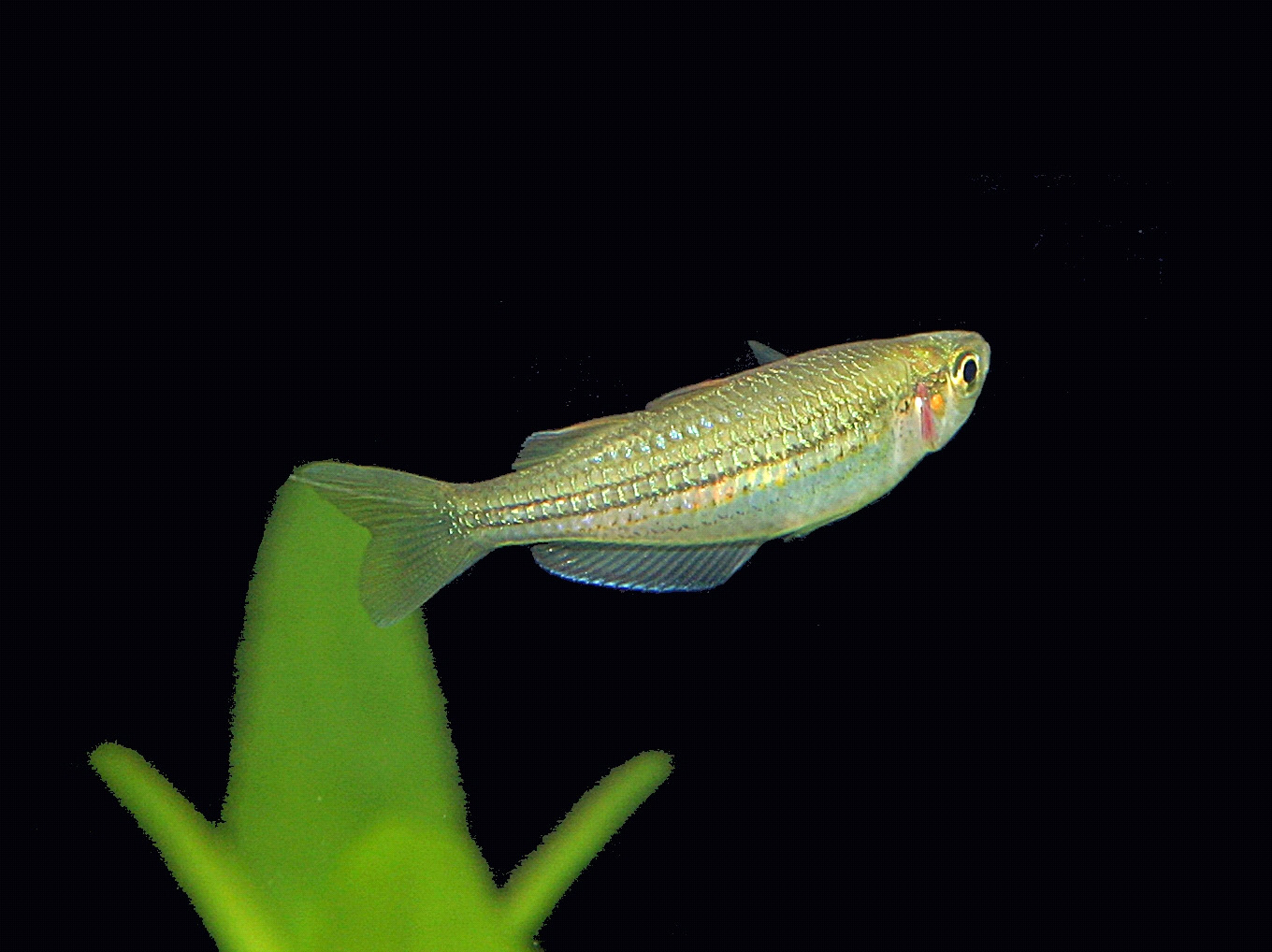
Alligator River. Permission to collect specimens from this site for whatever purpose is almost impossible to get. However, there are a number of captive populations in existence. They differ from Melanotaenia exquisita by having a deeper body and totally different colour. The males show a charcoal black chequer-board pattern over the body with red edging on the dorsal and anal fins. When spawning the nape band is a bright orangered colour.
Genetic studies (P. J. Unmack 2009, pers. comm.) suggest that the “Waterfall Creek Exquisita” are an introgressed (e.g. hybridised) population of M. exquisita and M. nigrans. Introgression, which seems to be common among some sympatric rainbowfishes in their natural environment, as suggested above, frequently blurs the differentiations of rainbowfishes we recognise as species or populations.
Although technically a ‘hybrid’, this process may contribute to a continuum in speciation and genetic diversity. This may be important to the species’ ability to adapt to changing environmental conditions over time. Some populations may become better adapted than others; some may become extinct. However, it is a good idea not to maintain the different varieties together in the same aquarium.
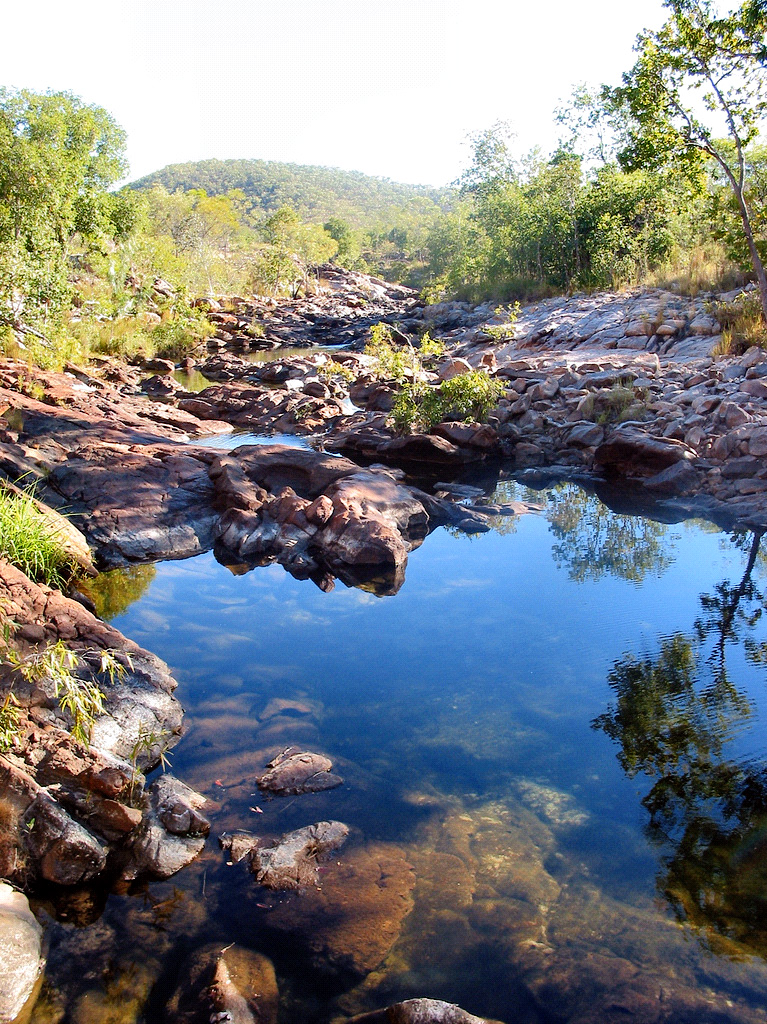
Waterfall Creek “exquisita” [South Alligator River, Northern Territory]
References
- Allen G.R. (1978) The rainbowfishes of northwestern Australia (family Melanotaeniidae). Tropical Fish Hobbyist 26(10): 91-102.
- Allen G.R. (1989) Freshwater fishes of Australia. T.F.H. Publications, Inc., Neptune City, New Jersey.
- Allen G.R. & R. Leggett (1990) A collection of freshwater fishes from the Kimberley region of Western Australia. Record of the Western Australian Museum 14(4): 527-545.
- Hansen B. (1999) Kimberley Cool. Fishes of Sahul 13(1): 595-604.