

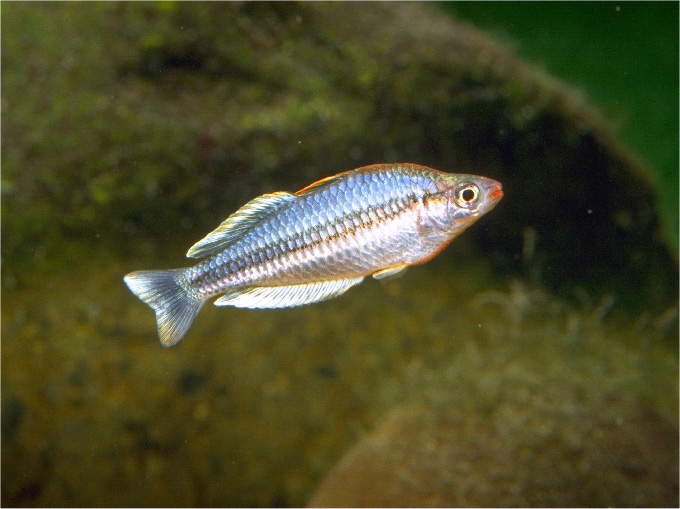
Melanotaenia pygmaea
Pygmy Rainbowfish
Species Summary
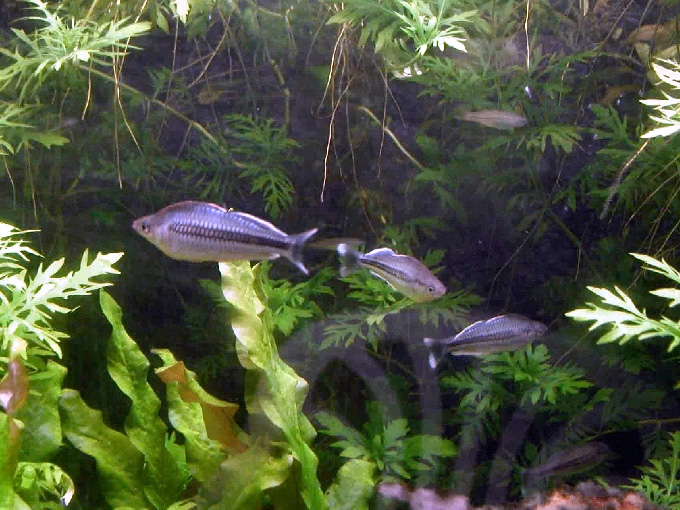
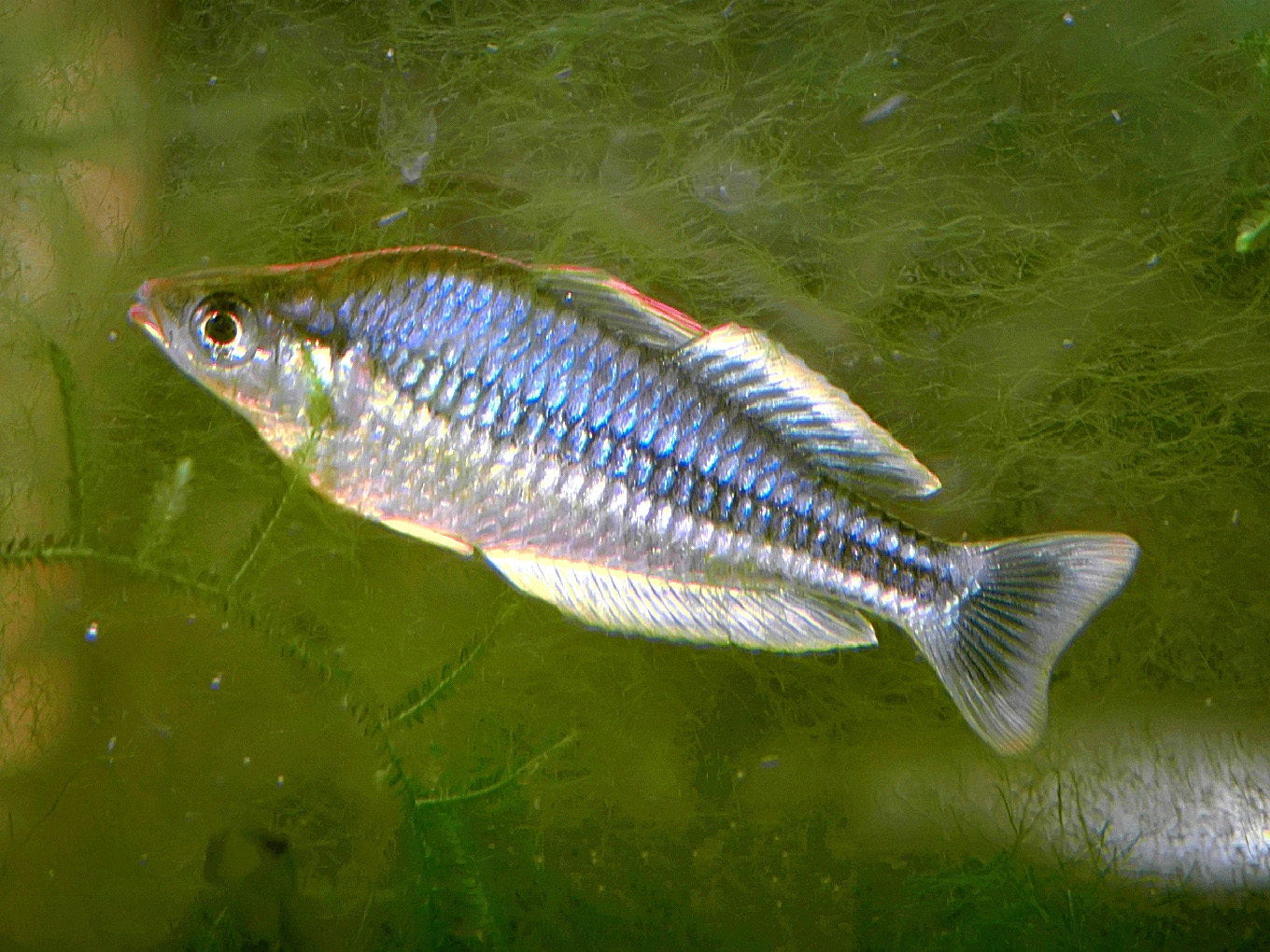
Melanotaenia pygmaea males display a brilliant colouration consisting of a metallic sky-blue back, a blackish midlateral stripe, and pale yellow fins. Males are more brightly coloured, larger, and much deeper bodied than females. Spawning males display a yellowish body colour below the lateral line and a brightly coloured rustic-red band running from the first dorsal fin to the upper lip and extending down the breast. Males may reach a maximum size of 7 cm, but females are usually less than 5 cm SL.
Etymology
The species name refers to its pygmy size, originally described at up to 32 mm SL, although some reports indicate males can reach 70 mm.
Etymology compiled from C. Scharpf (2022), “Fishes of Sahul: An Etymological Survey (Part 5), the rainbowfishes (continued)”, Fishes of Sahul 36(4): 1968–1992, and etyfish.org.
Distribution & Habitat
Melanotaenia pygmaea was first discovered by Gerald Allen in 1974 in the tributaries of the Prince Regent River in the Kimberley region of Western Australia. The Prince Regent River is currently the only known habitat of M. pygmaea. They have been collected from only two small tributaries; Cascade Creek and Youwanjela Creek, where they were found around sub-surface vegetation, submerged logs, or branches. Most collections have been from Cascade Creek, situated approximately 20 km upstream.
The Prince Regent River is situated in northeast Western Australia and flows into the Indian Ocean. The river rises 50 kilometres from the coast at an elevation of about 800 metres and drops through a rugged gorge. At the head of the river lies a broad plateau averaging over 700 metres above sea level. The coastline is deeply indented by a number of drowned river valleys. The following creeks flow into the Prince Regent River: Pitta Creek, Gundarara Creek, Womarama Creek, Youwanjela Creek, Cascade Creek and Quail Creek. The upper reaches of the river and creeks are mostly seasonal, with some permanent pools varying in depth up to several metres during the dry season.
Remarks
In 1992 and 1994, live collections were made and descendants from these collections now form the basis of the current stock available in the aquarium hobby today.
References
- Allen G.R. (1978) The rainbowfishes of northwestern Australia (family Melanotaeniidae). Tropical Fish Hobbyist 26(10): 91-102.
- Allen G.R. (1989) Freshwater fishes of Australia. T.F.H. Publications, Inc., Neptune City, New Jersey.
- Allen G.R. & R. Leggett (1990) A collection of freshwater fishes from the Kimberley region of Western Australia. Records of the Western Australian 14: 527-545.