
Rhadinocentrus ornatus
Ornate Rainbowfish
Species Summary
Rhadinocentrus ornatus is a sub-tropical species that were first collected from Moreton Island, a sand dune island off the south Queensland coast in Moreton Bay. The type description of R. ornatus was from six specimens collected from a pond on Moreton Island by the signal station operator at Cowan Cowan. They were described by Charles Tate Regan at the British Museum of Natural History in 1914. They are the only species currently recognised within the genus. In earlier times they were commonly known as the ‘Moreton Island Sunfish’ and were very popular with early native fish enthusiasts.
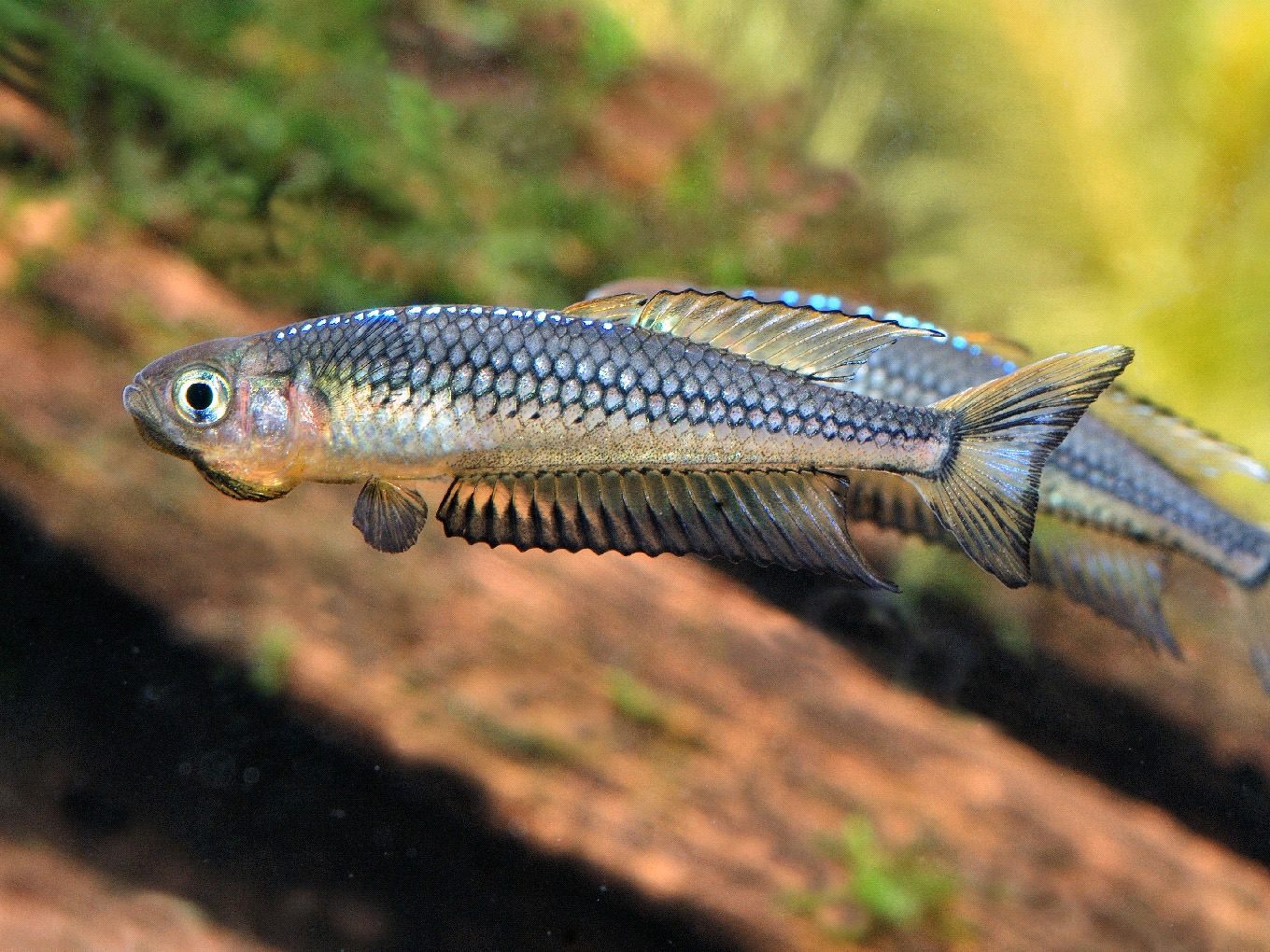
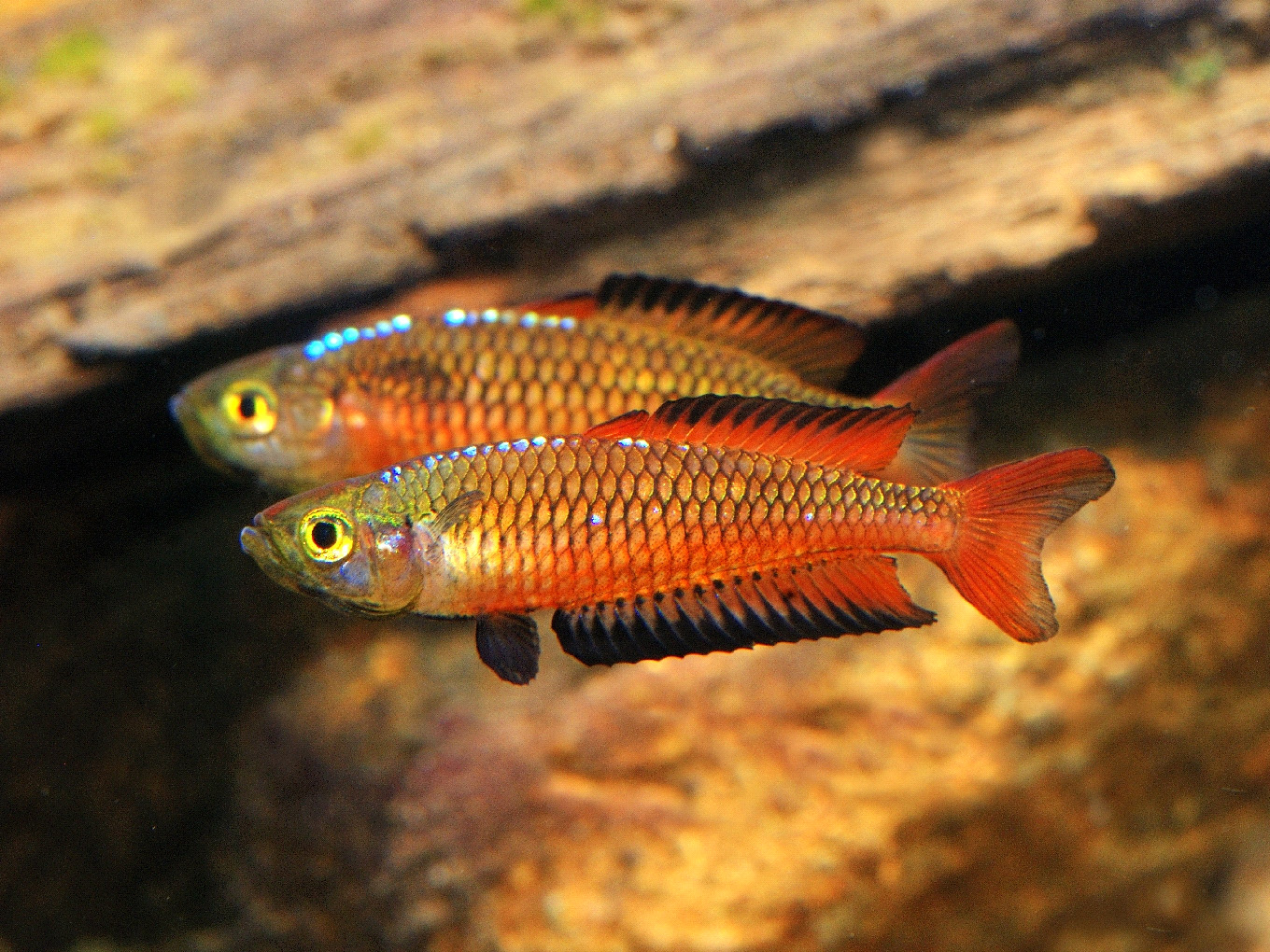
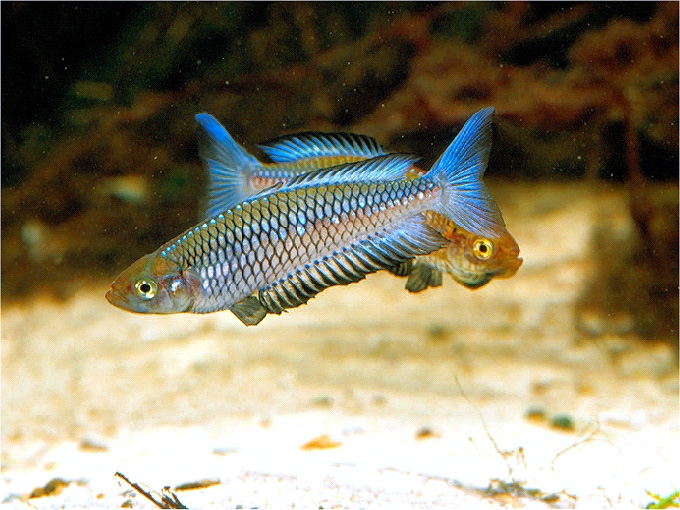
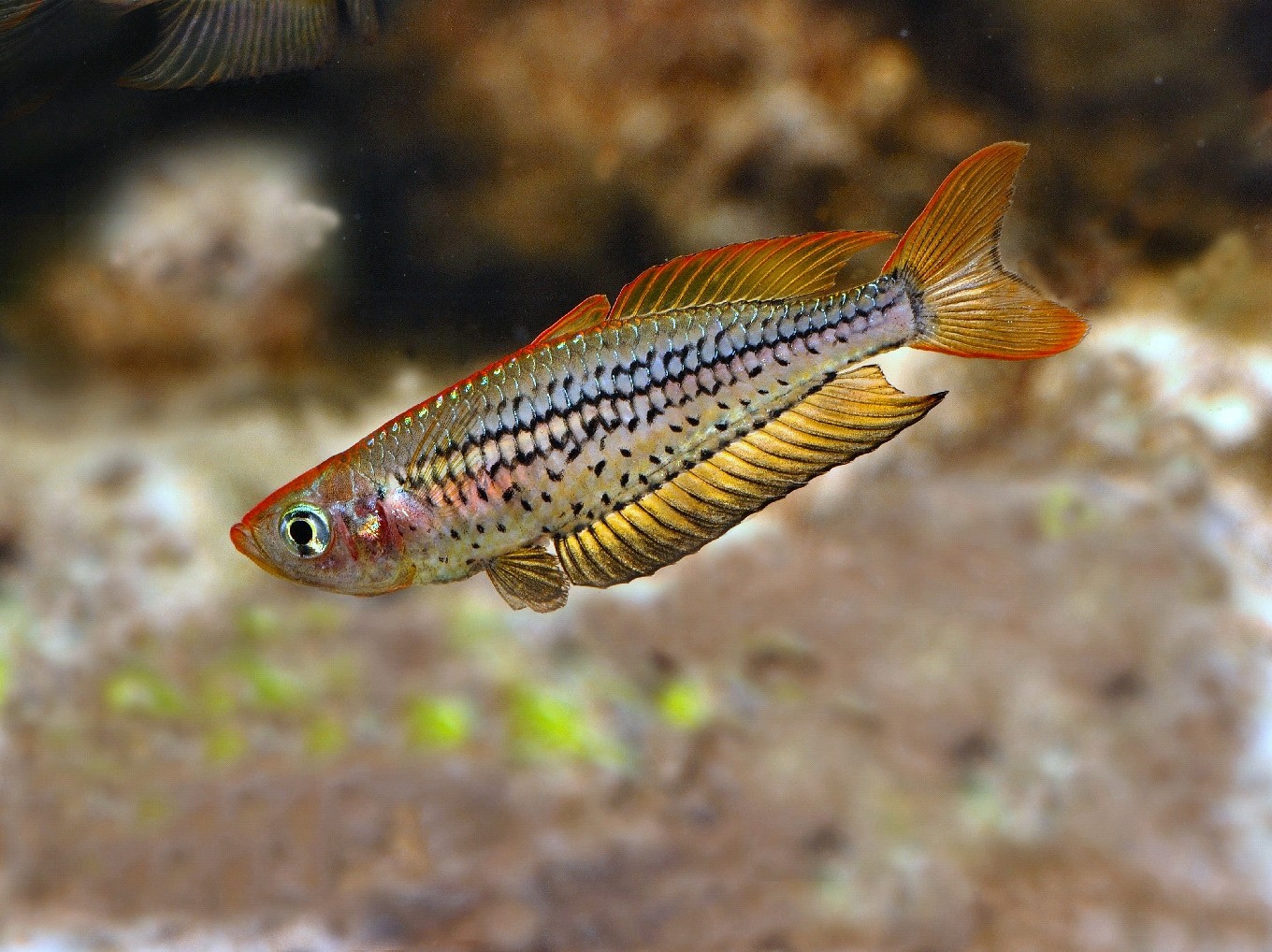
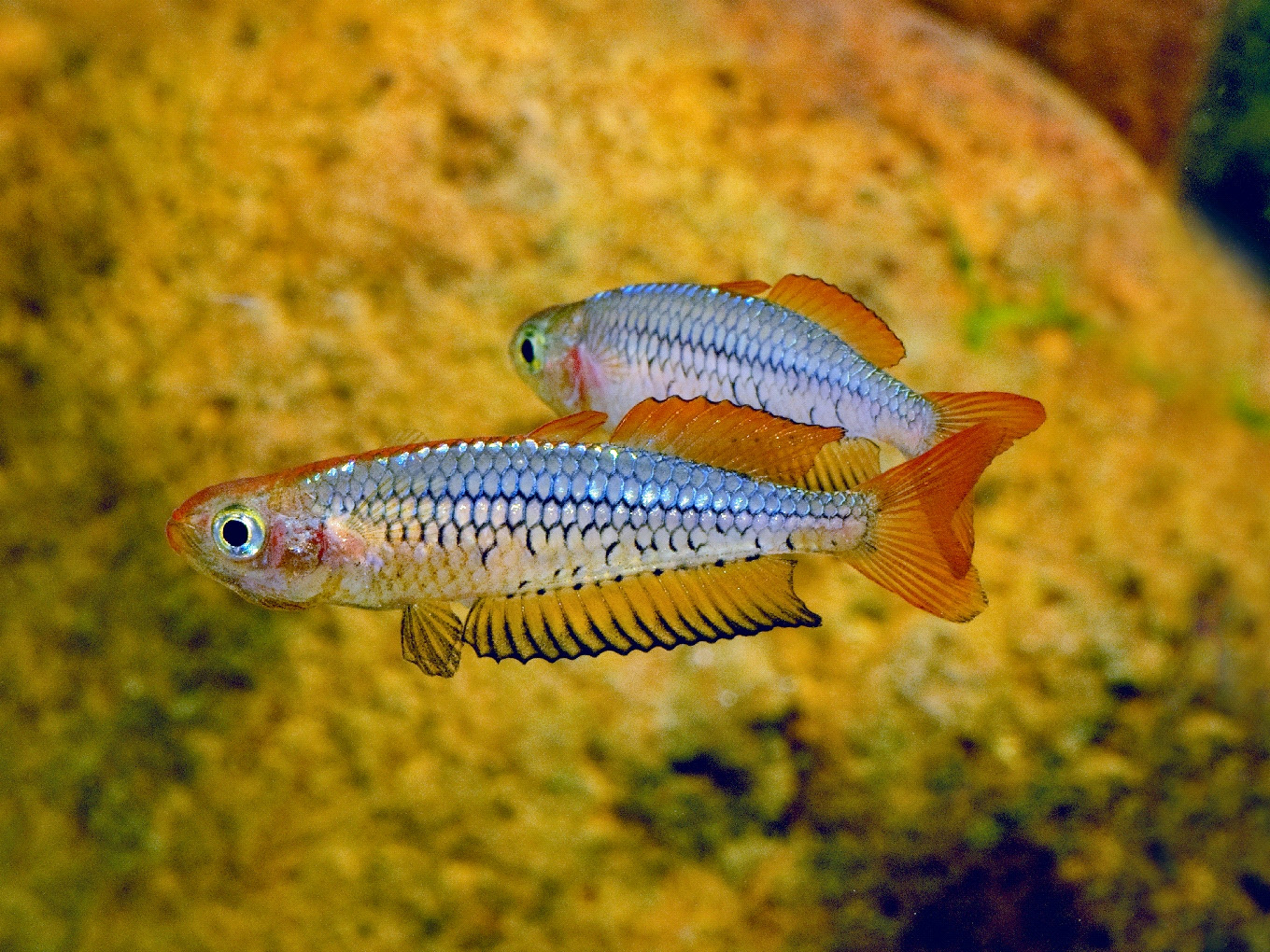
Rhadinocentrus ornatus is a small, slender and relatively elongated species, with two dorsal fins that are very close together; the first much smaller than the second. They exhibit considerable colour variation over their geographical range. Generally the body is semi-transparent with two rows of black scales in the midlateral region. The iridescent scales immediately below the dorsal fin and above the lateral line can be either red or metallic pale blue. The dorsal, anal and caudal fins are generally blue (sometimes red) with black edges. In 1995, ANGFA (Qld) members reported collecting an unusual golden yellow coloured form of R. ornatus in the Key Hole Lakes system on Stradbroke Island. Another coloured form on Stradbroke Island showed a distinctive black striped pattern on the sides of the body giving the fish an overall dark colouration of the body. The actual location was not documented.
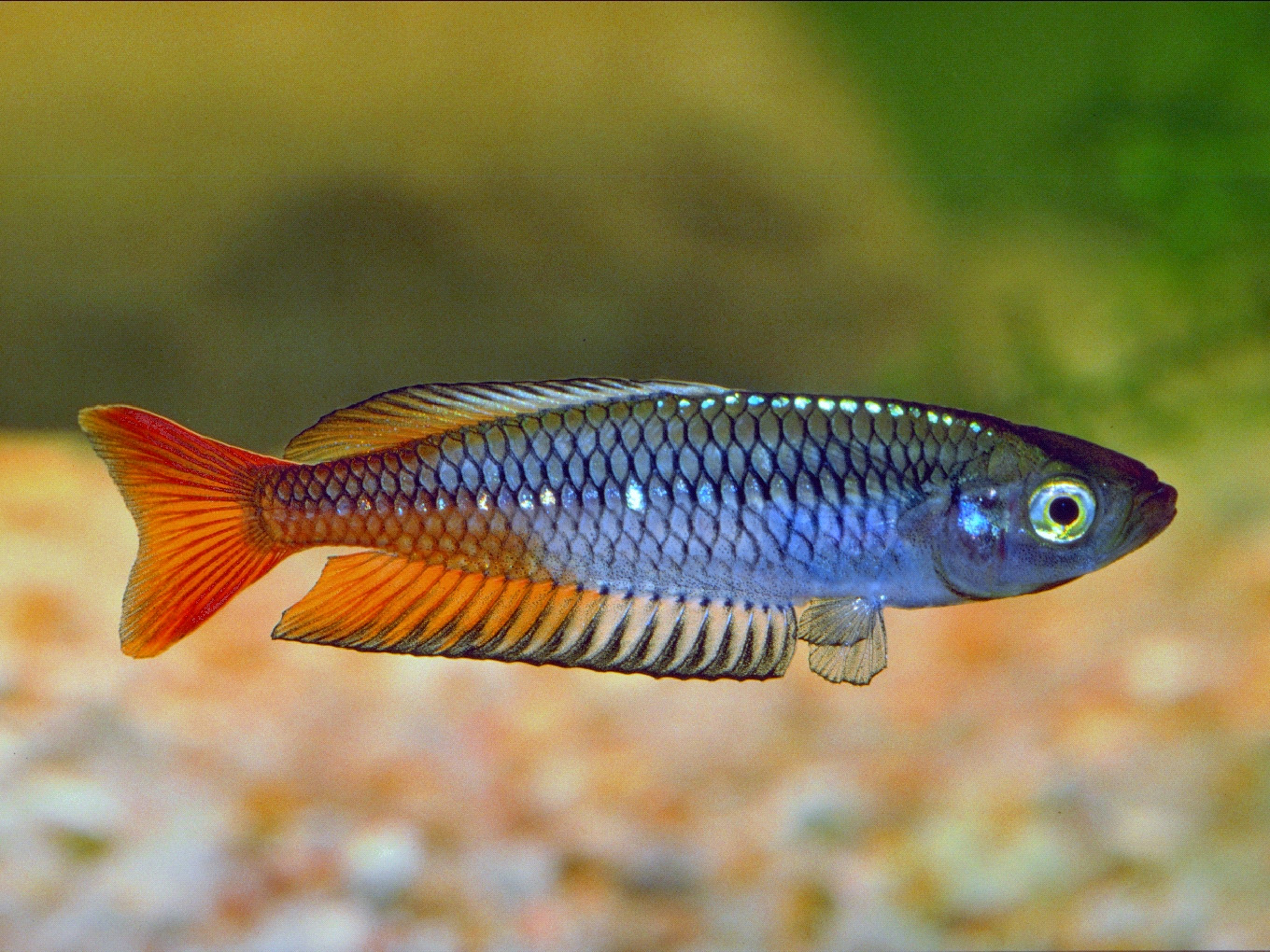
Body colour can be variable throughout their range with different colours, shades, or patterns. Most populations have their scales outlined with black that form an attractive latticework pattern over the body. However, some populations only show the scale pattern on the dorsal half of the body while the lower half can be either scattered with rounded or oblong markings, or completely clear. The body can be blue overall or a translucent light brown or olive colour with just a hint of either blue or red. Some males are completely red on the posterior third of the body. The dorsal fin can have a red outer border with black rays or black outer border with blue rays. The caudal fin is usually blue or reddish with a central dark sector. The anal fin usually has a black margin. The blue form is usually light brown on top of the body and fades ventrally to various shades of blue that increase towards the tail. Fish from dark tannin-stained waters can often be very dark.
Generally, the difference between the blue and red forms is just that the blue colour is replaced by red. All have scattered iridescent neon-blue spangles of varying densities that run along the back and nape. The different coloured forms can often be found in the same habitat. A third form does not have the black lateral lines or scale pattern and only has iridescent blue scales along the nape. This form is usually smaller than the other varieties. Females are not quite so highly coloured. Males, apart from their brighter colours, can be distinguished from females by having more elongated rays in the second dorsal and anal fins. Males also display a red nuptial stripe running from the upper lip and along the nape to the second dorsal fin during spawning activities.
A phylogenetic study (Page et al. 2004) found that R. ornatus exists as four separate populations. These populations correspond to:
- Byfield (Water Park Creek) south to Tin Can Bay and Fraser Island.
- Searys Creek (Rainbow Beach) population.
- Noosa River south to Brunswick River in NSW, including Bribie, Moreton and Stradbroke Islands.
- Northern New South Wales south of the Brunswick River.
Rhadinocentrus ornatus can grow to a maximum size of around 7–8 cm total length, but are usually more common at around 5–6 cm. In captivity they have been reported to grow somewhat larger at around 10 cm. However, that is more the exception rather than the rule. They tend to develop humped backs and faded colours as they get older and larger.
Etymology
The genus name Rhadinocentrus combines the Greek rhadinos, slender, and centron, thorn or spine, referring to the slender, flexible rays of the spinous dorsal fin. The species name ornatus is Latin for decorated, presumably referring to the two rows of black-margined scales along the middle of the sides, the scattered dark spots below them, and/or the dark spot at the base of each ray of the soft dorsal and anal fins.
Etymology compiled from C. Scharpf (2021), “Fishes of Sahul: An Etymological Survey (Part 4), the Rainbowfishes”, Fishes of Sahul 35(1): 1706–1714, and etyfish.org.
Distribution & Habitat
A 1924 survey of Moreton Island, noted that R. ornatus were found in swamps and unnamed streams south of the lighthouse. The first report of R. ornatus being found on the mainland that I can find was in an Aquarium & Terrarium Society of Queensland excursion report in 1927. At that time they were known only from Moreton Island. They were found in Belmont (Bulimba Creek), an outer southside suburb of Brisbane. Later that same year they were reportedly found in the Pimpama River catchment (Pimpama Island) on the Gold Coast in southeast Queensland. Members of the Aquarium & Terrarium Society were also the first to discover R. ornatus on Stradbroke Island. They were found in “a little freshwater creek a few miles north of Myora”. A description of the creek from the secretary, Amandus Rudel, in 1930 follows:
The water in this particular creek is very soft and of a slightly brownish colour. Except for a slimy sort of algae, the creek has no under-water plants of any description. No snails or other small insects were to be found and how Rhadinocentrus gets a living is rather a puzzle. The creek is rather narrow but very deep in places and winds its way through a very flat piece of country on the Island. It’s really more of a bog and one never knows when the ground gives way. Ferns and sphagnum moss grows all over the flat. Tracks of Kangaroos and Wallabies lead to the creek from all directions, and take it all around it's a very interesting piece of nature.”
A description of the fish was given as follows: “Back dark red with a row of blue shining scales. Body yellowish with two rows of black scales and black spots distributed all over body. Dorsal fin red with black edges and the same colour on the anal fin. Tail whitish edged black.”
Today we know that Rhadinocentrus ornatus have patchy distribution along the narrow coastal drainages of southern Queensland and northern New South Wales. Its range is nearly continuous amongst the unconnected coastal river catchments from the Nambucca River in the south to the Mary River in the north. North of the Mary River there is a break in the distribution of over 350 km to a disjunct northern population in the Byfield region (Water Park Creek) near Yeppoon. Their distribution includes lake and stream habitats on Bribie, Fraser, Moreton and Stradbroke Islands, a group of islands off the southern Queensland coast. Many of these lakes have never been connected to the mainland. The fish that are present have presumably been introduced as eggs on the feet of birds. Sea-level fluctuations has also been suggested for the colonisation of lakes on Moreton and Stradbroke islands by Rhadinocentrus ornatus when rivers flowed past the lakes during periods of lower sea level (Page & Hughes 2007). It has also been suggested that several coastal rivers that now discharge directly into Moreton Bay, including the Caboolture and Pine Rivers, may have previously flowed into the Brisbane River when sea-levels were much lower than at present.
Although not endangered, R. ornatus has a restricted distribution. Their distribution has likely contracted as a consequence of urban and rural development and the attendant altered hydrology and water quality. Habitat alteration and urban development are still having negative impacts in several areas. Extensive sampling in rivers and streams of the southeast Queensland mainland over the last few years has yielded relatively few individuals. Rhadinocentrus ornatus was a rare find during a survey of the Nerang River in 2007. Individuals were found both above and below the Heinz Dam. Nevertheless, they can still be found in reasonably numbers in the Sunshine Coast region north of Brisbane.
The introduced mosquitofish (Gambusia holbrooki), which are tolerant of a wide range of environmental conditions may displace native species such as R. ornatus. Gambusia holbrooki have been reported to prey on their eggs and larvae. Rhadinocentrus ornatus have also been observed to switch from areas of open water to refuge areas in the presence of Gambusia. Furthermore, experiments under captive conditions have shown Gambusia to exhibit aggressive behaviour towards R. ornatus.
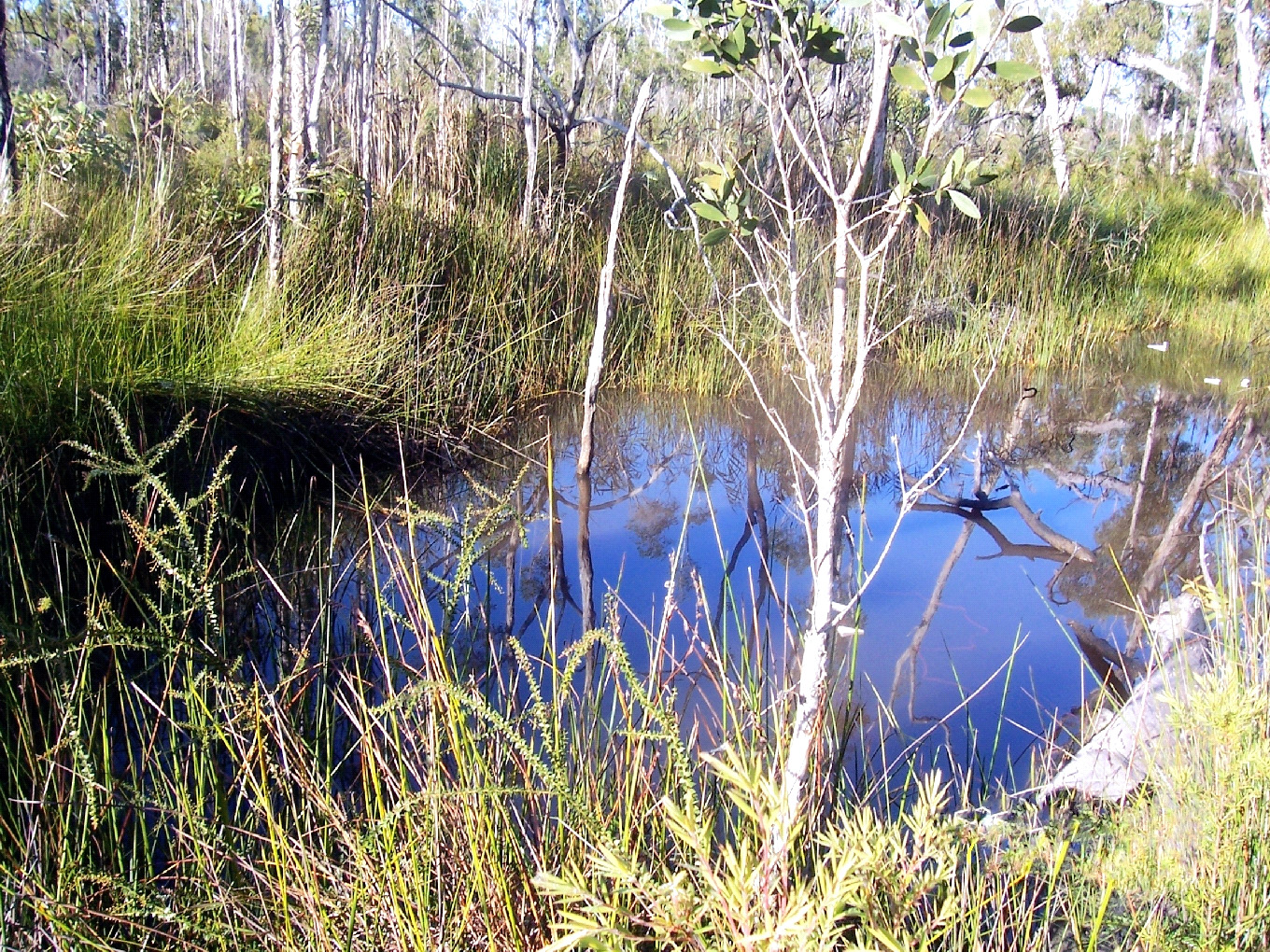
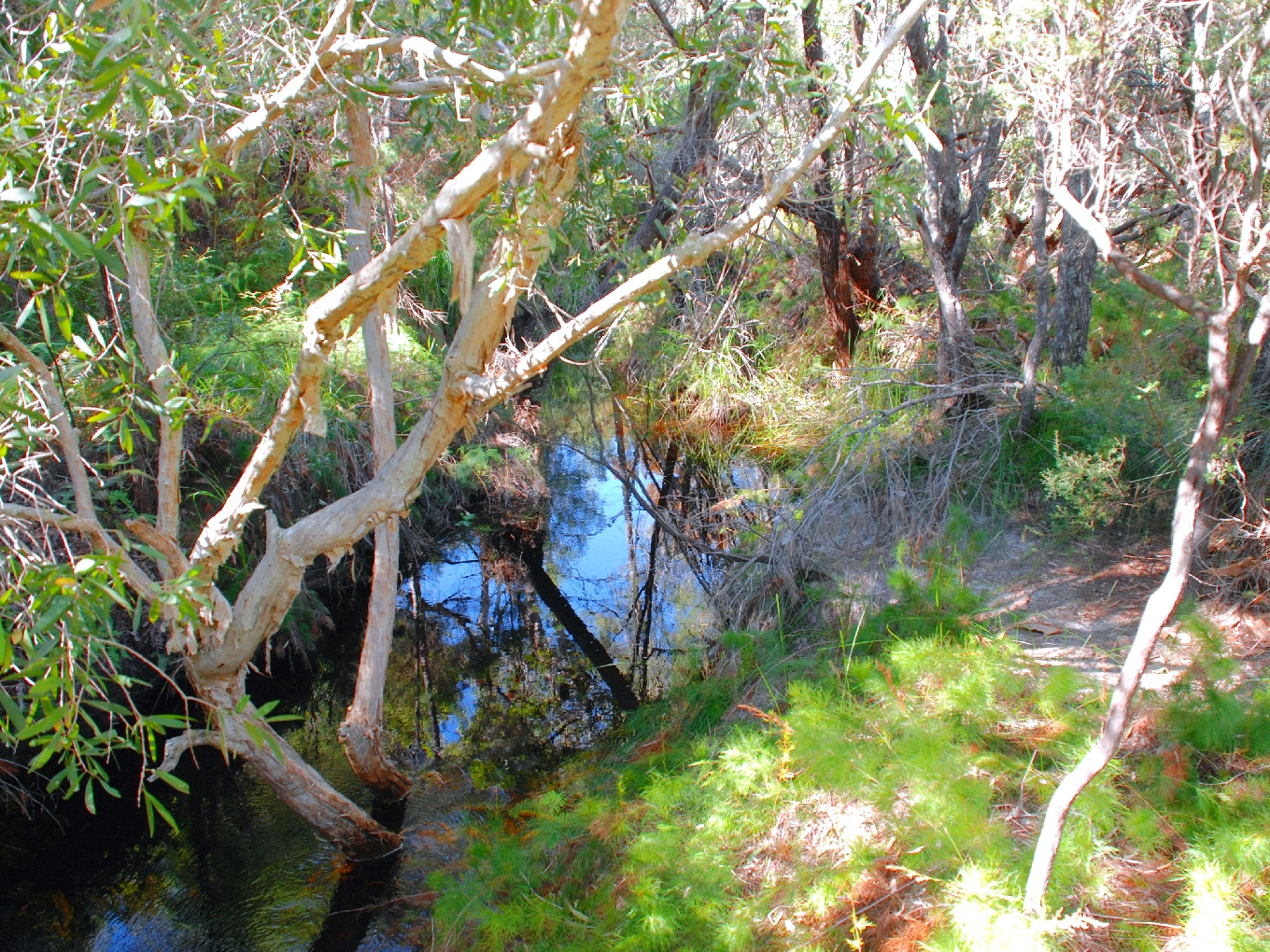
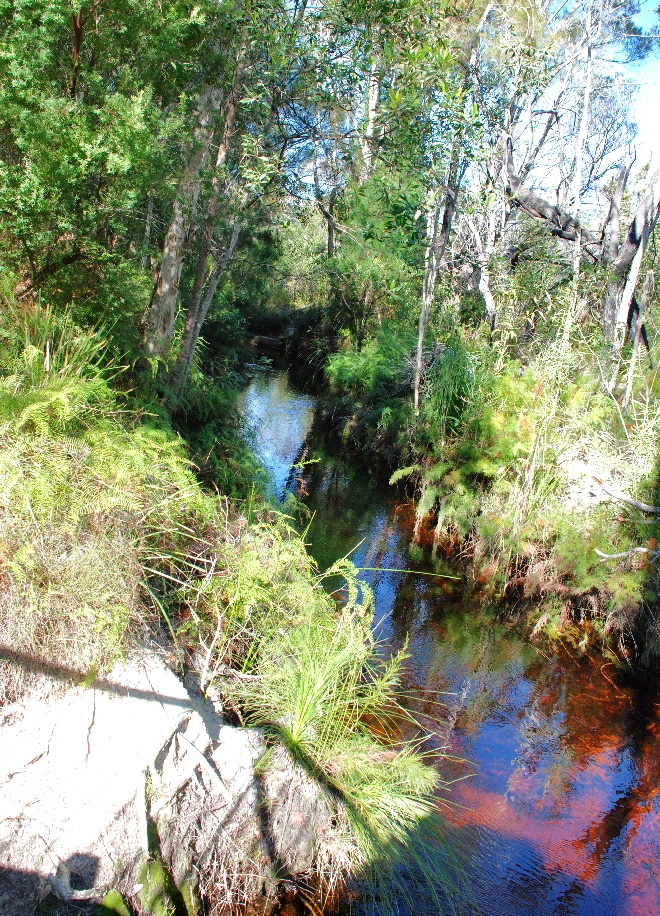
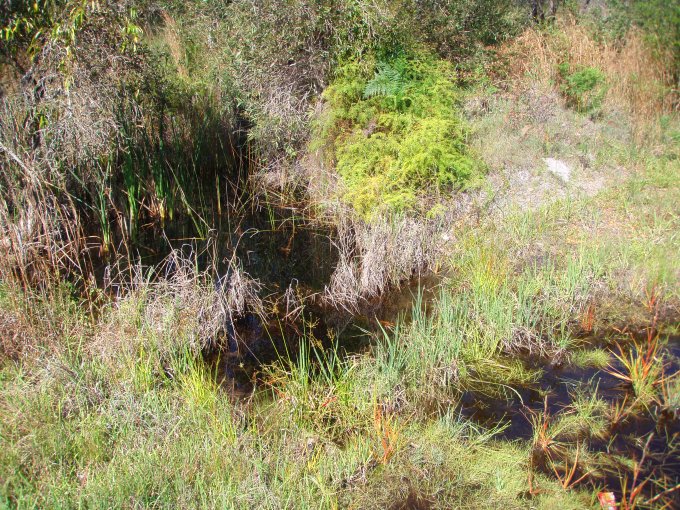
Rhadinocentrus ornatus congregate in small schools and occupy small, slowly moving creeks and marshy swamps, usually over a sandy substrate. The water temperature range has been reported from 12–32°C. However, they are known to survive water temperatures as low as 8°C. They are most abundant in unpolluted streams, lakes or swampy areas amongst emergent vegetation and reeds of the ‘wallum’, which is low, sandy, coastal heathland of southeast Queensland and northern New South Wales.
The word ‘wallum’ is an aboriginal word which was used to describe the small woody tree, Banksia aemula. Over time, the use of the term has been extended to describe other plant communities found in the coastal lowlands in the region, in particular heathlands, which tend to be dominated by Banksia aemula and other similar Banksia species.
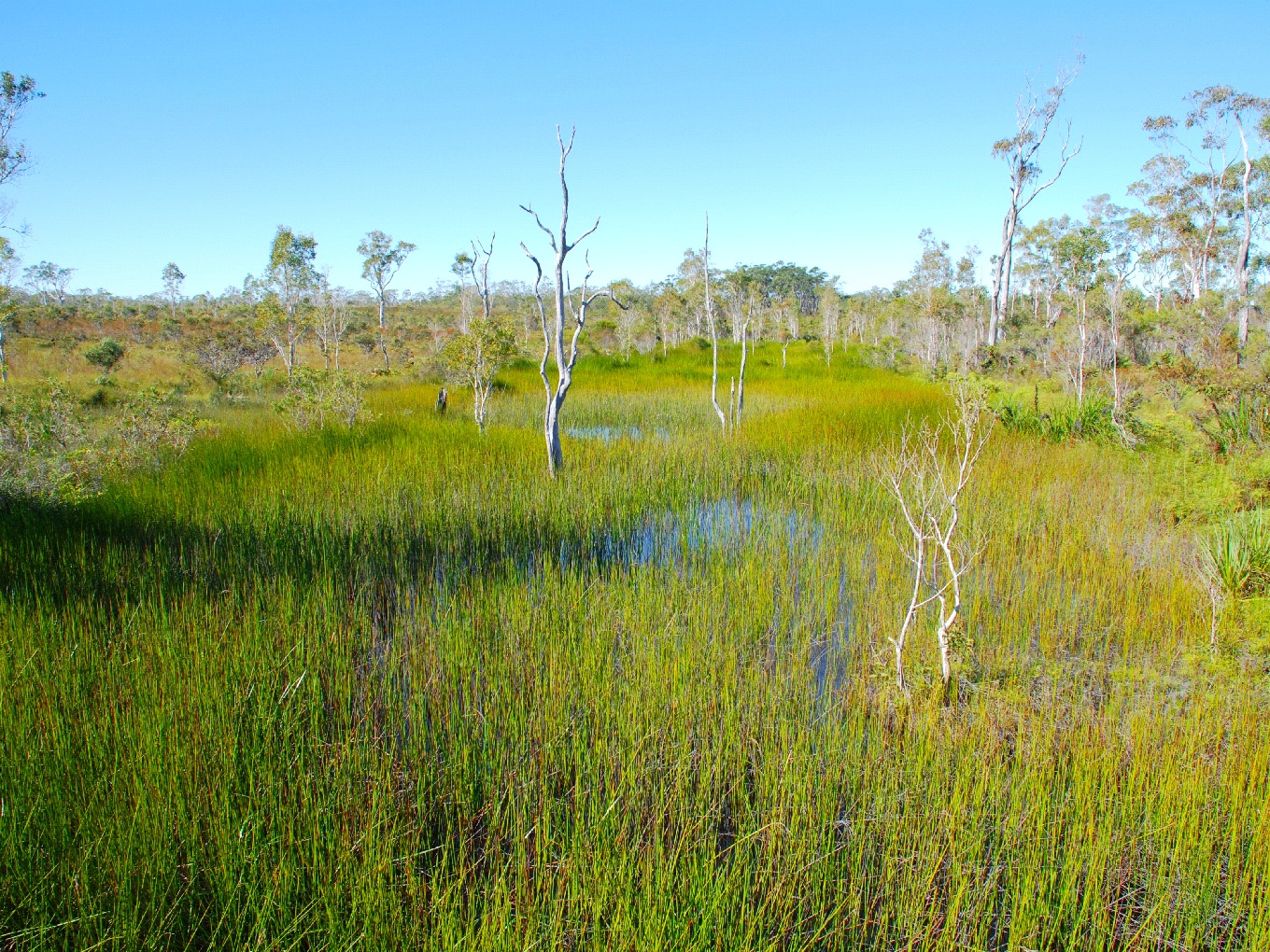
Wallum habitat associated with the perched lake systems of the Fraser Island–Cooloola region and those of Moreton and North Stradbroke Islands generally consists of extensive, dense reed beds in shallow areas of the lakes and the fringing areas of the lake support stands of M. quiquenervia.
Wallum habitats form in the catchments of creeks and usually support dense sedge-like vegetation. During periods of high rainfall these areas are often inundated with water. One of the most distinctive features of wallum is the tea-like colour and low pH of the water bodies associated with this habitat. Water colour is due in part to the amount of decaying organic matter in the water such as accumulations of leaf litter and other terrestrial material. The creeks and lakes can vary extensively in the degree of tannin colour in the water, ranging from clear to almost black. Acidity of the water is affected by input from vegetation, the age of the soils and the nature of the organic layer on which the water body forms. pH levels can range from as low as 2.8 to 6.8. It is the adaptation to low pH levels and the ability of the larvae of freshwater fishes to survive in these relatively acidic environments.
The dominance of humic acids among this organic material and the relatively low pH are not conducive to bacterial degradation, so particulate and dissolved humic compounds are metabolised very slowly. The dark colour of the water severely limits penetration of light, which, together with low concentrations of inorganic ions, restricts photosynthetic activity in aquatic plants. Limited photosynthesis and slow bacterial degradation results in low zooplankton and phytoplankton development.
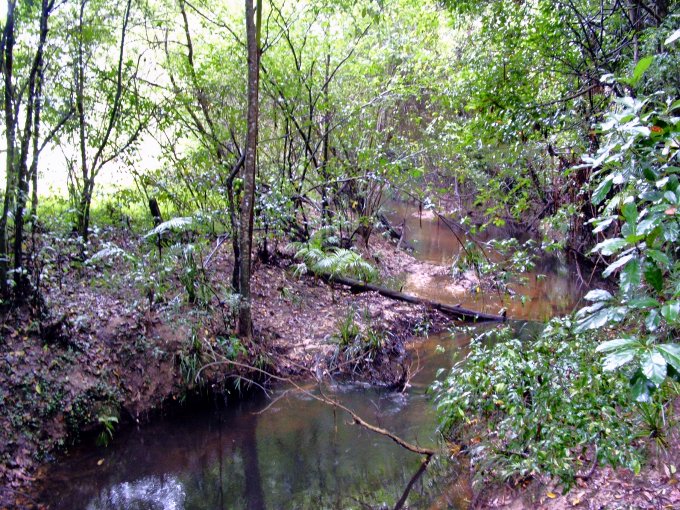
Rhadinocentrus ornatus have also been found in clear rainforest streams with dense overhanging vegetation and leaf litter. In these streams they are usually found around marginal vegetation, submerged logs, or branches. They may be found on their own or with other small-bodied native fishes. Many habitats occupied by Rhadinocentrus ornatus also contained individuals of Nannoperca oxleyana and Pseudomugil mellis.
Keeping & Caring
Very little is known about the natural life history and ecology of R. ornatus in the wild. Most information is mainly based on aquarium observations. In their natural environment spawning usually occurs during the warmer period of the year (SpringSummer) when water temperatures are around 24–32°C. Eggs and larvae have however, been found in the upper Orara River in northern New South Wales during Spring at temperatures of 16–17°C. Eggs adhere to fine-leaved plants or among the roots of floating vegetation.
Rhadinocentrus ornatus have been a popular aquarium fish with Australian native fish enthusiasts for many decades. They are a fish that requires a little more attention than most other rainbowfishes. They can be maintained and bred in water conditions that are suitable for most aquarium species. However, they will survive best if maintained at a temperature range of 20–28°C; pH 6.0–7.0; and water hardness from 5–100 ppm. They will display their best colouration when maintained in a well-planted aquarium of their own, and in a group of around 10 to 20 individuals, particularly if maintained under aquarium conditions that will show their iridescent reflective colouration.
Breeding R. ornatus is similar to most rainbowfishes in captivity. Females spawn small numbers (3–5) of eggs each day. The total number may range from around 20 to 80 eggs over several days. Hatching occurs in about 6–10 days at temperatures between 23–28° Celsius. Hatched larvae are well developed and competent swimmers. Upon hatching the larvae swim at the surface of the water, generally within the upper 1cm water layer. The mouth is well developed and functional, and they begin feeding within hours of becoming freeswimming. They can be fed commercially available fry foods, newly-hatched brine shrimp, copepods, phytoplankton and microworm.
Rhadinocentrus ornatus characteristically display a considerable range of growth rates, depending on conditions such as food, space, numbers, competition and water temperature. Growth rates of 20 mm in 3 weeks and 30–40 mm in 10 weeks have been reported in captivity with maturity at about 9–12 months. Life expectancy in captivity is around 3–4 years.
A dietary analyses of their natural foods showed that the main components of their diet are terrestrial insects (29~34%), Aquatic dipterans (16–24%), Copepods (8–11%), Cladocerans (0–6%), Ostracods (5–9%), Decapods (0–2%), algae or pollen, mostly pollen (6–32%), seeds (0–1%), aquatic acarinids (0–1%), and miscellaneous organic matter (0–7%).
References
- Aquarium and Terrarium Society of Queensland Archives 1926-1938.
- Arthington A.H., M. Kennard and G.J. Miller (1990) Water quality and trophic status of Fraser Island lakes. Final report, Part A. Division of Environment, Queensland Department of Environment and Heritage.
- Arthington A.H. and C.J. Marshall (1999) Diet of the Exotic Mosquitofish, Gambusia holbrooki, in an Australian Lake and Potential for Competition with Indigenous Fish Species. Asian Fisheries Science 12: 1-16.
- Coaldrake J.E. (1961) The ecosystem of the coastal lowlands ("wallum") of southeast Queensland. Bulletin 283 (CSIRO: Melbourne).
- Coaldrake J.E. (1962) The coastal sand dunes of southern Queensland. Proceedings of the Royal Society of Queensland 72: 101-115.
- Hancox D., C.J. Hoskin and R.S. Wilson (2010) Evening up the score: sexual selection favours both alternatives in the colour-polymorphic ornate rainbowfish. Animal Behaviour 80: 845-851.
- Hancox D., R.S. Wilson and C.R. White (2013) Visual habitat geometry predicts relative morph abundance in the colour-polymorphic ornate rainbowfish. Proceedings of the Royal Society B: Biological Sciences, 280: 1-7.
- Marshall J.C. (1988) An extension of the known range of Rhadinocentrus ornatus. Fishes of Sahul 5: 196-197.
- Mather A., D. Hancox and C. Riginos (2015) Urban development explains reduced genetic diversity in a narrow range endemic freshwater fish. Conservation Genetics 16: 625-634.
- McKay R. & J. Johnson (1990) The freshwater and estuarine fishes, In: The Brisbane River: A source book for the future, Davie P, Stock EC and Choy DL (Eds), pp 153-168, Australian Littoral Society, Brisbane, Australia.
- Page T.J., S. Sharma and J.M. Hughes (2004) Deep phylogenetic structure has conservation implications for ornate rainbowfish (Melanotaeniidae: Rhadinocentrus ornatus) in Queensland, eastern Australia. Marine and Freshwater Research 55: 165-172.
- Page T.J. & J.M. Hughes (2007) Phylogeographic structure in an Australian freshwater shrimp largely pre-dates the geological origins of its landscape. Heredity 98: 222-231.
- Pusey B.J., M.J. Kennard and A.H. Arthington (2004) Freshwater Fishes of North-Eastern Australia. CSIRO Publishing, Victoria.
- Regan C.T. (1914) Report on the freshwater fishes collected by the British Ornithologists' Union expedition and the Wollaston expedition in Dutch New Guinea. Transactions of the Zoological Society of London: 275-286.
- Sharma S. & J.M. Hughes (2011) Genetic structure and phylogeography of two freshwater fishes, Rhadinocentrus ornatus and Hypseleotris compressa, in southern Queensland, Australia, inferred from allozymes and mitochondrial DNA. Journal of Fish Biology 78: 57-77.