

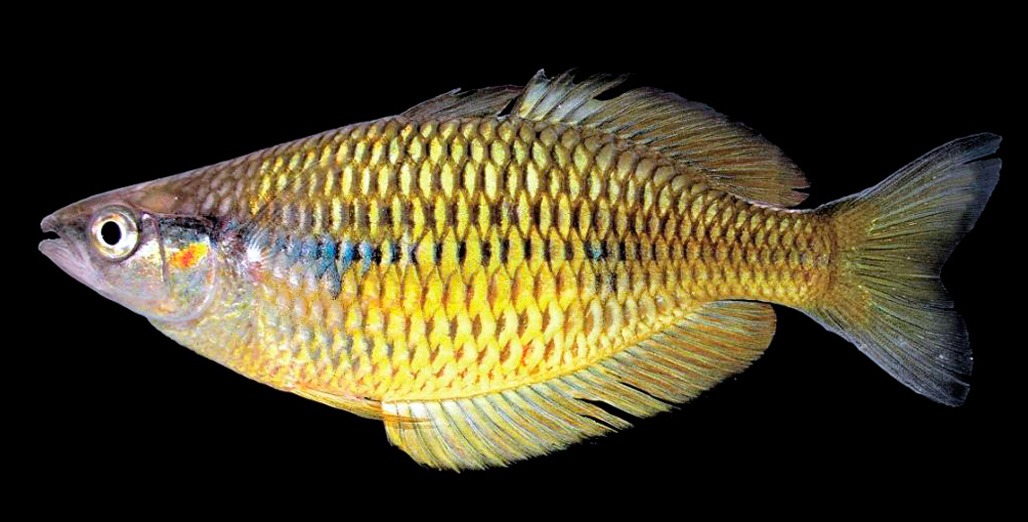
Melanotaenia naramasae
Species Summary
Melanotaenia naramasae is one of eight closely related rainbowfishes from the Birds Head region of West Papua, Indonesia, described together in 2015 on the basis of combined evidence: a cytochrome oxidase I (COI) gene phylogeny, genotyping at 12 microsatellite loci, and diagnostic morphological characters. The approach revealed a level of cryptic diversity in the region well beyond what traditional morphological survey alone had detected. It belongs to the ‘Southern Birds Head’ group, within the ‘Birds Neck’ species cluster alongside M. angfa and M. parva.
Etymology
The species is named for the Naramasa River, the type locality.
Etymology compiled from C. Scharpf (2023), “Fishes of Sahul: An Etymological Survey (Part 6), the rainbowfishes (continued)”, Fishes of Sahul 37(1): 2006–2022, and etyfish.org.
Distribution & Habitat
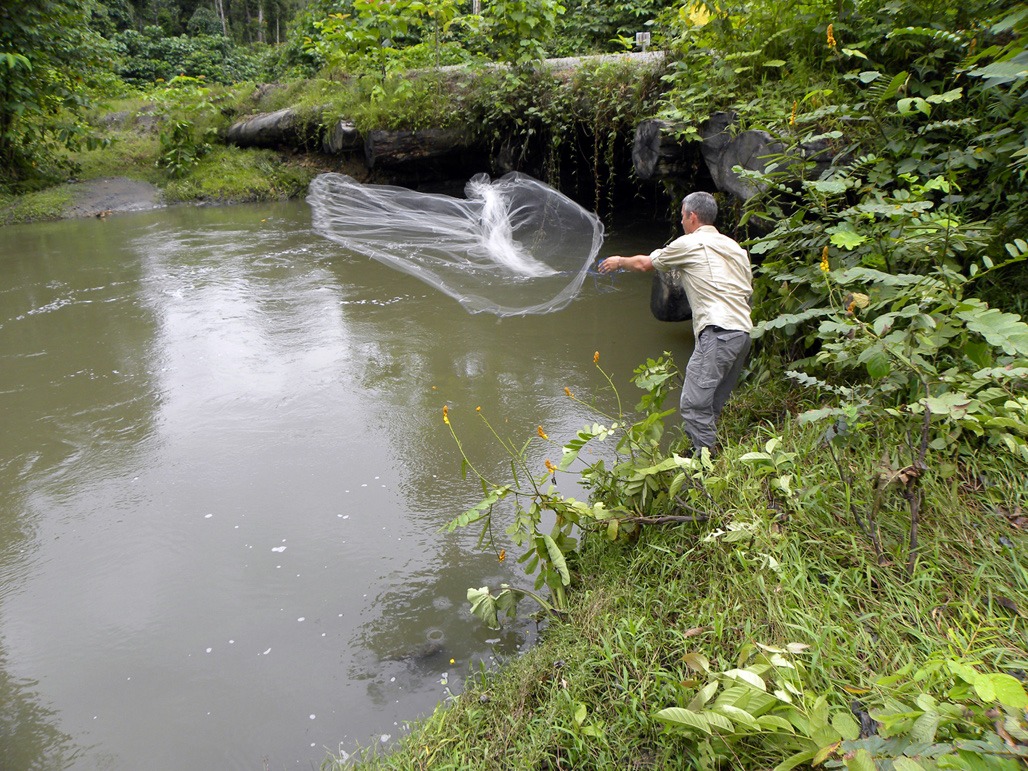
Melanotaenia naramasae is known only from the upstream Naramasa River system, which flows west to Bintuni Bay on the Birds Neck Isthmus. The stream, 20–30 m wide at the type locality, runs through primary forest over gravel and sand, with fish concentrated along the riverbank around log debris.
Description & Comparison with Similar Species
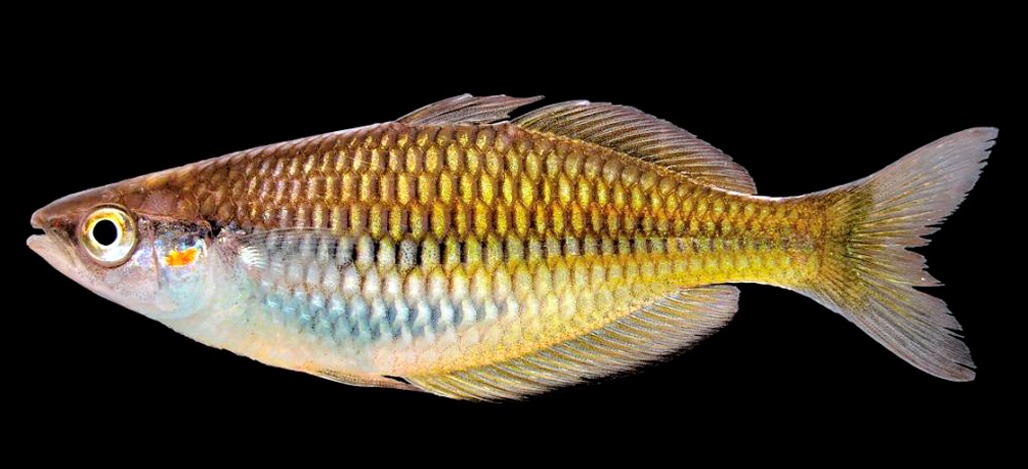
Live males are overall yellow, brown on the nape and crown, with a discontinuous dark blue mid-lateral stripe one to two scales wide, intensifying to two scales just behind the pectoral-fin base, interrupted at mid-body and faint on the caudal peduncle; the fins are otherwise plain yellow with no dorsal or anal margin stripe. Females carry a large blue blotch from the pectoral-fin base to the middle of the anal fin. Melanotaenia naramasae differs from M. angfa by a greater body and caudal-peduncle depth, a longer pectoral fin, fewer lateral scales and gill rakers, and the position of the dorsal-fin origin relative to the anal fin; from M. parva, by a shorter caudal peduncle and prepelvic length, a longer pelvic fin, longer dorsal and anal fin bases, and more dorsal soft rays and cheek scales.
Account compiled for Home of the Rainbowfish from M. F. I. Nugraha, Kadarusman, N. Hubert, J.-C. Avarre, R. K. Hadiaty, J. Slembrouck, O. Carman, Sudarto, R. Ogistira & L. Pouyaud (2015), “Eight new species of Rainbowfishes (Melanotaeniidae) from the Birds Head Region, West Papua, Indonesia”, Cybium 39(2): 99–130.
References
- Nugraha M.F.I., Kadarusman, N. Hubert, J.C. Avarre, R.K. Hadiaty, J. Slembrouck, O. Carman, Sudarto, R. Ogistira and L. Pouyaud (2015) Eight new species of Rainbowfishes (Melanotaeniidae) from the Birds Head Region, West Papua, Indonesia. Cybium 39(2): 99-130.