

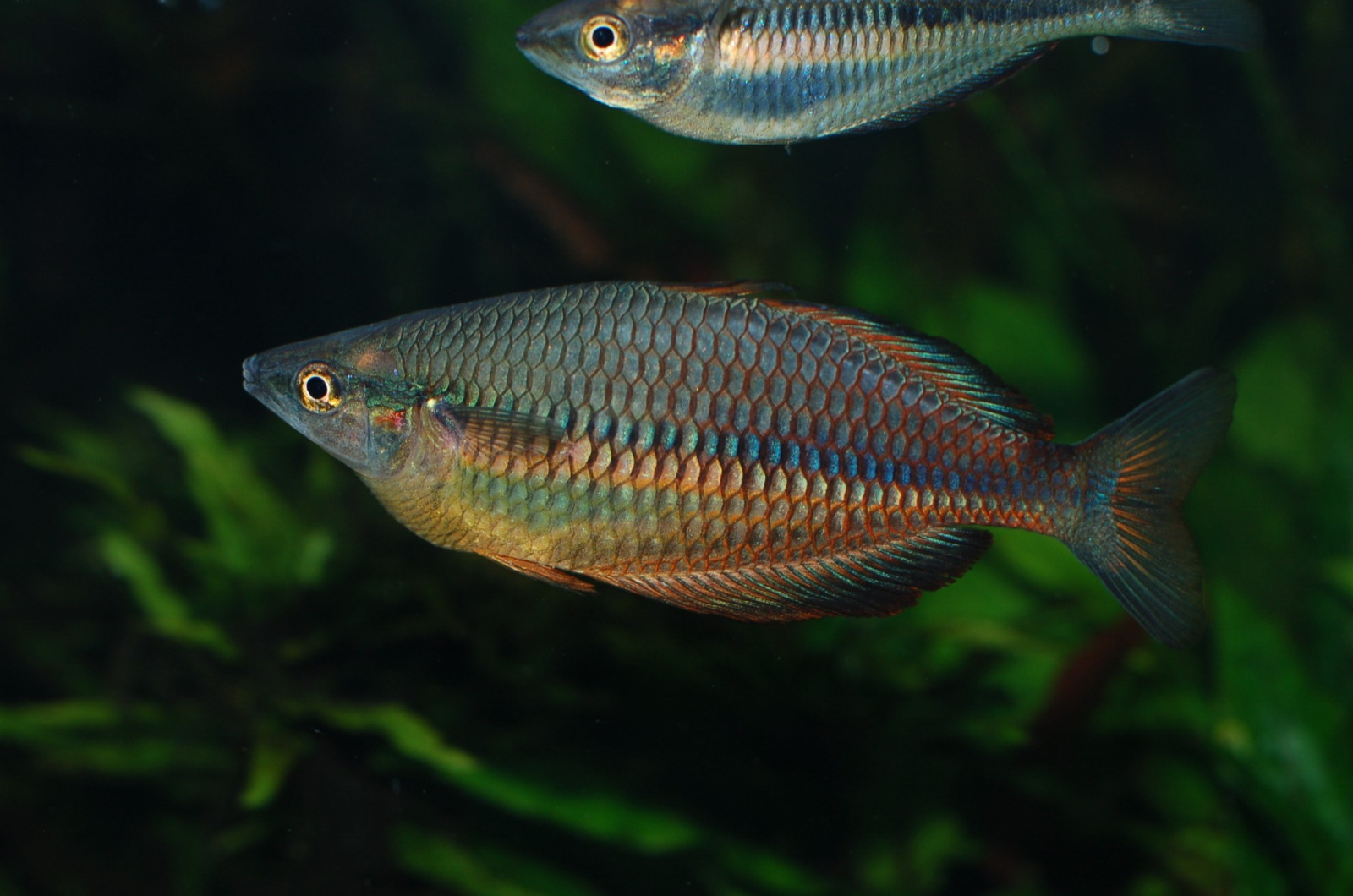
Melanotaenia veoliae
Species Summary
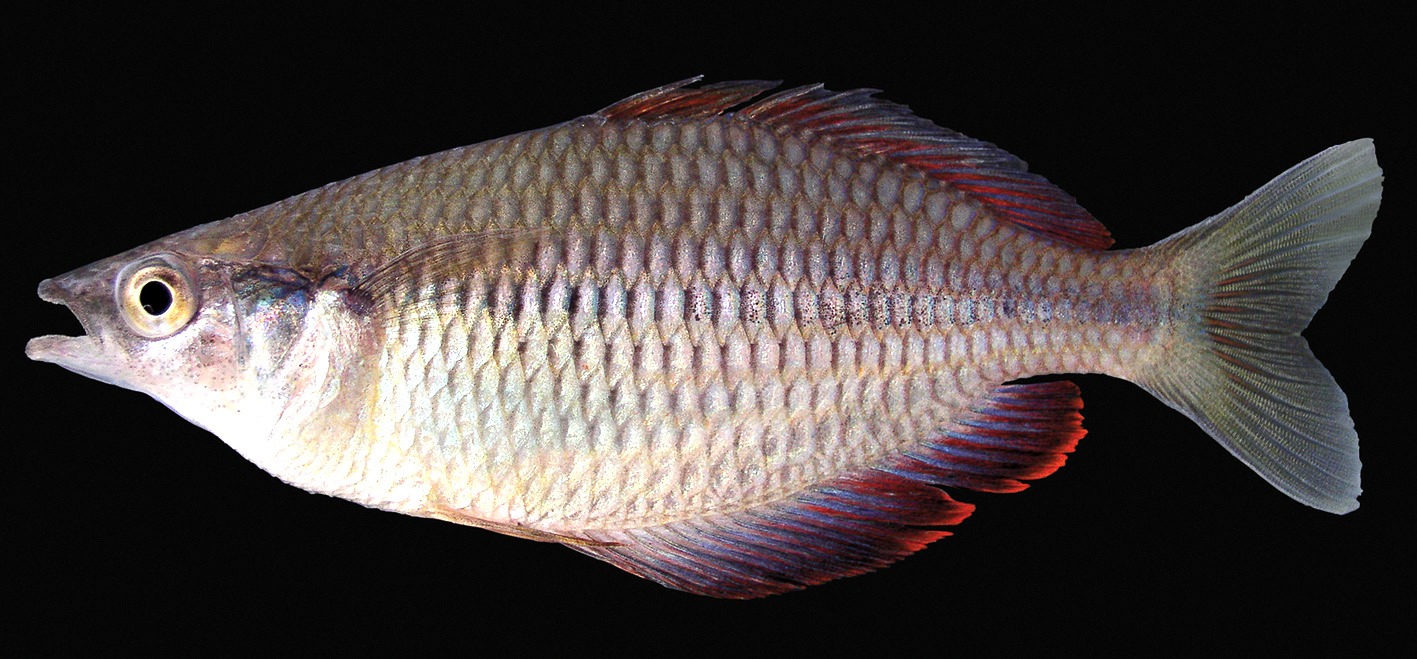
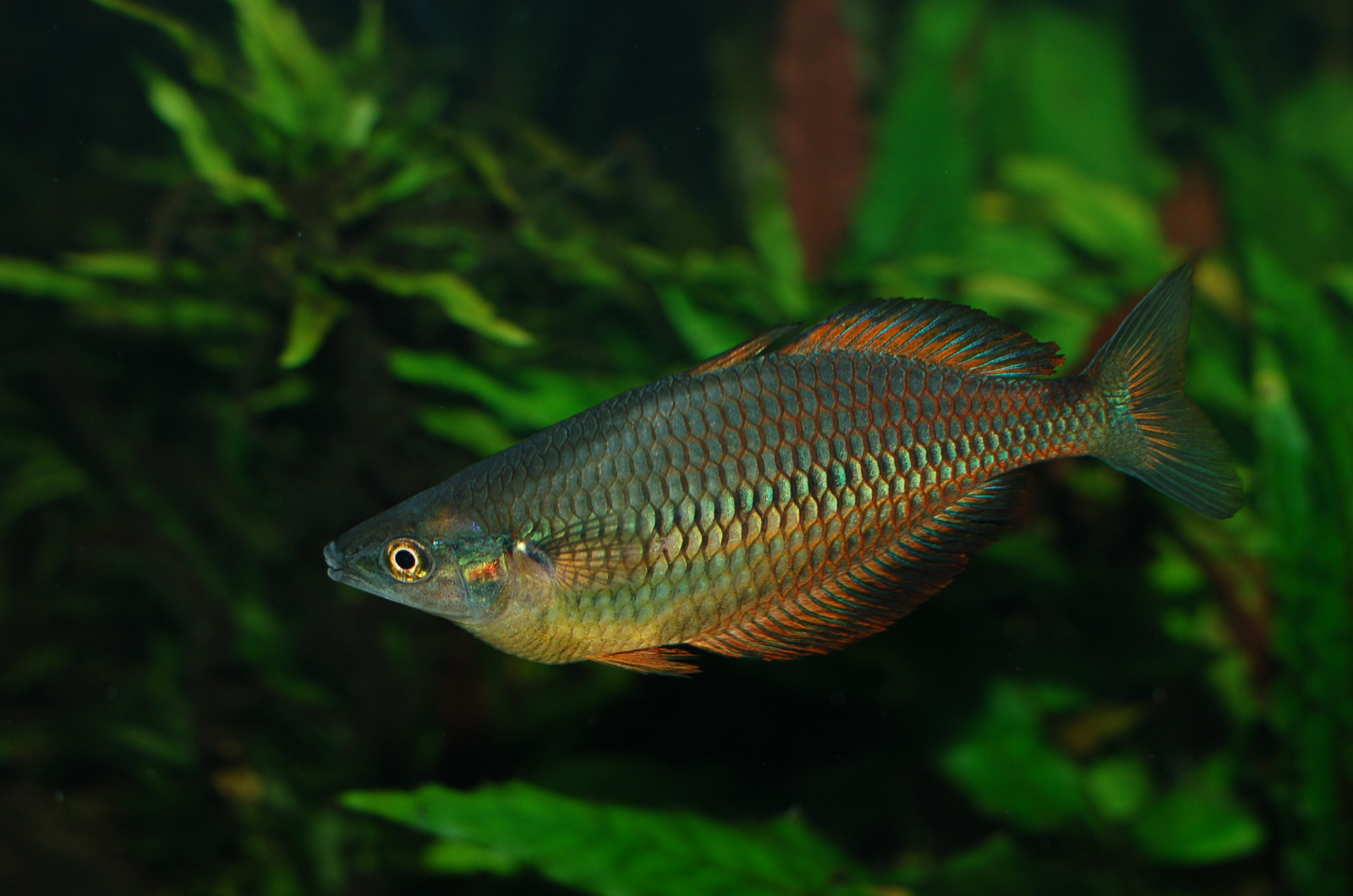
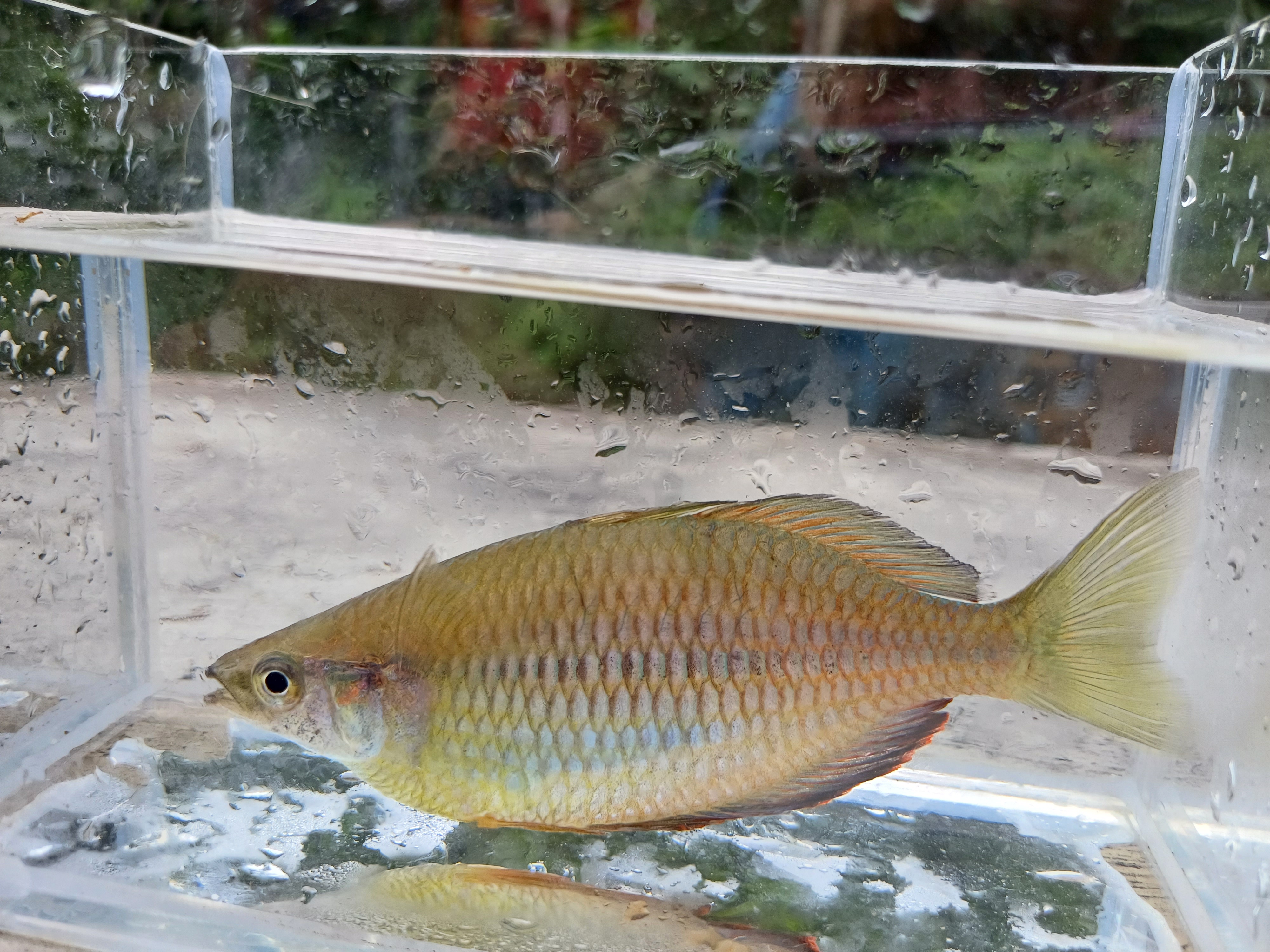
Melanotaenia veoliae is one of four closely related rainbowfishes described together in 2012 from the Arguni Bay region of the Bomberai Peninsula and Bird’s Neck, West Papua, Indonesia. All four are allied to M. ammeri, M. irianjaya, M. kokasensis, M. angfa and each other. Preserved male specimen show a distinctive pattern: grey-pink above, a large blue patch behind the pectoral fin, six or seven grey stripes along the flank, and dorsal and anal fins of a striking blood red with azure blue rays. Live fish show much more red on the body, with a purple hue.
In 2023, a collecting party (Graf, Heemskerk, Mailliet & Ohee) collected live specimen from Gebiasi creek. These were successfully bred and are now becoming available in the aquarium hobby in Europe and the USA. Further collections were made by Indonesian exporters, that became available in Vietnam and presumably elsewhere.
Etymology
The species is named in honour of the Foundation Veolia Environment, which sponsored, among other expeditions, the Lengguru-Kaimana Expedition of October–November 2010, during which the holotype was collected.
Etymology compiled from C. Scharpf (2023), “Fishes of Sahul: An Etymological Survey (Part 6), the rainbowfishes (continued)”, Fishes of Sahul 37(1): 2006–2022, and etyfish.org.
Distribution & Habitat
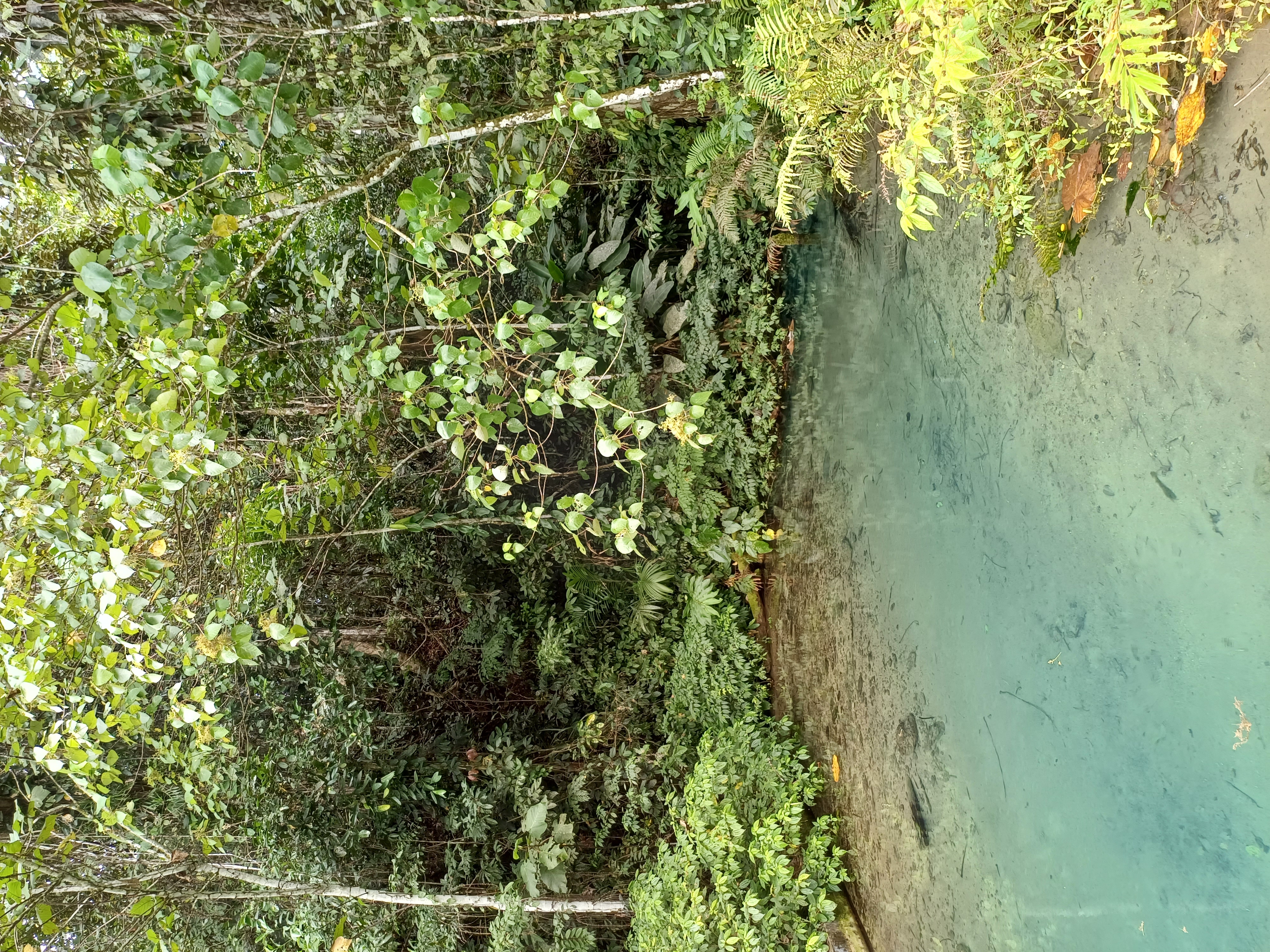
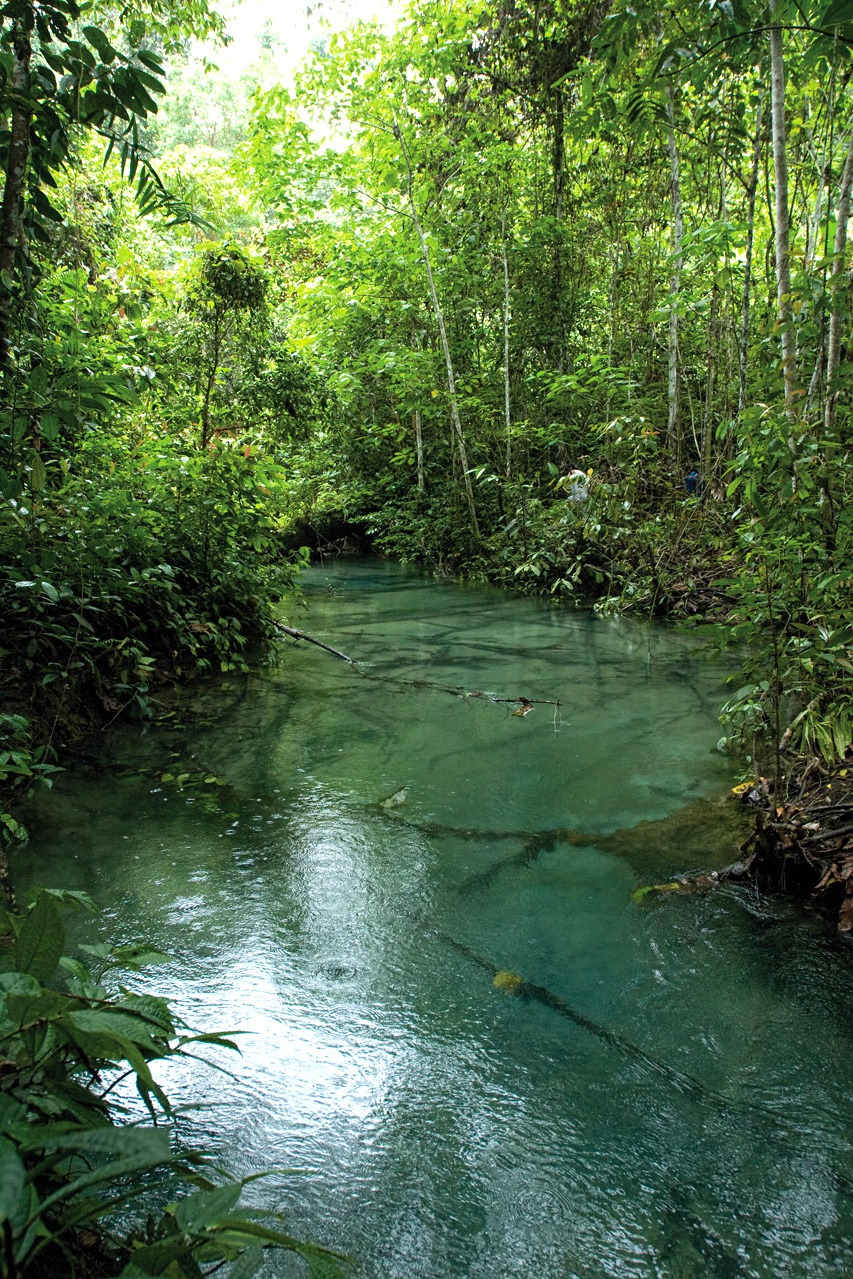
Melanotaenia veoliae is known only from Gebiasi Creek, a karst resurgence emerging from the Kaimana Anticline. The creek flows about 60 m from a karstic cave before disappearing underground for some 200 m, resurfacing in mangrove and eventually reaching Arguni Bay; the type locality itself is a narrow (2–3 m wide), shallow, crystal-blue stream in primary forest at about 40 m elevation.
Comparison with Similar Species
Melanotaenia veoliae differs from M. ammeri in a wider interorbital space, longer caudal peduncle and more gill rakers; from M. irianjaya in lacking a margin stripe on the dorsal fin, plus a shorter snout and fewer pectoral rays; and from M. kokasensis in a smaller eye and longer second dorsal-fin base. Compared with its Arguni Bay neighbours, it differs from M. arguni in a wider interorbital space and longer caudal peduncle, and from M. urisa in numerous proportions including a larger head, wider interorbital space and smaller eye.
Account compiled for Home of the Rainbowfish from Kadarusman, R. K. Hadiaty, G. Segura, G. Setiawibawa, D. Caruso & L. Pouyaud (2012), “Four new species of Rainbowfishes (Melanotaeniidae) from Arguni Bay, West Papua, Indonesia”, Cybium 36(2): 369–382.
Content edited/extended by Christophe Mailliet, based on his experience keeping this species.
References
- Kadarusman, R.K. Hadiaty, G. Segura, G. Setiawibawa, D. Caruso & J. Pouyaud (2012) Four new species of Rainbowfishes (Melanotaeniidae) from Arguni Bay, West Papua, Indonesia. Cybium, 36(2): 369-382.