

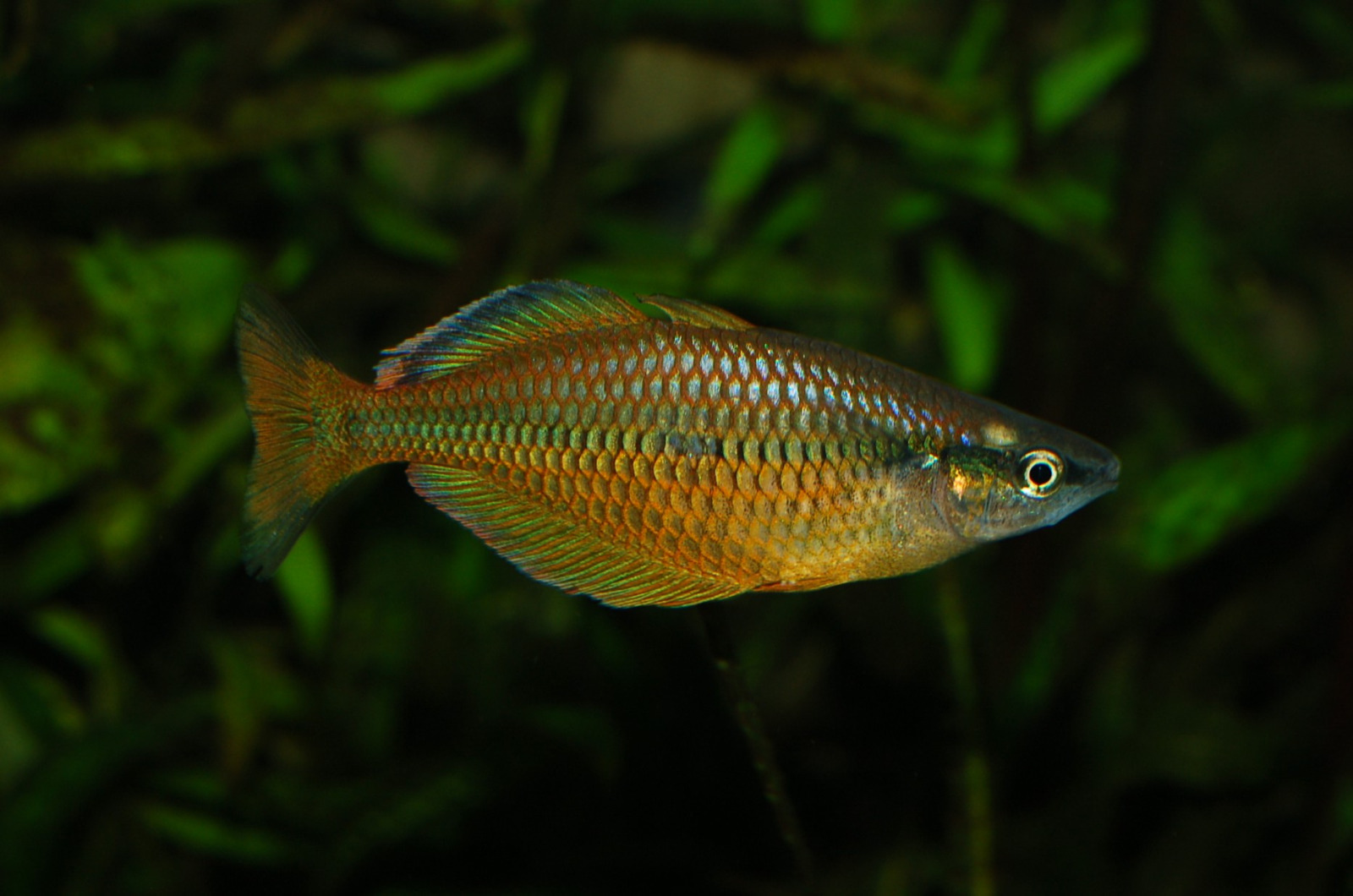
Melanotaenia wanoma
Species Summary
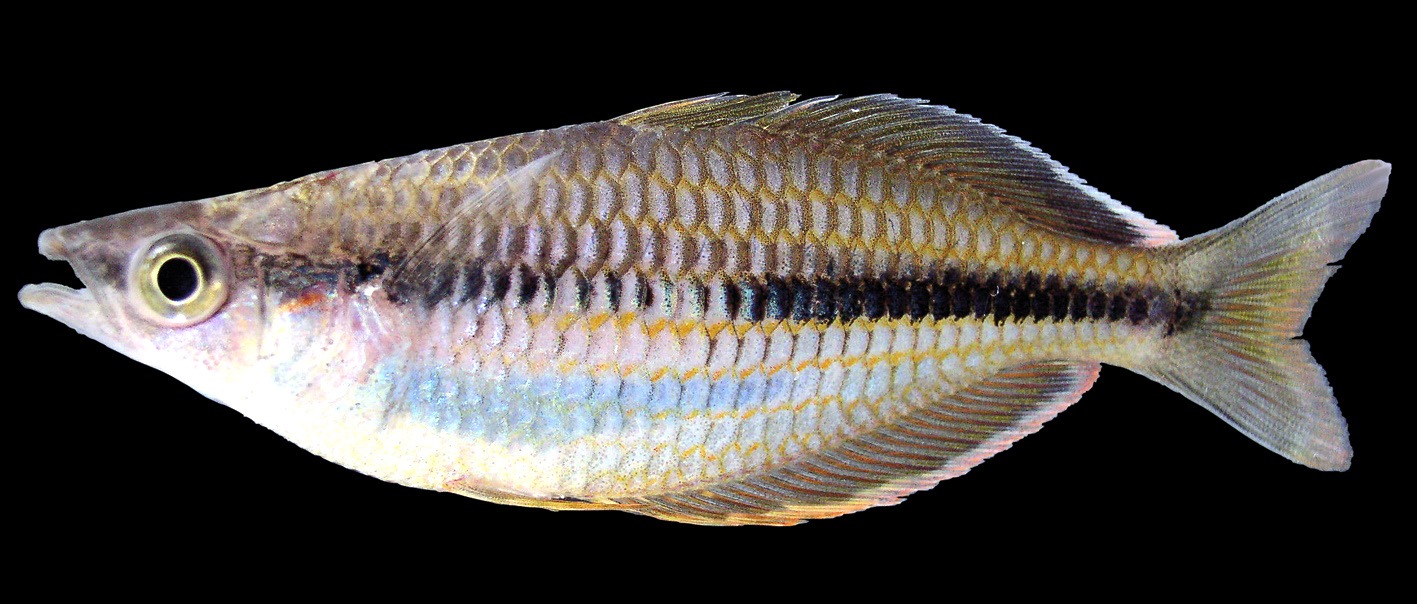
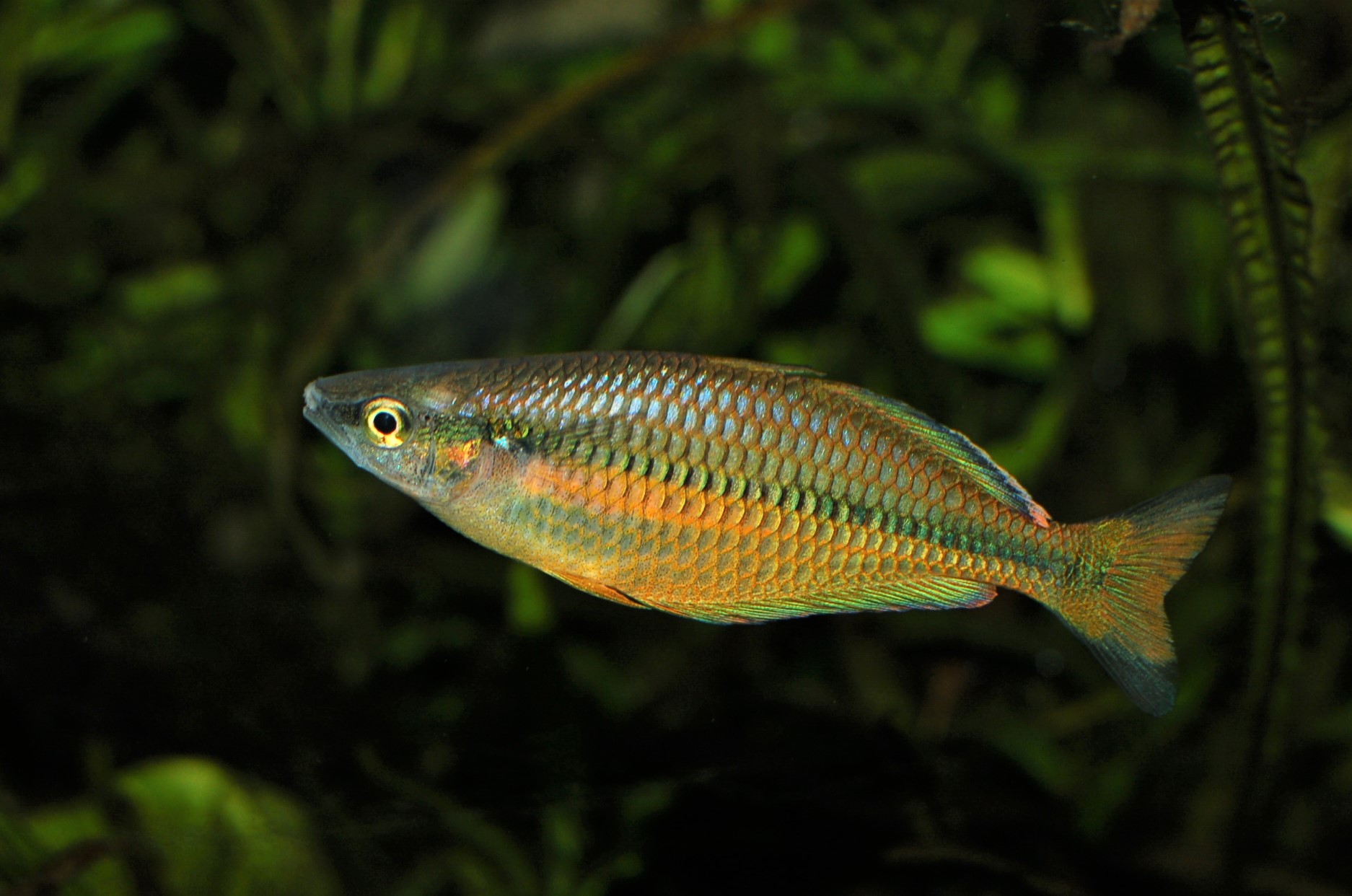
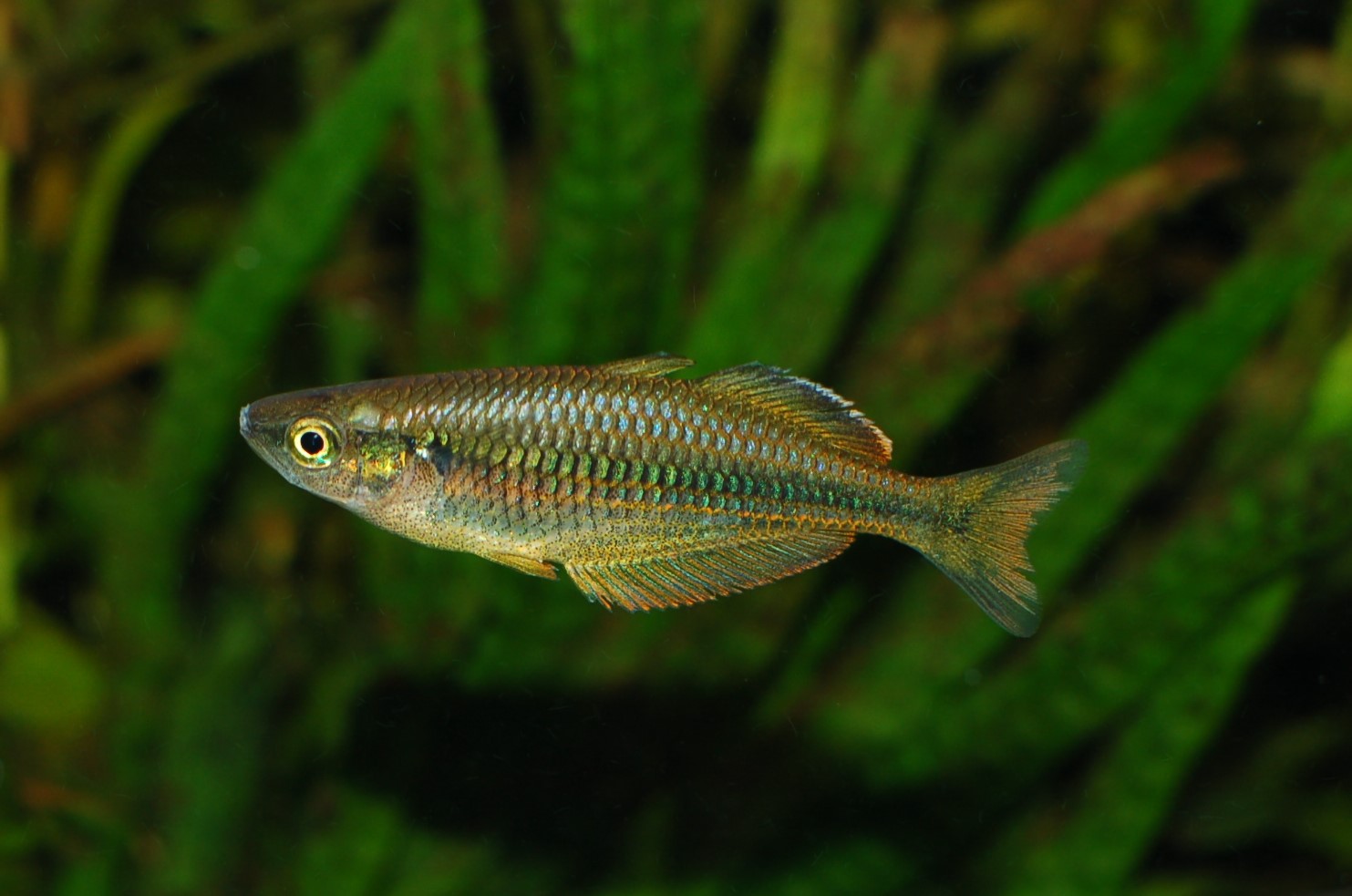
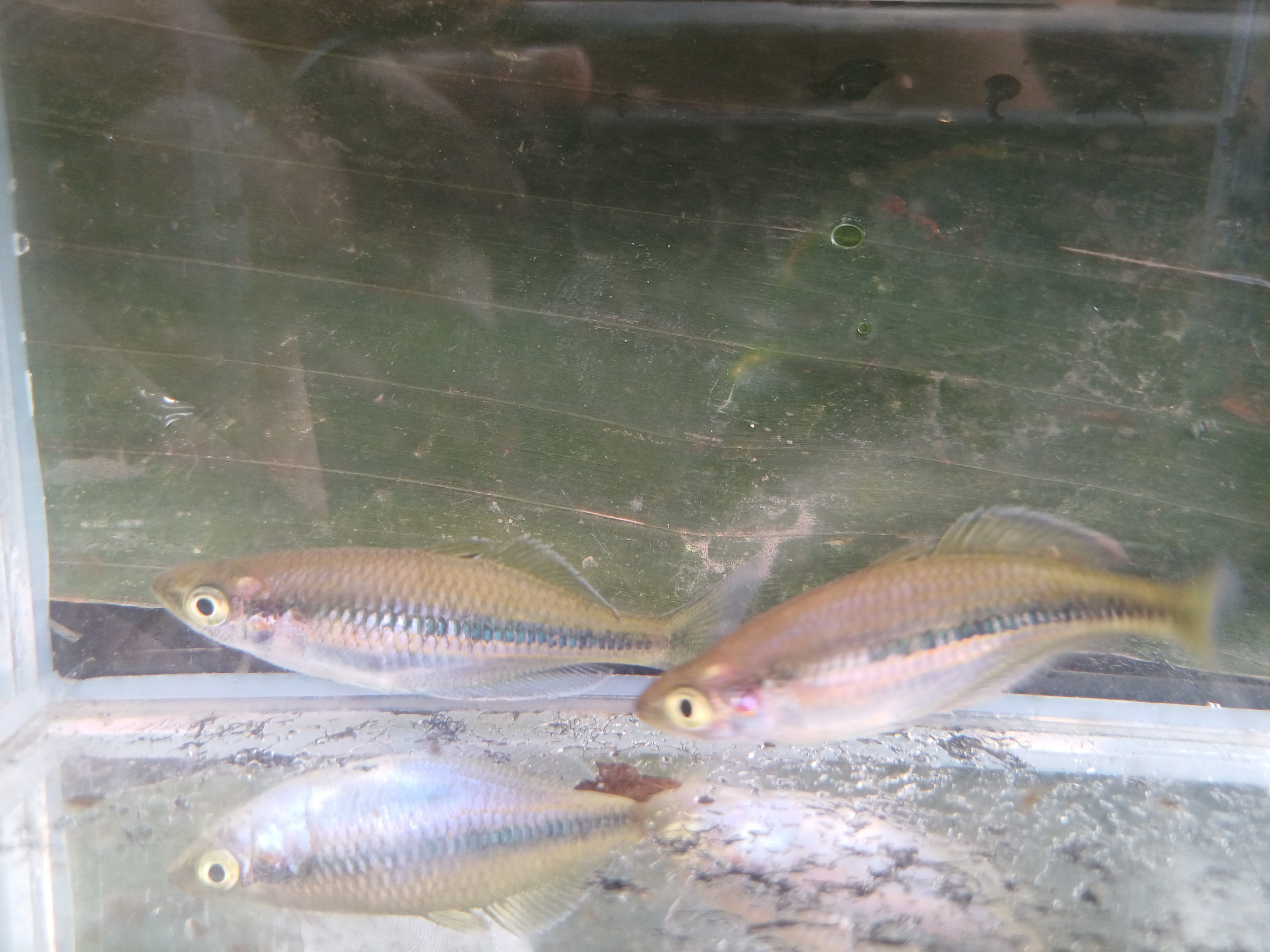
Melanotaenia wanoma is one of four closely related rainbowfishes described together in 2012 from the Arguni Bay region of the Bomberai Peninsula and Bird’s Neck, West Papua, Indonesia. All four are allied to M. ammeri, M. irianjaya, M. kokasensis, M. angfa and each other. Melanotaenia wanoma shows relatively little difference between the sexes beyond colour intensity, and young fish are difficult to tell apart before they become sexually mature. Unlike most rainbowfishes, males do not develop a substantially deeper body or more elongated fin rays than females. Preserved males are brownish above with a golden patch on the operculum, a broad oblong blue blotch below the pectoral fin, eight or nine narrow orange stripes, and dorsal and anal fins marked with a distinctive white margin stripe with reddish tips. Live males are bright yellow to orange, with a distinctive colour pattern in the dorsal fin.
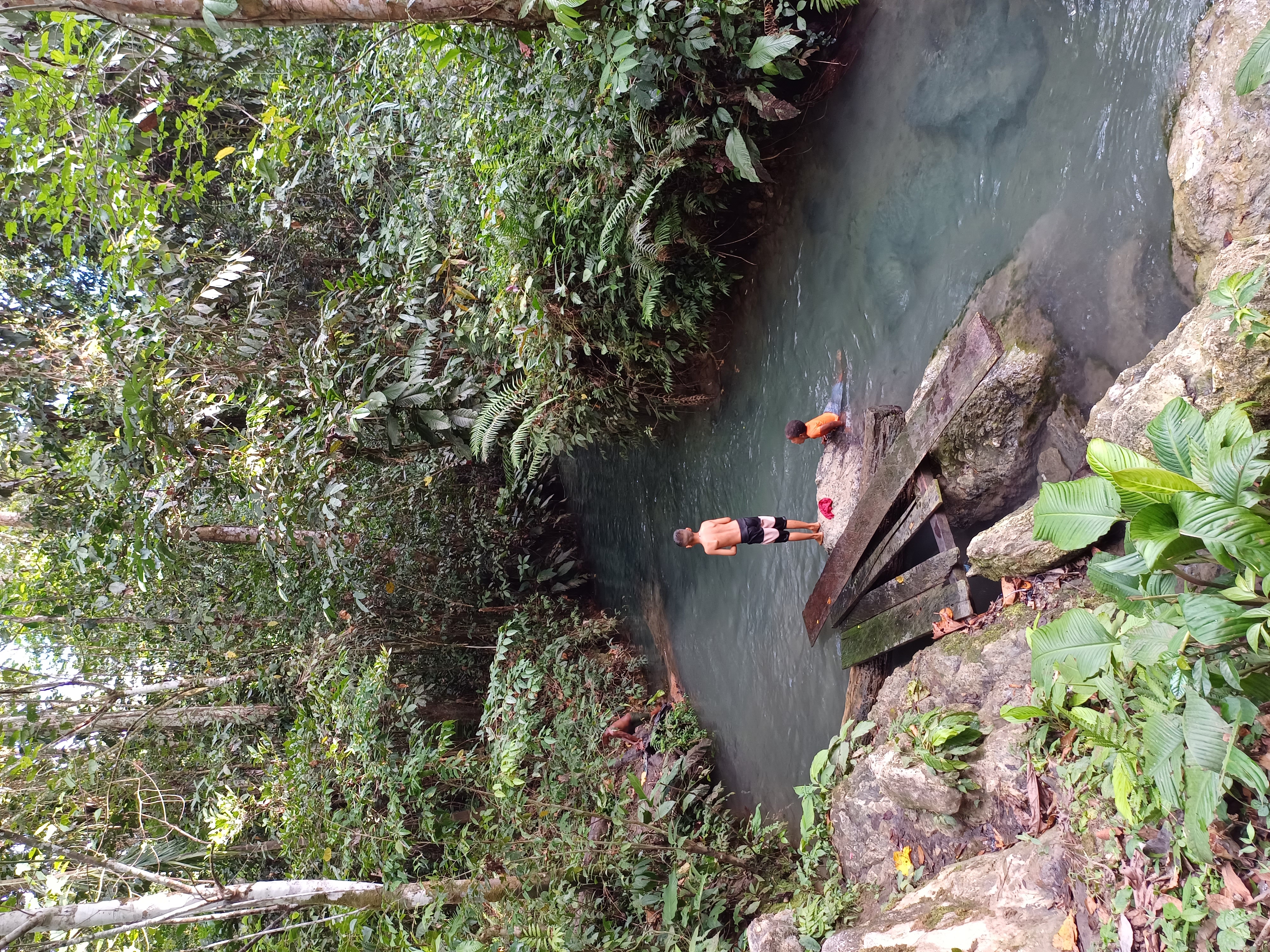
In 2023, a collecting party (Graf, Heemskerk, Mailliet & Ohee) collected live specimen from Sasnamora creek (this name was provided by the local villagers for the actual location corresponding to the description). These were successfully bred and are now becoming available in the aquarium hobby in Europe and the USA. It is a highly attractive species, that stays relatively small (ca. 8cm SL) and should become popular with aquarists.
Etymology
The species is named for Wanoma village, near the type locality, Wermura Creek, District Arguni Bawah, Papua Barat, Indonesia.
Etymology compiled from C. Scharpf (2023), “Fishes of Sahul: An Etymological Survey (Part 6), the rainbowfishes (continued)”, Fishes of Sahul 37(1): 2006–2022, and etyfish.org.
Distribution & Habitat
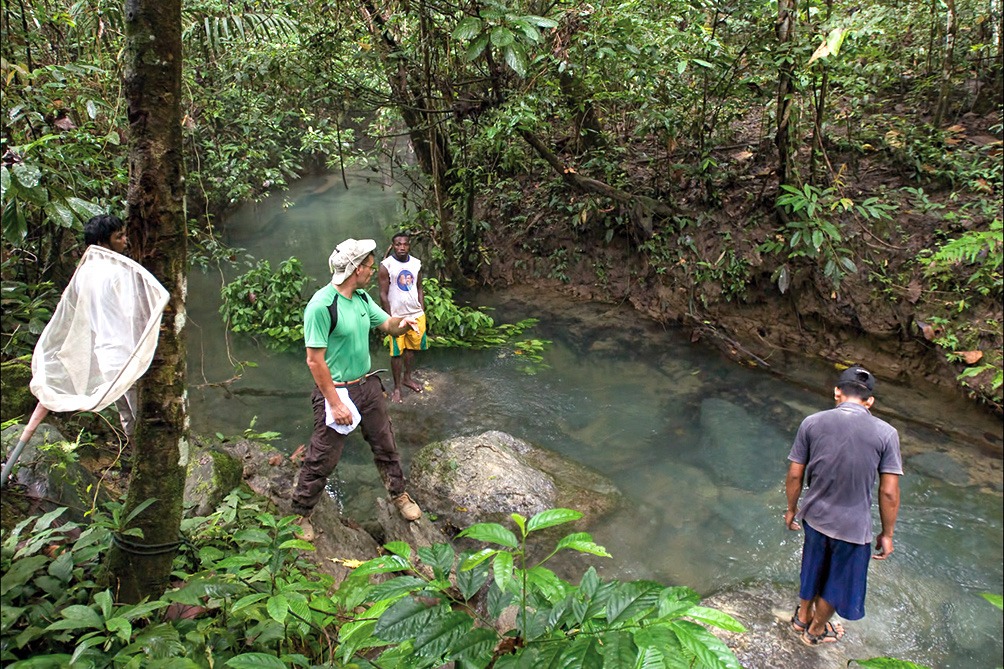
Melanotaenia wanoma is known only from Wermura Creek, a short karst resurgence emerging from the northeastern side of the Kaimana Anticline, only about 4 km from M. veoliae’s Gebiasi Creek but fed by a different geological fault. The creek flows about 200 m from a small cave before disappearing underground, resurfacing after roughly 1 km in mangrove on its way to Arguni Bay; the type locality is a narrow (about 1 m wide), shallow, crystalline stream in primary forest at about 42 m elevation.
Comparison with Similar Species
Melanotaenia wanoma differs from M. kokasensis in a narrower interorbital space, smaller eye and fewer gill rakers; from M. irianjaya in a shorter snout and predorsal length and fewer scale and gill-raker counts; and from M. ammeri in colour pattern and a more slender caudal peduncle. Among its Arguni Bay neighbours, despite Wermura and Gebiasi creeks lying less than 4 km apart on the same anticline, Melanotaenia wanoma differs from M. veoliae by a long list of proportional differences, and from M. arguni and M. urisa by a larger eye and fewer gill rakers.
Account compiled for Home of the Rainbowfish from Kadarusman, R. K. Hadiaty, G. Segura, G. Setiawibawa, D. Caruso & L. Pouyaud (2012), “Four new species of Rainbowfishes (Melanotaeniidae) from Arguni Bay, West Papua, Indonesia”, Cybium 36(2): 369–382.
Content edited/extended by Christophe Mailliet, based on his experience keeping this species.
References
- Kadarusman, R.K. Hadiaty, G. Segura, G. Setiawibawa, D. Caruso & J. Pouyaud (2012) Four new species of Rainbowfishes (Melanotaeniidae) from Arguni Bay, West Papua, Indonesia. Cybium, 36(2): 369-382.