
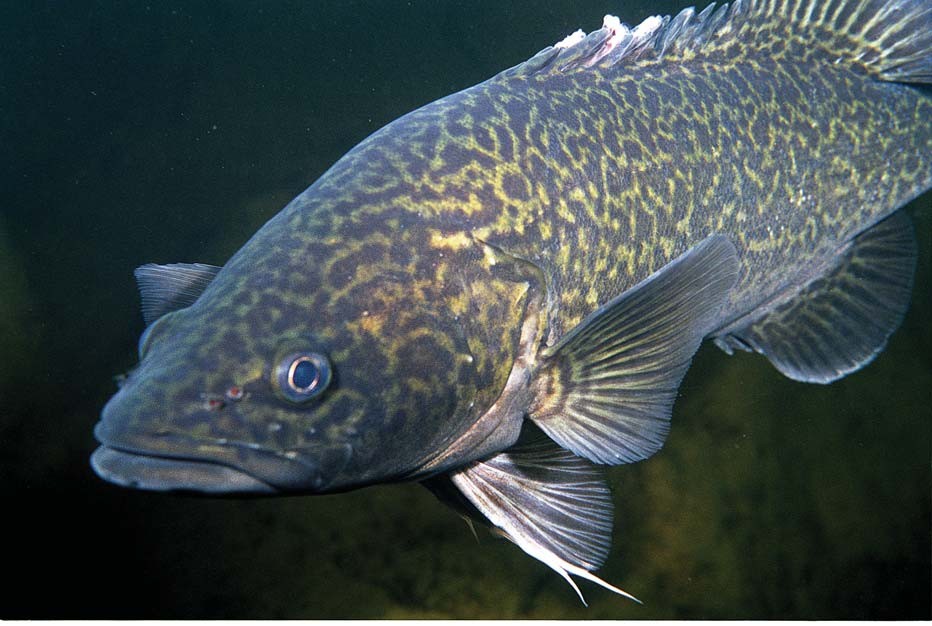
Maccullochella ikei
Eastern Freshwater Cod (also East Coast Cod, Clarence River Cod)
Species Summary
A large predatory cod endemic to the Clarence River system of northern New South Wales, Maccullochella ikei was originally also found in the Richmond, Brisbane and Mary Rivers. Mature adults can weigh up to 40 kg. Massive fish kills in the 1920s and 1930s, when bushfire ash polluted rivers and crashed oxygen levels, combined with exploitation for food and cheap pig feed, drove the species to the brink; today it survives mainly in the remote upper reaches of the Nymboida, Mann and Guy Fawkes Rivers, tributaries of the Clarence, and is formally listed as endangered.
Conservation
Maccullochella ikei shares its genus, its uniquely Australian distribution and its precarious conservation status with the Murray Cod, Trout Cod and Mary River Cod — all listed by the World Conservation Union’s International Red List alongside the giant panda, blue whale and cheetah. An early hatchery-based recovery effort, the Eastern Freshwater Fish Research Hatchery at Grafton, released around 30,000 fingerlings into the Clarence and Richmond systems before funding lapsed in 1990; Project Big Fish, a non-profit set up in the 1990s, aimed to build on that work with a target of around 50,000 fingerlings released annually over at least five years, in partnership with NSW Fisheries and licensed hatchery Booma Fisheries of Dorrigo. Illegal possession carried an $11,000 fine at the time.
Breeding & Research
A dedicated NSW Fisheries and Southern Cross University research program, running from the early 2000s, spent long hours canoeing and diving the Mann-Nymboida system with underwater cameras to finally document wild spawning sites — nine were located and monitored across a 50 km stretch of river by the end of the 2003 season. Males provide substantial parental care, aggressively guarding and cleaning the nest without a break for up to nine days after spawning. The breeding season proved much longer than previously assumed, spanning roughly two months from late August into October, with the same spawning sites reused by what are presumed to be different pairs. Early development of Maccullochella ikei appears to closely mirror that of the related Southern Pygmy Perch (Nannoperca australis).
Compiled for Home of the Rainbowfish from ANGFA sources: J. Knight & G. Butler, “Conserving Threatened Australian Fishes: Nannoperca oxleyana and Maccullochella ikei”, Fishes of Sahul 18, 2004, pp. 50–56; and “Project Big Fish — Saving the Maccullochella ikei (Eastern Freshwater Cod)”, Qld Newsletter 14(2), March/April 1998, p. 5.