
Aquatic Habitat (Australia)
Quality of habitat depends on how well the available habitat meets the organisms’ requirement for survival and reproduction. Different organisms have different requirements and tolerances for such habitat characteristics as flow, substrate, temperature, water chemistry, food availability, shelter etc. Overall there is a scarcity of aquatic habitats in Australia, particularly in the arid and semi-arid areas.
In contrast with most other countries, the area of saline wetlands in Australia far exceeds that occupied by fresh water. Inland waters are often broadly referred to as ‘freshwater’ due to a traditional distinction between marine aquatic environments and non-marine ones. However, in Australia, the relative abundance of saline inland waters, up to and exceeding the salinity of sea water, makes the term ‘freshwater’ inappropriate as a general descriptor of inland wetlands. Despite this, Australia does have a variety of wetland habitats provided by areas such as the Kakadu wetlands area in northern Australia and the lower Cooper wetlands, including the Coongie Lakes, in the centre.
Many rivers in Australia are floodplain rivers and during the wet season they break their banks to cover large areas of flat country. Floodplains are important areas for rainbowfishes moving upstream or downstream and for feeding and spawning. The floods covering floodplains in most areas are short lived. Flow in the river channel may persist for a longer period, but the period of extensive flooding rarely exceeds two to three weeks. However, this may occur several times in the course of a good wet season, but is dependent upon cyclones, rain depressions and monsoonal development. The floodplain surrounding lowland rivers contains a mosaic of habitats. All are replenished, regularly or irregularly, by flooding. Such waterbodies include intermittent lakes, billabongs (lagoons) and various types of flood runners (deep channels that only have water in them during high floods), as well as backwaters, anabranches and creeks. Equally importantly, floodplains also contain swamps, marshes and other intermittently wetted areas, all of which play crucial roles in conserving river health. Indeed, the whole of a river floodplain can be considered a single, but extremely diverse, wetland.
Extensive floodplains in the near-coastal lowlands adjacent to some of the largest northern rivers form some of Australia’s largest and most diverse wetlands. Examples include the Kakadu wetlands; in the wet season, 2,700 km2 of Kakadu may be inundated with floodwaters. Floodplains on large rivers are large; when several rivers in the Gulf of Carpentaria merge in major floods they can create a single, vast wetland of around 20,000 km2.
While perhaps not important as habitat for some species, floodplain and temporary wetland habitats may be important to rainbowfishes through the entrainment of terrestrial organic matter into organic food webs thereby increasing the abundance of food for larval and juvenile fish.
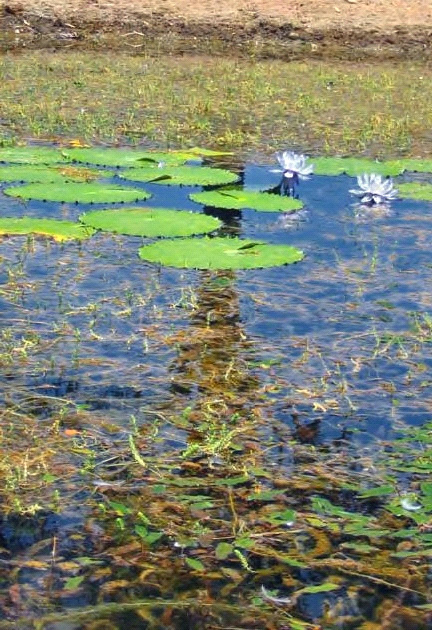
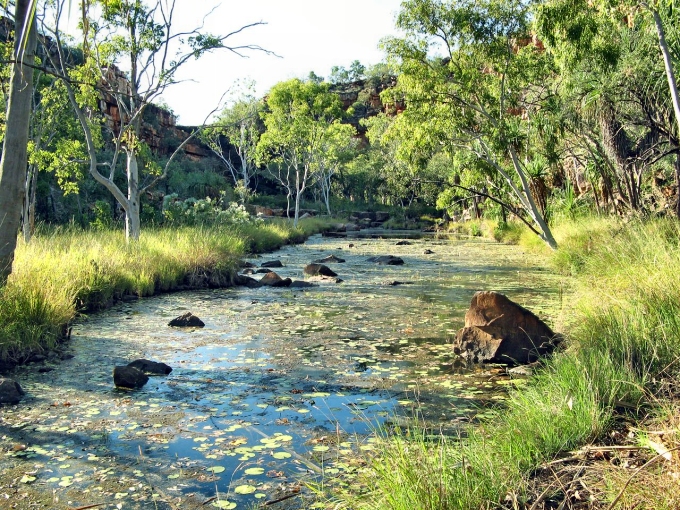
Riverine habitats include open water areas over sandy or muddy bottom substrates. Aquatic vegetation fringes the margins and consists mainly of aquatic beds of floating leaved species and reeds. Mostly the vegetation is in a thin band along the margins, with leaf litter accumulating below. Water flow varies from permanent to seasonal and may dry back to non-flowing deeper holes during dry conditions. Some only flow after heavy rains, which may be years apart. Water flow is relatively slow except for short periods following wet season rainfall. However, flowing water in the river channels provide few ecological niches for rainbowfishes. Saltwater enters the lower reaches of coastal riverine habitats and they generally have some tidal movement.
Tributary streams are mostly slow-flowing, and seasonal in nature. They can be clear or turbid with fringing water plants such as waterlilies, emergent grasses, and sedges. Oxygen levels decline during the dry season; pH is mostly neutral and specific conductivity is low. Rainforest streams are characterised by their clear water, usually high current, sparse aquatic plants, and almost complete shade of the water by riparian forest.
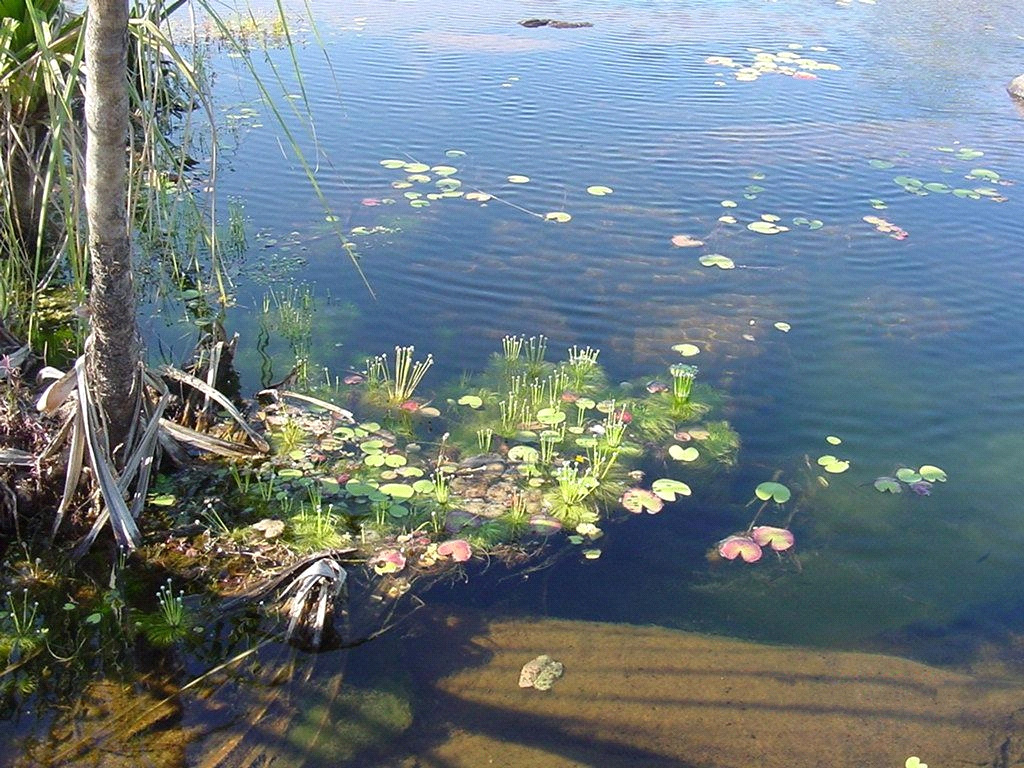
Lagoon (billabong) habitats differ significantly from riverine habitats and are a very common feature in rivers of northern Australia. They are created in a river or in a branch of a river when the floodwaters recede, and being replenished only when the stream floods again. Such habitats retain much of their riverine character and much of its former fauna and flora and provide a diverse range of habitat for breeding and feeding. Although often quite deep soon after formation, lagoons progressively become shallower with time as organic matter and sediment increases and in-situ plant production develops along their margins. Substrates are usually mud or silt, and there is an abundance of water plants growing to the surface around the margins. Sometimes they may have water plants growing in the deeper water in the middle. Lagoons often have a thick layer of leaf litter around the margins. In the wet season they often turn green, due to influx of nutrients in runoff water.
Lagoons are important in the floodplain environment as they frequently form permanent aquatic habitats and thus provide refuge for aquatic organisms when other, shallower, floodplain wetlands dry out. These habitats may persist for several months (duration), depending on local rainfall events. A number of the smaller species of rainbowfishes and blueeyes appear to be dependent upon these specialised habitats for their survival. Iriatherina werneri and Pseudomugil gertrudae are almost exclusively found in vegetated lagoons.
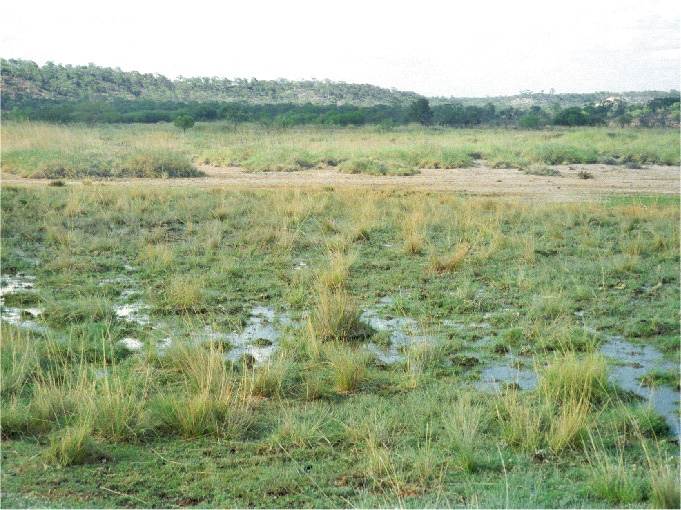
Swamps can be broadly defined as areas featuring permanent or temporary shallow open water. This includes virtually any land, which is regularly or intermittently inundated. Swamps near river mouths are mostly slightly saline. Upstream swamps tend to be shallow and support mainly emergent water plants. There may be standing water in these swamps for most of the year.
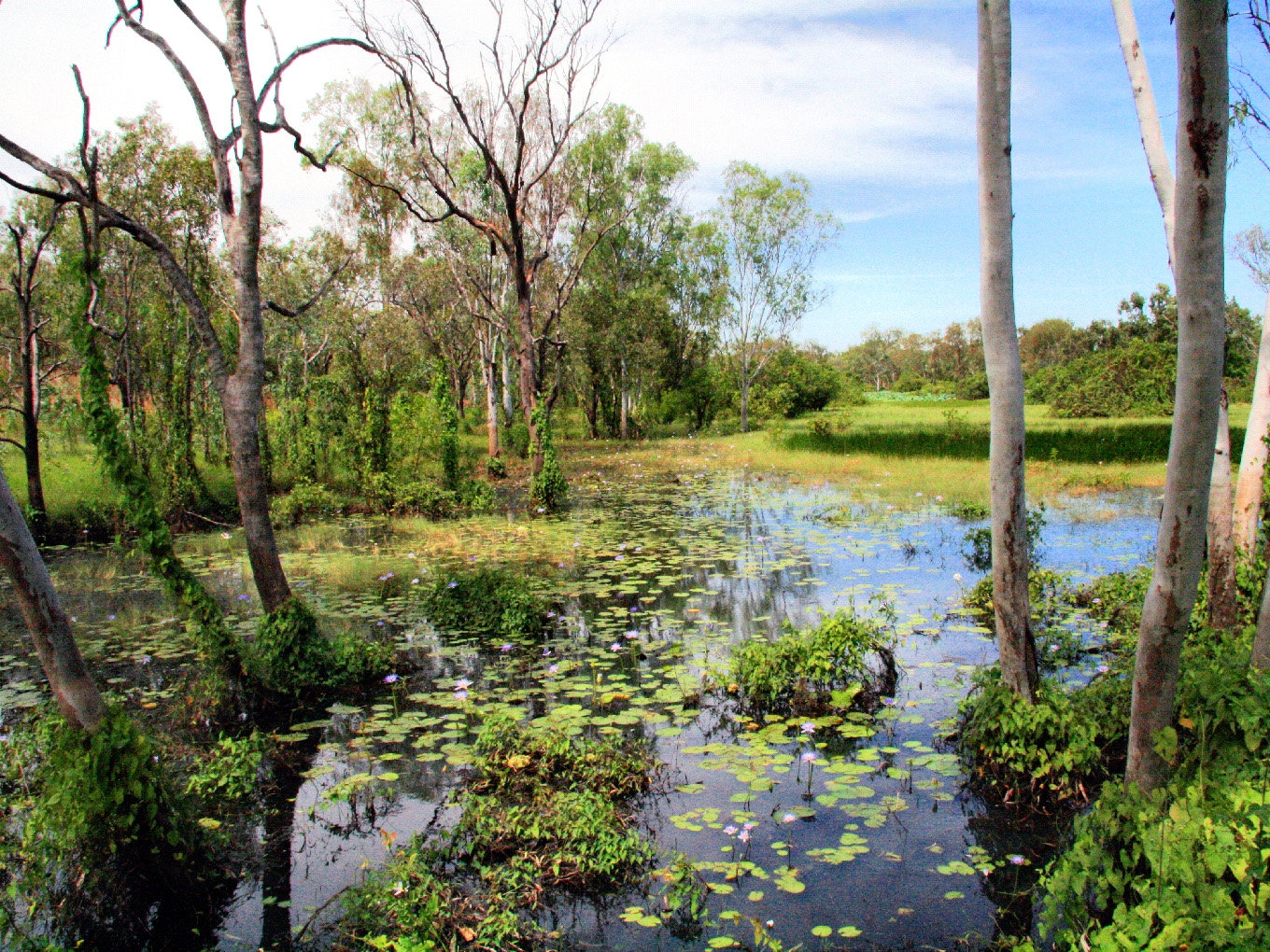
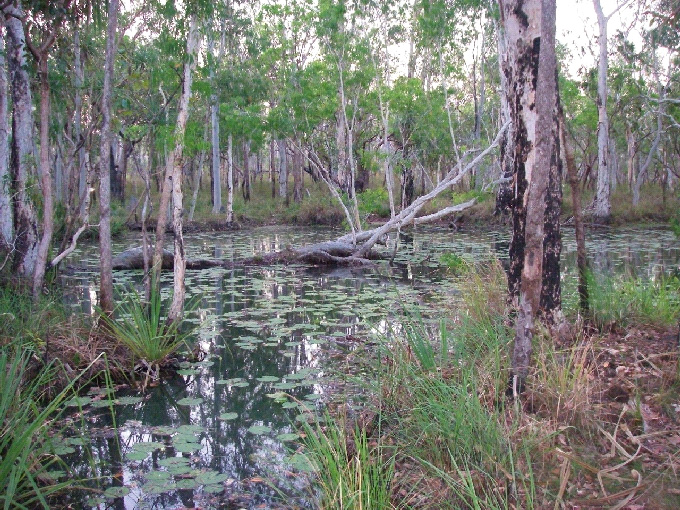
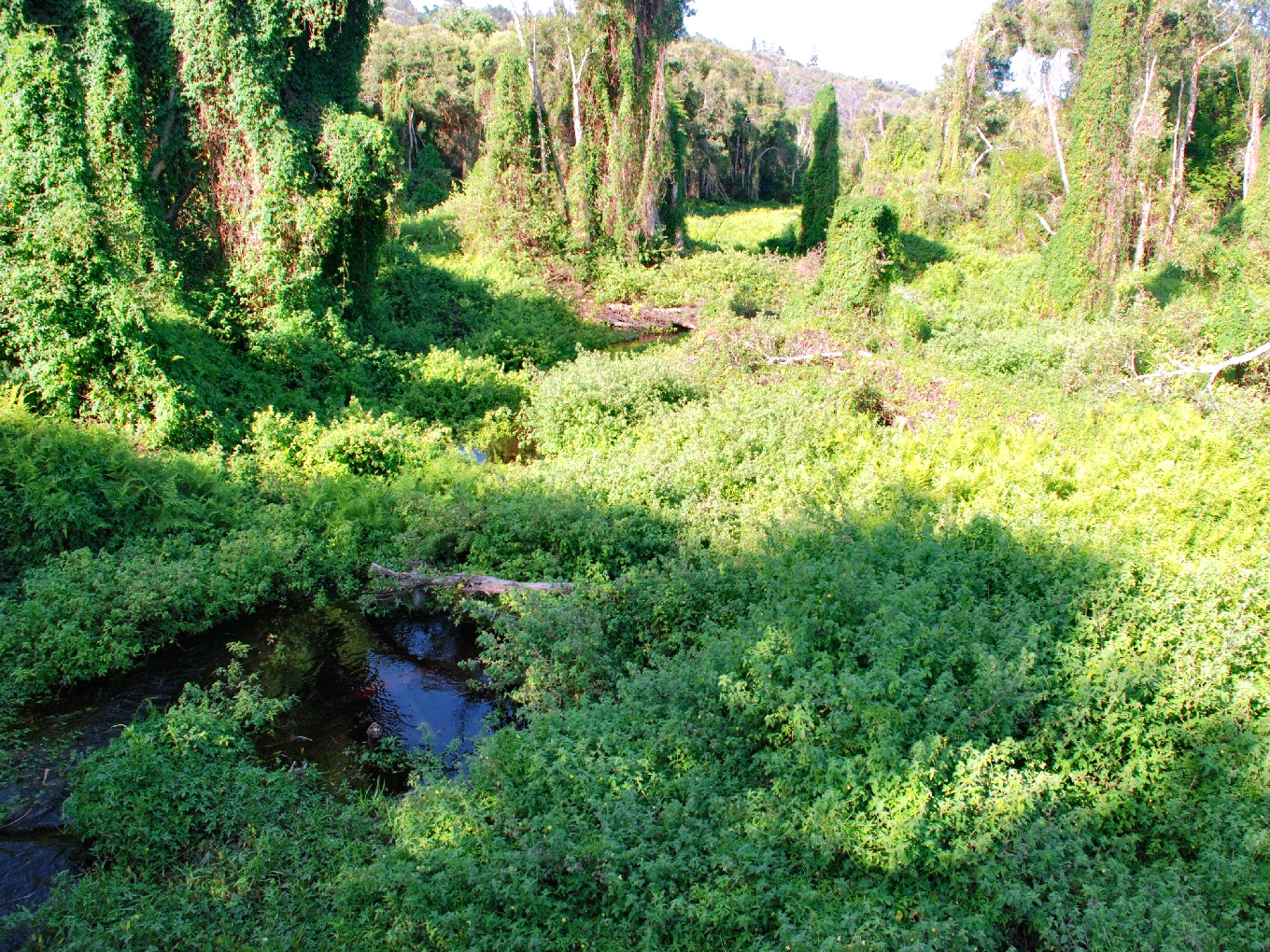
Large stretches of dune field and coastal heathland swamps; lakes and streams are found dotted along the eastern Australian coast. Within southeast Queensland and northern NSW, these coastal lowlands are known as “wallum”. The word ‘wallum’ is an aboriginal word which was used to describe the small woody tree, Banksia aemula. Over time, the use of the term has been extended to describe other plant communities, which tend to be dominated by Banksia aemula and other similar Banksia species.
The coastal lowlands are distributed across low lying undulating alluvial plains (approximately 1 to 10 metres above sea level) found in behind coastal dune systems. Wallum habitat associated with the perched lake systems of the Fraser Island-Cooloola sand masses and those of Moreton and North Stradbroke Islands generally consists of extensive, dense reed beds in shallow areas of the lakes while the fringing areas of the lakes support stands of Melaleuca quiquenervia.
One of the most distinctive features of wallum is the tea-like colour and low pH of the water bodies associated with this habitat. These habitats are generally acidic, have low conductivity (dissolved ions), but vary in their pH levels, dissolved organic matter, ionic composition, and colour. Factors contributing to these variations are age, formation, layers of low permeability and peats, proximity to the sea, surrounding vegetation, and the extent to which leaf litter accumulates and decays in the water. The creeks and swamps contain dissolved organic acids (humic acids) which give the waters their dark brown colour and low pH (2.8 to 6.8). The sandmass water bodies are usually well oxygenated but highly oligotrophic (low nutrient levels due to the surrounding infertile sands) and of low biological productivity. Rainbowfishes often found in these habitats include Iriatherina werneri, Melanotaenia maccullochi, Pseudomugil gertrudae, Pseudomugil mellis and Rhadinocentrus ornatus.
Major sedimentary basins where groundwater can be found extend under 60% of the Australian mainland. The Great Artesian Basin is the world’s largest and deepest artesian basin. It covers an area of 1,082,400 km2. Artesian springs are found in large numbers on the fringes of the Great Artesian Basin and these springs are refuges for a variety of fish, invertebrates and plants, some of which are dependent on the springs for their survival. The spring water emerges as seepages, as flowing springs, or form pools of standing water. Depending on the rate of water flow, moderately large pools may form over the spring site, some feeding streams or tails several kilometres long. Many species of fish appear to be restricted to particular groups of springs such as the Redfin Blue Eye (Scaturiginichthys vermeilipinnis), which is only found at Edgbaston Springs.
Extensive areas of intertidal mangrove forests occur at the lower reaches of coastal topical rivers in Australia. These mangrove forests are comparable in diversity to those of Southeast Asia, which are acclaimed as being among the richest mangrove areas in the world. During the wet season, freshwater flowing into these habitats dilutes the waters to nearly fresh. Water thus varies from saline through brackish to fresh. Rainbowfishes are seldom, if ever; found in these habitats, all live exclusively in fresh waters. However, they are the preferred environments for a number of blue eye (Pseudomugil) species.
Since riparian (stream-side) vegetation is out of the water for most of the year its relationship to and importance for rainbowfishes is not immediately obvious. However, this vegetation plays a critical role in the health and vitality of stream organisms by contributing to food supply, shade, protection from predators, shelter from fast flowing water and water quality. Terrestrial insects have been found to form a large proportion (20–50%) of the diets of rainbowfishes. Riparian vegetation also plays an important role in the maintenance of daily and seasonal water temperatures. Research in Australian tropical streams has found that cleared stream sites were 3–5°C warmer than nearby forested stream sites and the daily fluctuation in temperature was three times greater.
As well as providing food and habitat for rainbowfishes, riparian vegetation significantly influences the quality of water in a stream or river system. It does this by filtering and/or absorbing nutrients, chemicals and sediments derived from terrestrial sources. Vegetation on the banks of streams and rivers also helps to reduce or prevent bank erosion and hence sedimentation, which smothers habitat, food sources and spawning sites.
The health of Australia’s fish communities has declined as the rivers in which they live have deteriorated in habitat quality. In a government commissioned report to identify the key threats to Australia’s freshwater fisheries, Kearney et al., (1999) list the following: habitat degradation; pollution; water quality; water temperature; reduced environmental flows; barriers to migration and introduced species.
Rainbowfishes have a number of basic habitat requirements in order to survive from day to day, to breed and to maintain long term populations. A change in any one of these factors can reduce the ability of the population to survive in the longer term. A reduction in two or more factors will seriously threaten the population. A feature of any pristine environment is the huge variety of habitats that are available. Rainbowfishes will not survive in bare, barren habitats. Cover is required to provide protection from predators and to provide flow refuges to prevent downstream displacement. In some cases, deep water provides adequate shelter, though more generally, boulders, logs, fallen branches, and aquatic and riparian vegetation provide the necessary cover. Without sites to deposit eggs and allow their fertilisation and development until hatching, rainbowfish populations will not survive. Important breeding sites include submerged aquatic and riparian vegetation.
Rainbowfish larvae and juveniles are mostly found in nonflowing or slow-flowing habitats, whereas adult rainbowfishes can be found in both flowing and non-flowing habitats. Adults tend to form shoals and be associated with macrophyte beds in areas of relatively low water velocity.
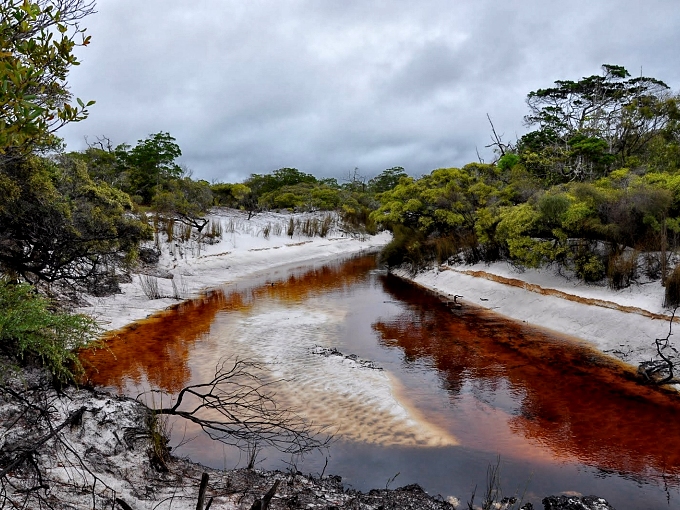
In the main river channels they are most commonly found in association with beds of macrophytes, which limit the current to a large extent. Surveys have indicated that slowflowing habitats contain many more rainbowfishes than fast -flowing sections. Habitat in river channels is formed by water flow, woody debris, boulders or macrophytes.
Adults are typically more generalist in their requirements (e.g., food, shelter, depth) relative to juvenile stages, partly because they can move from one habitat to another as water flow changes. However, for less mobile life stages—such as attached eggs and undeveloped larvae—changes to flow and the resulting effect on critical rearing habitat, may result in significant mortality and may be a significant determinant of recruitment success in any one year.
Almost all rainbowfish species need to move within their habitat to access food resources, escape predation or competition, access breeding sites, escape unfavourable environmental conditions such as low or high water temperatures, and recolonise dry season habitats. Their habitat requirements are complex, and it is unlikely that they will ever be fully understood. An adequate supply of suitable quality water is the most fundamental requirement. Without this, rainbowfishes will not survive for more than a few minutes. Important water quality parameters include dissolved oxygen and temperature. Extreme levels of these parameters can cause massive fish kills.